


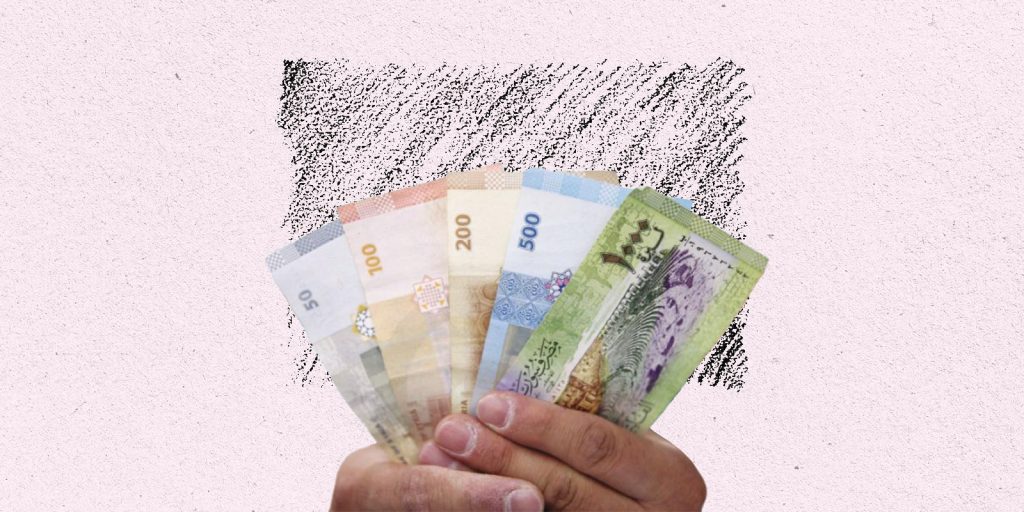
Syria’s financial markets were jolted in recent hours by an unexpected surge in the Syrian pound, triggered by remarks from former U.S. President Donald Trump. Speaking in Riyadh on May 13, Trump announced his intention to lift economic sanctions on Syria, stating, “I will be ordering the cessation of sanctions against Syria in order to give them a chance at greatness,” The statement, though not followed by any formal policy shift, sparked a wave of optimism and speculative movement across Syria’s currency markets.
The reaction was immediate and dramatic. The U.S. dollar fell by over 19% on the parallel market in some regions, while the Syrian pound rallied to below 8,400 from approximately 10,700 in less than 48 hours, according to the widely followed exchange-tracking platform Lira Today. The shift was met with cautious optimism in economic and banking circles, many of whom interpreted Trump’s remarks as a possible signal of future policy easing.
Read also: Trump Urges Syrian President to Expel ‘Palestinian Terrorists,’ Take Over ISIS Prisons
Central Bank Moves, but the Market Leads
In response, Syria’s Central Bank lowered the official exchange rate from SYP 12,000 to 11,000 per dollar, aiming to narrow the spread between the formal and informal markets. However, the gap remains wide, with black-market rates fluctuating between SYP 8,100 and SYP 8,700, roughly 30% lower than the official rate.
Analysts say this two-tiered system reflects an intentional government strategy to maintain a higher official rate for purposes of taxation, public wages, and remittances. Yet, in practice, the black market remains the true benchmark for daily transactions. However, the divergence reveals a deep lack of confidence in official monetary policy. When people stop trusting the official rate, it loses relevance.
Exchange Houses Tighten Flow
Private exchange companies played a critical role during the market turmoil. Despite regulatory permission to operate within close margins of the official rate, many sharply limited dollar sales, citing “liquidity shortages.” Unofficial reports suggest several firms hoarded dollars in anticipation of a potential rebound.
“Currency firms reacted faster than the government, but not transparently,” said a banking source in Damascus. “Some created artificial spreads exceeding 10%, which ultimately hurt average citizens.”
Economists are now calling for greater oversight of exchange operations, warning that unchecked speculative behavior may exacerbate volatility and distort supply.
Read also: Trump Says U.S. to Lift Syria Sanctions, Signaling Major Policy Shift
Prices Lag Behind Currency Gains
Despite the dramatic appreciation of the Syrian pound, prices remain largely unaffected. Essential goods, vegetables, sugar, rice, and pharmaceuticals, showed minimal or no decline, with some dropping just 5–7%. Experts attribute this lag to several factors: ongoing use of high-cost imported stock, uncertainty among vendors, and fears of a market reversal.
Moreover, the gains in currency value have not translated into improved household purchasing power. The average public-sector salary stands at roughly SYP 300,000 per month, while monthly living expenses for a typical family exceed SYP 4 million.
Remittance Hit: A Lifeline Undermined
Syrians who rely on remittances from abroad, often a crucial income stream, are feeling the pinch. A $300 transfer that previously fetched over SYP 4.5 million now yields only around SYP 2.8 million. While this may help reduce money supply inflation in the macroeconomic sense, it leaves many families worse off.
While the government considers this a decline in the inflated monetary mass, recipients of remittances see the stronger exchange rate as harmful to their daily income—especially since it has not been accompanied by a drop in consumer prices.
Experts remain divided on whether the recent rebound of the Syrian pound is sustainable. Some argue that the improvement is purely circumstantial, lacking any real indicators of economic growth. They stress that lasting monetary stability requires a broader foundation of political, productive, and security stability. Others describe the shift as a speculative price correction triggered by Trump’s remarks and market anxiety. Without actual financial inflows or meaningful easing of sanctions, they warn, the exchange rate is likely to climb again.
Read also: Aleppo Chamber of Commerce Head to +963: Syria Is Ripe for Investment, Trade Recovery Underway
Few believe the currency will return to pre-crisis levels seen between 2020 and 2022 (SYP 1,250–2,500 per dollar). Years of conflict, economic contraction, and international isolation have left deep structural damage.
Lasting Stability Requires Structural Change
Economists broadly agree that achieving lasting currency stability in Syria will require far more than political declarations. They emphasize the need for comprehensive structural reforms, including stricter oversight of private exchange companies to prevent speculative hoarding, significant increases in public sector wages indexed to actual inflation rates, and a revival of domestic production, particularly in agriculture and manufacturing, to reduce reliance on costly imports.
Additionally, they advocate for the gradual liberalization of the exchange rate to better reflect true market dynamics, the expansion of formal channels for remittances to limit dependence on the black market, and a serious crackdown on financial corruption, especially within customs and import-related bureaucracies.
The Sanctions Backdrop
U.S. sanctions on Syria began in 1979 but intensified sharply after 2011, when the uprising against the Assad regime triggered a raft of measures targeting Syria’s energy, banking, and aviation sectors. The most punishing blow came with the 2020 enactment of the Caesar Act, designed to choke off reconstruction financing and penalize international allies such as Russia and Iran for doing business with Damascus.
Read also: Mass Graves in Baghuz: A Forgotten Tragedy Threatening Health and Humanity
While Western governments have argued that sanctions exempt humanitarian goods, the reality on the ground paints a different picture. Syria’s healthcare sector has struggled to access basic medical supplies and modern equipment.
Education has also suffered. Enrollment has dropped, particularly in rural areas, curricula are outdated, and many schools lack basic infrastructure. Water, electricity, and transportation networks remain in disrepair.
Trump’s Riyadh remarks may have sparked a brief reprieve for the Syrian pound, but experts caution against reading too much into the bounce. Without a credible, coordinated economic recovery plan, and real changes in U.S. policy, the rally could prove to be a mirage rather than a turning point.











