


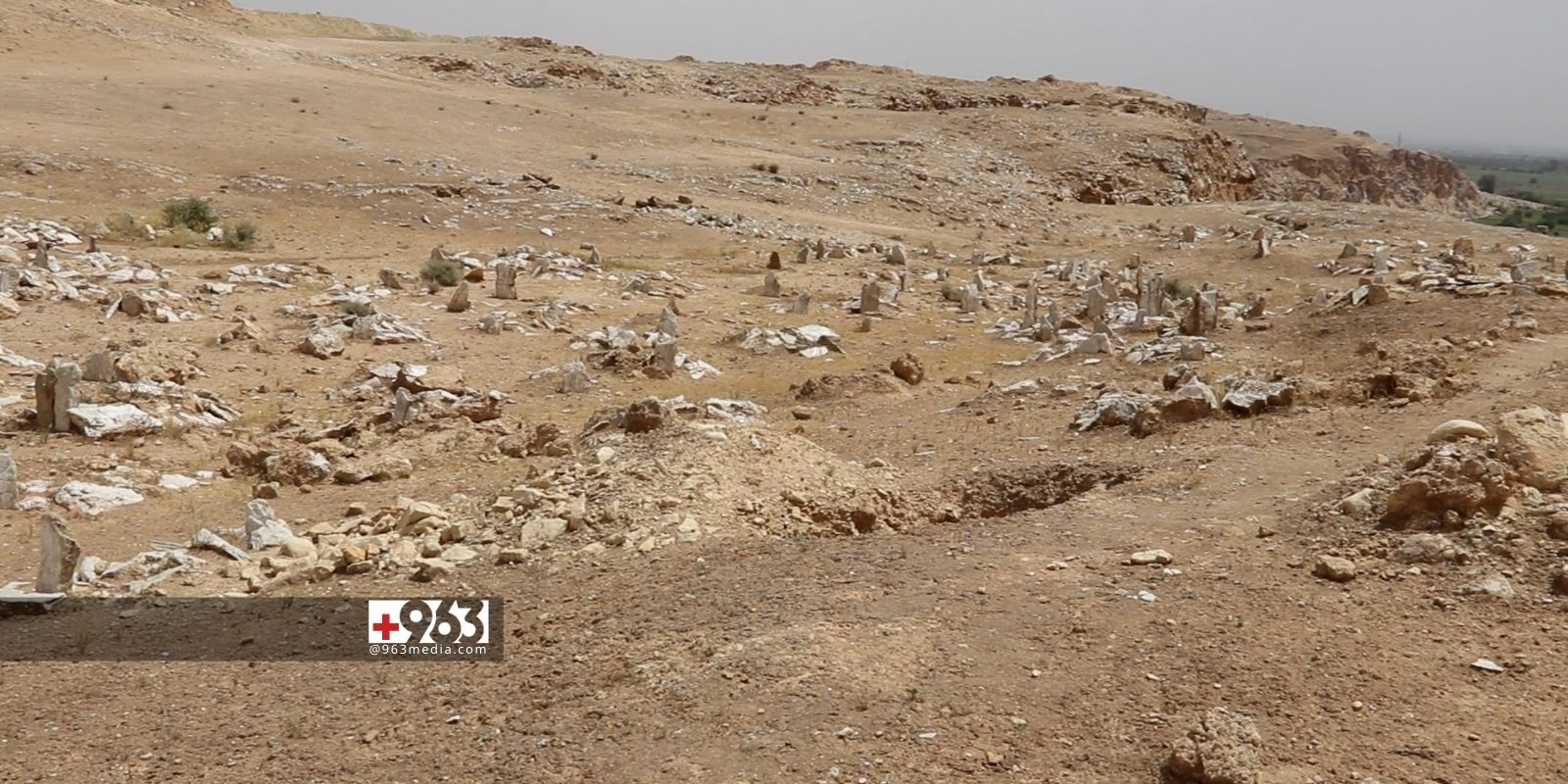
In the scorched farmlands and shattered homes of Baghuz, an eastern town in Syria’s Deir ez-Zor province, a new chapter of suffering unfolds, one not marked by gunfire, but by silence. Dozens of unmarked mass graves, filled with unidentified bodies hastily buried during the final battles against ISIS, now rot in plain sight. These graves are more than tragic relics of war; they are a growing health and psychological emergency.
Between the Stench of Death and the Silence of the World
“We survived war,” says local resident Mohammed Al-Hamadeh, “but this… this is something else. The stench of decomposing bodies wakes us up. Children play where we fear bones may lie. How are we supposed to live like this?”
Al-Hamadeh tells +963 that locals tried to rebury bodies unearthed by rain or wind, only to fall ill with skin infections and nausea. “We’re not doctors or forensic teams. We don’t want to touch death anymore.”
Read also: Why Displaced Syrians Struggle to Return Home: A Health Crisis That Can’t Be Ignored
Women in the area report having frequent nightmares, as trauma seeps into daily life. One mother shares: “My children ask if they’ll end up in one of those graves too. Even our water is frightening, some wells are too close to the burial sites.”
Another local, known as Abu Mohammed, adds: “You can’t unsee bones sticking out of the ground. We try to forget, but we step out and face death every single day. I fear for our children’s health and sanity.”
Burial Without Identity or Peace
According to local activist Ahmad Al-Marsoumi, at least 12 documented sites in the region hold over 700 bodies, victims of ISIS, fallen fighters, civilians. “Many were buried without identification, some even without shrouds,” he says. “With every sandstorm, skeletal remains resurface. It terrifies the community.”
The worst-affected areas include Abu Hammam, Granij, Bahra Quarry, and Hajin. Yet technical resources, funding, and international support remain virtually non-existent. “This is not just a local issue anymore,” Al-Marsoumi warns. “It should be treated as an urgent humanitarian crisis.”
Read also: Health Sector in Crisis: Challenges and Efforts
An Escalating Health Disaster
Dr. Ibrahim Al-Qaisoum, an environmental health expert, describes the situation as a ticking time bomb: “Improper decomposition contaminates soil and groundwater with bacteria like E. coli and Clostridium. This raises serious risks of diseases like cholera.”
He further explains that decomposing bodies emit hydrogen sulphide, a toxic gas that can damage respiratory systems. “We need trained teams with protective gear to exhume the remains and sanitize these areas properly. Water sources must be routinely tested.”
His final warning is stark: “Ignoring this crisis will cost us an entire generation’s health. It’s far cheaper to act now than face a full-blown epidemic later. There must be awareness campaigns to educate locals on how to protect themselves, and mobile medical teams must be deployed to deliver urgent health care on the ground.”
Mental Wounds That Won’t Heal
Psychiatrist Dr. Ibrahim Al-Rashid says the psychological toll is just as severe. “Mass graves are a visual and emotional trauma. They’re a constant reminder of death. We need intensive psychological support programs to help residents cope with this ongoing trauma.”
Read also: A Nation Without Healers: Syria’s Medical Workforce in Crisis
“Seeing bones, smelling the scent of decay, or even just knowing that there are remains nearby, are powerful psychological triggers. They reopen unhealed wounds and drive-up anxiety and depression, especially among women and children.” Al-Rashid added.
Local and international organizations have called for immediate deployment of forensic and health teams to manage the crisis with dignity and scientific care. But for the residents of Baghuz, hope feels distant.
They aren’t just asking for the dead to be buried properly. They’re asking for a return to life, one with dignity, safety, and a future.











