


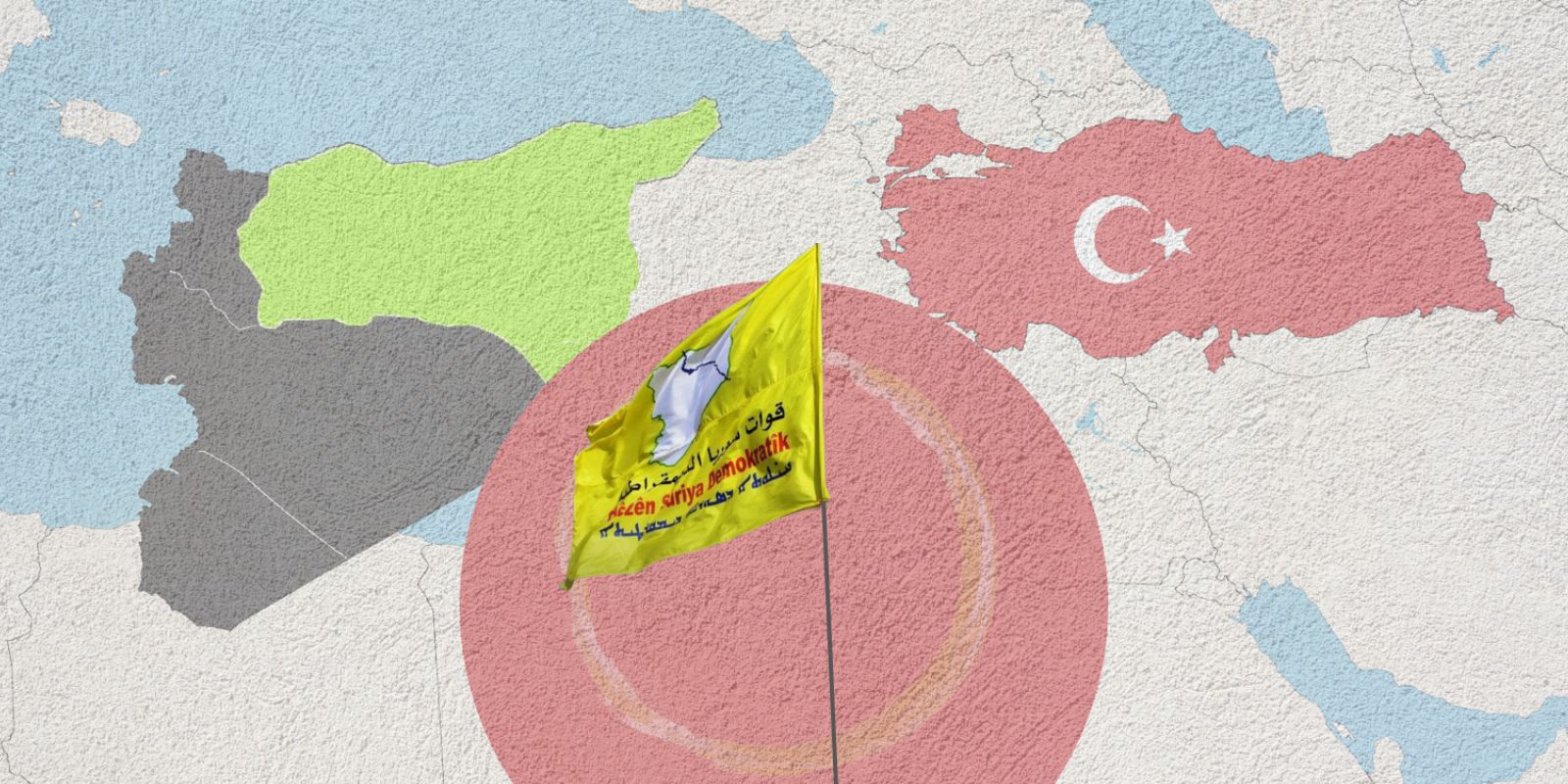
This week, Devlet Bahçeli, leader of Turkey’s Nationalist Movement Party and an ally of the government, warned that ignoring the memorandum of understanding signed between the Syrian president Ahmad Al-Sharaa and SDF leader Mazloum Abdi in March would make military intervention inevitable. According to Turkish media, he emphasized strict adherence to the agreement; otherwise, joint military action between Ankara and Damascus would be “unavoidable.”
Bahçeli also claimed that the SDF “operates under Israel’s orbit,” arguing that the U.S.-Israeli alliance “lays the foundation for a bloody civil war and division in Syria.” He described Syria’s federalism proposal as “a pretext for division and separation,” warning of widespread chaos. These statements come amid stalled negotiations between the SDF and the Syrian government, alongside escalating military skirmishes. Turkey views the SDF as a national security threat, especially as elements of the Kurdistan Workers’ Party (PKK) have moved under the SDF umbrella.
Turkey has accused the SDF of failing to comply with the Damascus agreement, citing attacks in the outskirts of Manbij and Aleppo against Syrian forces. A Turkish official stated that Ankara observes “on the ground the SDF’s noncompliance,” expecting the SDF to disarm and integrate into Syrian state institutions.
At the same time, indicators suggest that direct meetings between Turkish officials and SDF representatives may take place. Tulay Hatemogullari, co-chair of the Kurdish “Democracy and Equality for Peoples” Party in the Turkish Parliament, believes that such exchanges could advance the peace process.
Months ago, leaked reports revealed direct talks between Turkey and the SDF facilitated by the U.S., covering U.S. withdrawal from Syria, ISIS detainees, and mechanisms for integrating the SDF into the Syrian army. SDF commander Mazloum Abdi confirmed direct contact with Turkey, expressing no objection to meeting President Erdoğan. However, Turkish Foreign Ministry sources denied any plans to meet Abdi at the time, while Erdoğan accused the SDF of “stalling tactics” despite agreements to integrate into the Syrian army.
Previous meetings between Turkish officials and SDF representatives, brokered by the U.S. in March, resulted in a ceasefire along the Tishrin Dam fronts in eastern Aleppo, despite three months having passed since the agreement between the Syrian president and Mazloum Abdi.
Turkey continues to pressure the SDF to implement the Damascus agreement, dismantle the People’s Protection Units, and halt U.S. support. Turkish Defense Ministry sources revealed the creation of a joint operations centre with Syria and Jordan in Damascus to coordinate regional anti-ISIS operations.
Also read: Turkey–SDF Meetings: Northeast Syria Faces a New Reality
Negotiations: Factors and Possibilities
Hussein Omar, a political analyst and researcher based in Belgium, told +963 that “from the start, it should be clear that understandings and agreements between parties are shaped by the circumstances they face, particularly governments seeking to stabilize and consolidate power at home; they aim to end hostilities with opposing parties. We must consider all possibilities because the global and regional context is not favourable to Turkey, nor does it align with its hostile policies. Turkey needs a type of détente with the SDF because the Turkish regime faces a deep crisis it is trying to alleviate; this can only be achieved by reaching an agreement with the PKK in Turkey and the SDF administration in Syria, allowing Ankara to offload significant burdens draining state resources without justification.”
He added, “Turkey clearly does not trust Damascus; I will say it plainly: Turkey does not trust Arabs, based on decades of interactions. Therefore, if Damascus disregards its agreement with the SDF, it allows Turkey to expand and sustain its influence, because the SDF will uphold the agreement if implemented, but Damascus’s intentions remain unclear. What matters is having understandings in place to avoid new regional disasters; the guarantees come from the UN mediator and the U.S., who facilitate dialogue between the parties.”
Omar continued, “As for turning the SDF into a tool, this will not happen because the SDF has its own identity, goals, and vision, primarily protecting its achievements in northeast Syria and continuing the fight against ISIS and other terrorist groups. If Turkey intervenes constructively, it will be welcomed. The SDF’s cards include a cohesive military structure, continuous partnership with the international coalition, uncertainty around the de facto Damascus government, and ongoing negotiations between the PKK and Turkey.”
He concluded, “Potential scenarios are not fully clear, but Turkey’s strategic interest lies in reaching an agreement or understanding with the SDF for regional and international reasons; Ankara faces existential concerns and fears losing influence and international standing due to Erdoğan’s and now Hakan Fidan’s intelligence-driven approach to politics. This has positioned Turkey as a rival, even an adversary, to the region’s strongest powers. Therefore, an agreement with the SDF and the PKK may be necessary for internal stability and security, reopening ties with the EU and the U.S., while Damascus remains relevant in this equation due to the lack of clarity in its governance structure.”
Also read: Turkey and the Syrian Kurds: Toward a New Chapter of Strategic Cooperation?
Pros and Cons: Negotiations Between the SDF and Turkey
Dr. Huda Rizk, a Lebanese researcher on Turkish and regional affairs, told +963 that “Turkey considers the SDF an extension of the PKK, so Ankara opened channels with the party to encourage the SDF to disarm. Although the SDF is clear about its demands, Turkey fears the forces retaining their weapons and integrating into the Syrian army under negotiations with Damascus.”
She added, “Recognizing the SDF and allowing it to keep arms undermines Turkey, which justifies intervention under the pretext of supporting the Syrian government and protecting territorial unity. Turkey does not want any form of SDF autonomy along its southern border, fearing a repeat of domestic Kurdish demands.”
Rizk believes that U.S. officials tried to mediate between the SDF and Ankara before Assad’s fall, but Ankara views the SDF as a local faction within Syria, seeking sole influence and competing with Iran through HTS and opposition factions controlling governance.
She also noted that “Turkey is not trying to bypass Damascus to negotiate with the SDF; media reports are negotiation tools. Ankara also competes with Saudi influence over the legitimate president, who ideologically aligns with Turkey but pragmatically balances relations with both sides and Saudi funding. Ankara fears losing leverage over him.”
Turkey also opposes any agreement between Damascus and Tel Aviv; it seeks a weak Syria. Given promises to recognize the legitimate president permanently if an agreement with Netanyahu is reached at the UN General Assembly this month, Ankara fears granting Suwayda autonomy, which could set a precedent for northeast Syria.
Rizk asked, “What does Turkey want from the SDF if negotiations open? And what does the SDF want from Ankara?” She expects the SDF will demand a faction within the Syrian army while maintaining its weapons; Ankara will insist on SDF joining the army under Damascus, disarmed, and complying with the constitution.
She emphasized that Turkey seeks to prevent the SDF from posing a threat and wants it to be part of Damascus authority while recognizing its special status. The main issue remains security, the army, and disarmament; whether both parties can agree on this remains uncertain.
Rizk added, “Negotiations between Ankara and the SDF require Western backing; both have allies in Europe and the U.S. Turkey previously threatened attacks in northeast Syria, but America rejected them. The key question is whether Turkey can accept SDF integration into the army while granting Kurds limited privileges beyond cultural rights, and how successful negotiations depend on Turkey’s acceptance.”
She concluded that “the international community supports negotiations between Turkey and the SDF, and Damascus has no objection. But Turkey fears the shape of a new Syrian government, as it could impact Ankara. The Syrian social composition closely mirrors Turkey’s, so Turkey seeks to engage in negotiations, especially after failing to dominate Syria and competing with Israel, Saudi Arabia, while the U.S. stays neutral.”











