


By Khorshid Dali
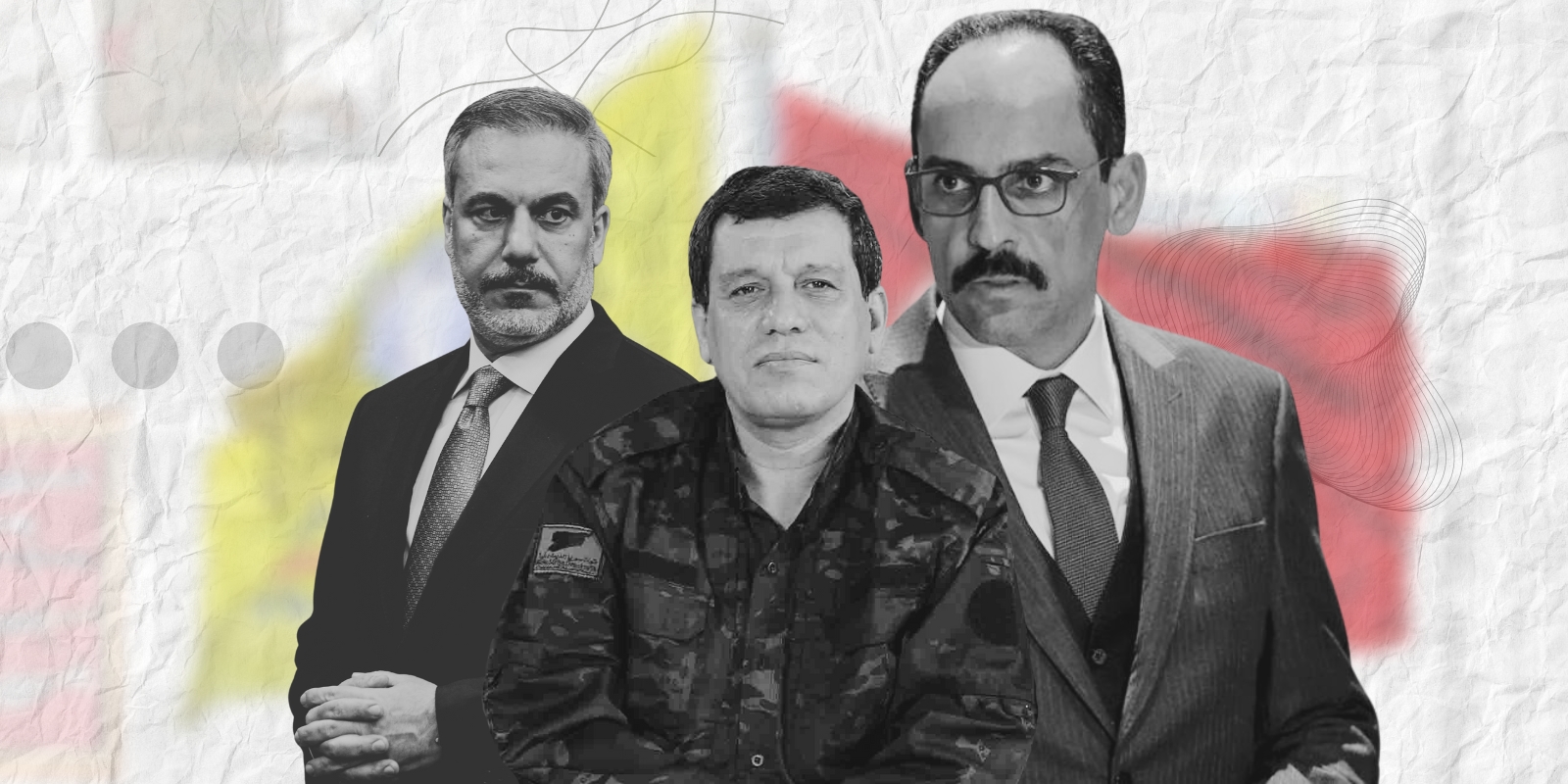
The announcement by U.S. envoy to Syria, Tom Barrack, of contacts and discussions between Mazloum Abdi and both Hakan Fidan and Ibrahim Kalin, may mark the beginning of a new era in relations between Turkey and the Syrian Kurds. This announcement lays the groundwork for a new political trajectory that could take shape, driven by overlapping and substantial shared interests.
What could bolster this trajectory is the ongoing peace process in Imrali Island between Abdullah Öcalan and the Turkish state. Developments there have become part of Turkey’s foreign policy toward both Damascus and Qamishli, and indeed toward the wider region amid unfolding events in Gaza, Lebanon, Syria, and Iran.
In reality, if Barrack’s revelation reflects an American desire to foster positive ties between its historic ally Turkey and its newer partner the Syrian Kurds, then the announcement is not far removed from a Turkish current founded by the late President Turgut Özal. This current approaches the Kurdish question with a pragmatic recognition of their history, rights, and identity, prioritizing interests above all. Such a perspective was echoed years ago by İlnur Çevik, former adviser to President Erdoğan, when he hinted at the possibility of allowing a Kurdish entity in northeast Syria. Similarly, journalist Veyru Özér once asked in Hürriyet: Will the Democratic Union Party become another Barzani? Although raised years ago, that question encapsulates today’s moment: relations between Turkey, the Syrian Kurds, and the SDF appear open to a dramatic Turkish pivot, given the scope of potential interests and the intensifying rivalry between Turkish and Israeli projects in Syria over influence, power, and hegemony.
Read also: Turkey and Its Border Crossings with Northeastern Syria
Strategic Benefits
Developments in Syria and the wider region have compelled Turkey to reassess its interests and political behavior. From a soft retreat from supporting Muslim Brotherhood movements in pursuit of better ties with Gulf states and Egypt, to a quiet de-escalation with the SDF in Syria by giving the Abdi-Sharaa agreement a chance, Turkey now faces political conclusions and strategic gains in engaging with the Syrian Kurds and the SDF. These can be summarized as follows:
- Turkey has reached the conclusion that its repeated calls for Washington to abandon the SDF have led nowhere. With the U.S. firmly committed to the SDF, Ankara sees the need to reconcile differences and search for larger shared interests.
- Turkey’s experience with the Kurdistan Region of Iraq offers a successful model of political, economic, and security cooperation, one that could be replicated with the Syrian Kurds. Ankara once dismissed Kurdish leader Masoud Barzani as merely a tribal chief before 2003, yet later welcomed him on red carpets in the Turkish capital. A similar scenario may unfold with Mazloum Abdi, once labeled a “terrorist” by Ankara, but now rumored through Turkish media leaks to be considering a visit to Ankara. Such leaks likely prepare the ground for a real visit, especially since his contacts with Fidan and Kalin have become direct, if not U.S.-mediated. None of this could occur without Erdoğan’s knowledge, approval, and backing.
- With Israel repeatedly speaking of redrawing the Middle East map, and Barrack declaring the Sykes-Picot agreement obsolete, Turkey deeply fears that Israel may be working toward a Kurdish alliance that would directly target Ankara. Thus, outreach to the Kurds becomes a preemptive, defensive measure to block such an alliance and its implications for Turkey’s domestic stability. This concern explains Erdoğan’s repeated warnings that Israel has set its sights on Turkey’s internal security.
- Against this backdrop, the ongoing dialogue between Öcalan and the Turkish state acquires added weight. Turkey increasingly believes that regional developments necessitate outreach to the Kurds, and that the key to such outreach lies through Abdullah Öcalan, who commands immense respect among the SDF and Syrian Kurds. Ankara may calculate that this process could turn the Kurds both domestically and regionally into allies, strengthening its regional role in Syria and beyond.
- Turkey also views this path as a way to resolve long-standing disputes with the U.S. and Europe, especially since Western particularly French support for the Kurds has become a source of tension. Improved relations could open economic lifelines for Ankara, which faces a worsening financial crisis.
- Another factor driving Turkish interest in rapprochement with the SDF is the fear that, once the Assad regime collapses, Russia may move to embrace the Syrian Kurds, especially given its military base at Qamishli airport. Such a development would fit into Moscow’s calculations related to the Ukraine crisis, particularly given Turkey’s repeated refusal to recognize Russia’s annexation of Crimea.
Also read: Kurdish-led SDF and Turkey: Between Political Maturity and Fragile Implementation
From their side, the SDF sees no problem in building positive relations with Ankara. The group has repeatedly declared its readiness for dialogue and resolution of outstanding issues. For the Syrian Kurds, such rapprochement would be a political gain: it would ease Turkish pressure while simultaneously fostering a regional environment supportive of their project for decentralized governance in Syria, an arrangement that safeguards their identity and national rights while laying foundations for a democratic process in the country.
Against this backdrop, one might argue that the scenario described above remains at odds with Turkey’s traditional policy toward the Syrian Kurds, weighed down by a heavy legacy of enmity. Yet the precedent of relations with Iraqi Kurdistan, coupled with current regional transformations and the potential benefits of a new opening with the SDF, all suggest that in politics, nothing is impossible. Still, the difficulty lies in the fact that such a shift cannot occur overnight. Opening a new page requires gradual political accumulation and the crystallization of shared interests in step with unfolding regional developments.











