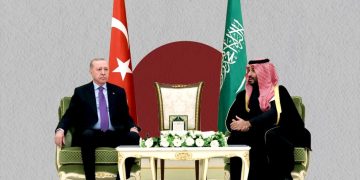
The southern arena in Syria is witnessing a wide debate surrounding the new military and political agreement between Damascus and Moscow, which aims to reorganize relations between the two countries after a long phase of war and destruction in which Russia played a central role.
In Daraa, the cradle of the Syrian revolution and one of the most prominent former opposition strongholds, public opinion appears particularly sensitive and cautious. The collective memory of the province’s people remains burdened with images of Russian air raids that destroyed homes and claimed thousands of lives, making the idea of a renewed relationship with Moscow difficult for many to accept.
The Interim Syrian Government, headed by Ahmad al-Sharaa, has attempted to present the agreement as a step toward building a strong national army and rebalancing international relations. Yet, in the south, which witnessed firsthand the devastation of Russian bombardment, a fundamental question arises: can the killer become a partner in construction?
The Agreement Is a Necessary Military Step, but Trust Is Absent
Military and strategic expert Colonel Akram Abu Mijna told +963 that the Syrian-Russian agreement carries two contradictory dimensions. The first is that it re-arms the new Syrian armed forces with Russian weapons, which could strengthen the army in the short term. The second, however, is that it restores Russia’s influence over Syria’s military decision-making, a move fraught with risk, as Moscow still views Damascus as a sphere of influence rather than an equal partner.
Abu Mijna added that arming and training the Syrian army is necessary, but must occur under clear conditions that preserve Syrian sovereignty and prevent Russian interference in military and political decisions. He emphasized that Moscow seeks to maintain its presence in the Middle East, which is why it focuses on southern Syria as a strategic zone close to the borders with Israel and Jordan.
He believes that a Russian repositioning in the south may temporarily contribute to stabilizing security, but at the same time opens the door to renewed foreign military influence, contradicting the vision of the new state, which aims to build an independent national military institution.
Read also: Israeli Troops Clash with Protesters in Southern Syria
No Trust in Russia, and Politics Is Not About Emotion
Legal expert Anwar al-Jahmani stated to +963 that trusting Russia is nearly impossible. He explained that trust in the new Syrian government is one thing, but trusting Russia is entirely different, as Moscow was a partner in the destruction of Syrian cities, making confidence in it unthinkable.
Al-Jahmani added that although the past is painful, it cannot be an obstacle to relations between states, as politics is ultimately driven by interests, not emotions. He clarified that today’s Syrian government deals with Russia out of a desire to avoid harm, not out of alliance, since Moscow is a permanent member of the UN Security Council and can obstruct international resolutions that may benefit Syria. Hence, engagement with Russia is a political necessity, nothing more.
He explained that President Ahmad al-Sharaa did not speak of new agreements as much as he spoke of redefining the relationship with Moscow, transforming it from one between a subordinate regime and its patron into one between two independent states. This redefinition, he said, is the essence of the new phase, which must be built on equality and accountability.
He stressed that an alliance with Russia is not under consideration at all, as the matter is not one of alliance but of normal state-to-state relations governed by interests. Any future agreement, he emphasized, must pass through the People’s Assembly to gain legitimate approval, for sovereignty is not ratified by individuals but by elected institutions.
Al-Jahmani concluded: “Russia has committed clear crimes against the Syrian people. Syrians have the right to demand compensation under international law. They know very well that those who destroyed their cities yesterday cannot be partners in rebuilding them. What the government seeks today is merely to avoid direct confrontation with Moscow.”
We Do Not Forget Who Destroyed Our Homes, but National Interest Comes First
Yousef al-Zoubi from Daraa told +963 that Russian aircraft were partners of the regime in killing, destruction, and massacres, particularly in Daraa.
He said: “It was Russian aircraft that destroyed my home and killed my neighbors. Yet, we place the nation’s interest above all considerations.”
He continued: “We categorically reject any friendly relations with Russia. However, if government decisions truly serve the Syrian people’s interest, we will accept them, for we want to build a strong state, not settle personal scores. But if it turns out that the agreement serves Russian interests more than Syrian ones, the people will rise and reject any Russian presence entirely.”
Al-Zoubi added: “The people of Daraa want peace, but not at the expense of their sons’ blood. Russia, which was part of the war, cannot present itself today as a friend of the Syrian people unless it acknowledges its crimes, provides real compensation, and ceases its support for remnants of the former regime.”
Russia, the Enemy of Yesterday, Will Not Become a Friend Today
Hisham Abu Abdulrahman from western rural Daraa told +963: “We absolutely reject relations with Russia. Russia was the main partner in destroying our homes and villages, it was at the core of the bombing and killing, as if the Syrian revolution had been waged against Russia, not Bashar al-Assad.”
He added: “The former regime and the Assad family are promoting in the south the idea that Russian police can prevent Israeli incursions into Daraa. We tell the Russians: go back where you came from. The people of Daraa, who faced Russia, Iran, and the former regime, are capable of standing up to Israel and driving it out.”
He continued: “Russia and Israel are both occupiers of Syria. Those who killed Syrians for fourteen years cannot now claim to defend civilians. Those who bombed and destroyed cannot be partners in rebuilding the south. If Russia returns to Daraa, the free people will make its forces legitimate targets. Some may want calm and an end to war, but Russian presence will not pass without accountability, apology, or compensation.”
Abu Abdulrahman affirmed: “The entire world knows that without Russia, Syria would not have suffered this level of destruction. Without Russia’s veto in the Security Council, Bashar al-Assad and his militias could not have continued killing Syrians. The enemy of yesterday cannot become a friend today. Those who destroyed cities cannot rebuild them.”
Southern Syria Does Not Forget Who Destroyed It
Activist Mohammed al-Madhib from eastern rural Daraa told +963: “We in the south do not forget who destroyed our cities and villages. Russia was a main partner in bombing Busra, Daraa al-Balad, al-Yadoudeh, and Nawa. Dozens of towns were reduced to rubble by Russian airstrikes.”
He added: “Relations with Russia are completely rejected in southern public opinion. Blood cannot be erased by political statements. If the new leadership truly wants to build a new relationship, it must start from the people, not from Moscow. Southern Syria paid the heaviest price in this war, and its stance cannot be ignored.”
He said: “Russians speak of stability, yet they are the ones who brought destruction to Daraa and its countryside. We do not want more bloodshed, but we also do not want a new form of tutelage, whatever its name.”
Read also: Can Iraq Restore Ties Between Tehran and Damascus?
Between Popular Caution and Political Calculations
According to the views gathered by +963, the southern Syrian public lives in a state of deep caution toward Russia. Some see engagement with it as a necessity to prevent Moscow from obstructing any political process in the Security Council. Others reject it entirely, holding it directly responsible for Syria’s tragedy.
Colonel Akram Abu Mijna believes the new leadership is acting wisely in managing these files, attempting to balance political necessities with public sentiment, yet fully aware that no agreement lacking popular trust can endure.
Meanwhile, legal expert Anwar al-Jahmani believes the real solution begins within Syria, through building strong and just institutions that protect national decision-making and prevent any external influence, Russian or otherwise.
The South Speaks Its Mind
Despite differing opinions between those who view relations with Moscow as a political necessity to avoid international confrontation and those who categorically reject them as a continuation of the era of bombardment and destruction, what unites the people of southern Syria is a growing conviction that Daraa’s future cannot be built on foreign alliances but on the will of Syrians themselves.
Russia, which participated in killing and destruction, cannot be a trustworthy partner in reconstruction before it acknowledges its crimes, apologizes to the Syrian people, and pays the price for what it has done.