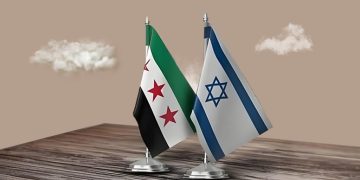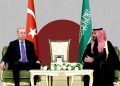



The relationship between Damascus and Ankara today resembles a delicate balancing act built on overlapping interests. Geography brings them together; history keeps them apart. While Syria’s interim government seeks to consolidate its presence in the north, it sees Turkey as an indispensable partner on issues of security, borders and refugees. Yet Ankara faces its own challenges, entangled in the evolving Turkish–Israeli confrontation that now extends into the Syrian arena.
This is a relationship that goes beyond rhetoric – a pragmatic equation driven by necessity and tempered by regional calculations. Security concerns intersect with ambitions of influence, and every gesture of rapprochement becomes a measured move in an ever-shifting regional game.
A Fragile Convergence
Despite the appearance of openness between the two sides, the relationship remains deeply complicated. It is shaped by the overlapping interests of regional powers involved in Syria, particularly amid growing tension between Ankara and Tel Aviv in recent months.
The two capitals have diverged over the war in Gaza and Iran’s role in Syria, as well as in the energy and gas disputes of the eastern Mediterranean. These differences have cast a shadow over the Syrian scene, where Ankara continues to regard the north as a sphere of political and military influence.
Read also: Caution Over Conviction: The Arab World’s Measured Bet on Syria’s New Leadership
Guardianship or Partnership?
Issam Zeitoun, founder of the Syrian Peace Initiative and based in Germany, argues that what appears to be a rapprochement between the interim government and Turkey is, in essence, “a relationship of guardianship” that predates the fall of the former regime.
He tells +963: “This relationship did not start today. It goes back to when the Astana alliance received the international mandate to manage the Syrian file through de-escalation zones and the agreements that eventually led to Idlib’s autonomy under the direct protection of Turkey.”
Zeitoun adds that this guardianship persisted even after the regime’s fall. “Ankara has never hidden its ambitions in northern Syria. Turkish leaders – at the highest levels – have for years spoken about the end of the Lausanne Treaty’s century and the idea of reclaiming the northern belt of Syria stretching from Latakia to Mosul and the Iranian border.”
He continues: “Behind these ambitions lies a dream of reviving Ottoman glory. At the same time, Ankara’s harsh rhetoric against Israel is an attempt to assume the mantle of liberating Jerusalem – a cause that unites Arabs and Muslims and restores to Turkey both religious and political legitimacy as a regional leader, especially after Iran lost that role following repeated Israeli strikes.”
Zeitoun points out that the divergence between Turkish and Israeli policies in Syria has become increasingly visible – “particularly after Turkey’s attempt to establish airbases inside Syrian territory, when a technical team inspecting the T-4 airbase was targeted despite Israel’s well-known red lines.”
He adds that Ankara insists on raising its anti-Israel rhetoric even while maintaining diplomatic, commercial and military ties with Tel Aviv. “The Syrian issue is far more complex. Turkey’s ambitions are both historic and strategic. It seeks to lead the Arab and Islamic world under the banner of resisting Israel and liberating Jerusalem.”
An Unclear Vision from Damascus
Regarding the interim government’s position on the Turkish–Israeli rift, Zeitoun believes the vision remains “unclear” – not only on this issue but in its overall foreign policy. Trying to keep an equal distance from all parties, he says, is “the policy of amateurs”, as it is nearly impossible to balance contradictory interests simultaneously.
By contrast, political analyst and academic Ismat Al-Absi offers a different perspective. He tells +963 that relations between Ankara and the transitional government have entered “a new phase since the fall of the Assad regime”.
“They have moved beyond temporary coordination to something closer to a strategic partnership based on security, political and economic cooperation,” he says.
Turkey, he notes, has become a key channel of communication between the Syrian government and international actors in matters of refugees and border stability. However, he acknowledges that this relationship remains highly dependent on regional fluctuations, particularly the intensifying friction between Ankara and Tel Aviv – making it, in his words, “a partnership with a temporary margin of flexibility”.
Al-Absi warns that growing Turkish–Israeli tensions could directly affect Turkey’s level of support for Damascus. “Israel is uneasy about Ankara’s expanding role in Syria, while the transitional government is trying to maintain a delicate balance between the two to preserve its regional legitimacy,” he explains.
This tension, he adds, presents both “an opportunity and a risk”: a chance for Damascus to strengthen its role and attract wider international engagement, yet also a danger of polarisation if the standoff turns into open confrontation – especially with Israeli airstrikes continuing across Syrian territory.
Read also: Moscow and Damascus: From Painful Past to Pragmatic Diplomacy
Unspoken Coordination to Avoid Confrontation
Amid these developments, Middle East Eye reported in mid-May that Israel and Turkey had agreed to establish a direct 24-hour military communication channel to avoid unintended clashes in Syria.
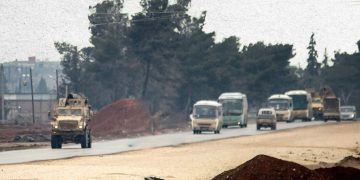
According to sources cited in the report, Ankara offered to deploy ground forces in Syria – including armoured vehicles and infantry – on the condition that its positions would not include air-defence systems or radar installations capable of tracking Israeli aircraft. Tel Aviv reportedly raised no objections if the deployment did not threaten its operations.
The agreement followed a series of Israeli airstrikes, including the April attack on Hama military airport and the T-4 base in Homs province, which caused multiple casualties. Reuters reported that Turkish teams later visited three Syrian airbases in preparation for a joint defence agreement before those sites were targeted.
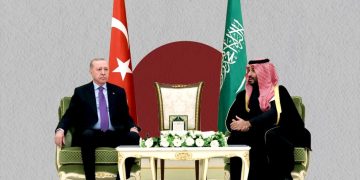
The agency also noted that, during his February visit to Ankara, interim Syrian President Ahmad Al-Sharaa discussed a draft defence accord allowing Turkey to establish new airbases in Syria, use Syrian airspace for military purposes, and assist in training the new Syrian army under joint supervision.
In this intricate landscape, relations between Damascus and Ankara remain governed by a fragile balance of overlapping regional interests. Between Turkey’s ambitions in northern Syria, the interim government’s struggle for legitimacy, and the ongoing Turkish–Israeli contest for influence, the map of alliances is constantly redrawn.
Yet one thing is certain – post-war Syria is no longer an empty space but a testing ground for new regional alignments and the evolving limits of power and partnership in a changing Middle East.