The recent visit of Syria’s interim president Ahmed Al-Sharaa to Moscow in mid-October, and his meeting with Russian President Vladimir Putin, have once again brought Syrian–Russian relations to the forefront. The visit marks the most significant diplomatic exchange between the two countries since Russia withdrew from its once central role in the Syrian crisis following the fall of its long-time ally Bashar al-Assad, who was overthrown by opposition forces led by Hay’at Tahrir al-Sham in early December of last year.
For many observers, the visit represents an effort by both sides to redefine their relationship based on pragmatic necessity rather than ideological loyalty. It also highlights the attempt to place shared strategic interests above the painful legacy of Russia’s direct military involvement in the Syrian war. That intervention, which began in 2015 in support of Assad, remains deeply etched in Syrian collective memory as a time of great loss and destruction.
Exchange of Visits
President Al-Sharaa’s journey to Moscow followed a previous visit by Asaad al-Shaibani, the interim foreign minister, who led a delegation that included Defence Minister Marhaf Abu Qasra and Intelligence Chief Hussein al-Salama. Their mission came shortly after a Russian delegation headed by Deputy Prime Minister Alexander Novak visited Damascus and met with al-Sharaa. These mutual visits have been interpreted as signs of a cautious rapprochement between the two sides, particularly given reports that secret wartime communications had previously ensured Russia’s neutrality during the operations that culminated in the fall of the Assad regime.
Following the meeting between Putin and Al-Sharaa, Novak told journalists that Syria urgently requires a comprehensive reassessment of its infrastructure, which has been severely damaged over the years. “Russia is capable of providing support and participating in this process,” he said, explaining that the discussions had covered a wide range of economic and humanitarian issues, including energy, health care, and tourism. He also confirmed that Russian companies had expressed interest in restoring Syria’s transport and energy sectors, much of which had been constructed during the Soviet era.
Novak went on to note that both parties had agreed to convene a joint governmental committee in the near future to finalise cooperation frameworks and begin implementation of agreed projects. The talks also included the cultural and humanitarian fields, as well as initiatives in tourism and public health, with the Syrian delegation expressing particular interest in securing Russian wheat and pharmaceuticals to help alleviate domestic shortages.
Read also: Inside Damascus’s Diplomatic Dilemma: Russia, Sanctions, and Sovereignty
Revisiting a Historical Partnership
During his meeting with the Russian president, Ahmed Al-Sharaa stressed that Syria continues to respect all existing agreements signed with Russia and that the country’s production still depends heavily on Russian resources and expertise. “Damascus wishes to maintain and strengthen its ties with the Russian Federation,” he said, “but it is also determined to redefine the nature of these relations in line with the realities of the new phase.”
According to a Syrian government source quoted by Reuters, Damascus is seeking firm assurances from Moscow that it will not arm remnants of the former regime, and that it will instead support efforts to rebuild a new, professional Syrian army.
The historical ties between Moscow and Damascus are long and complex. The Soviet Union was among the first to recognise Syria in the 1940s, and over time the relationship developed into a strategic alliance that extended across political, military, and economic domains. Syria found in Russia a steadfast ally, while Moscow viewed Syria as a gateway to the Mediterranean Sea and a forward position in its global struggle for influence. The partnership deepened further when Vladimir Putin came to power in 2000 and forgave most of Syria’s outstanding debts in 2005.
The bond reached its peak during the Syrian uprising, when Moscow backed Assad politically and militarily, eventually intervening directly in 2015. Although that intervention helped preserve the regime, it also left deep scars among Syrians who associate Russia with the bombardment of cities and the suffering of civilians.
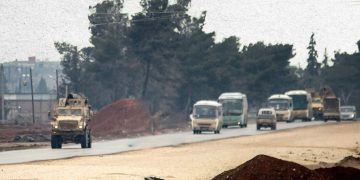
Nevertheless, the interim Syrian government now regards renewed engagement with Moscow as a matter of necessity. With the country facing overwhelming reconstruction and security challenges, Russia remains a major global power, a permanent member of the UN Security Council, and the holder of two key military bases on the Syrian coast – Hmeimim Airbase in Latakia and the naval base at Tartus. Moreover, Russia’s technological expertise and energy resources could prove vital in rebuilding Syria’s shattered infrastructure.
Critics, however, warn that reviving relations with Moscow risks overlooking its role in Syria’s devastation. They argue that the transitional authorities, still grappling with internal divisions and limited resources, cannot pursue balanced diplomacy while European powers remain strongly opposed to any renewed Russian presence in Syrian affairs, regardless of past agreements signed under Assad’s rule.
Strategic Interests
For Dr Mahmoud al-Afandi, a Syrian academic and political analyst based in Moscow, the current rapprochement reflects the enduring weight of strategic necessity over historical grievances. Speaking to +963, he noted that “throughout history, Syria’s strategic depth has been linked to the Soviet Union and later to Russia. Attempts to balance relations between East and West have failed, particularly as Western promises of economic assistance have come to nothing and sanctions continue to cripple the economy. Turning towards Russia, therefore, is not a matter of preference but of survival.”
Al-Afandi argued that Syria stands to gain the most from cooperation in the energy sector, as its infrastructure still largely dates to the Soviet period. “No European company can realistically operate in Syria while sanctions remain in force,” he said. “Only Moscow has both the experience and the political will to help.”
He also suggested that Russia could assist in rebuilding and training the new Syrian army, while Damascus strives to adopt a neutral foreign policy, maintaining a delicate balance in its relations with Russia, the West, and even Ukraine. Responding to criticism of Russia’s past conduct, al-Afandi insisted that “all external and internal actors involved in the Syrian conflict share responsibility for the violations that occurred, not Russia alone.”
Moscow’s Search for a New Foothold
In contrast, Samer al-Khelewi, a Syrian political analyst based in London, told +963 that Russia’s primary goal is to secure a lasting foothold in post-Assad Syria and to revive the agreements signed with the previous regime.
He explained that Damascus, for its part, has set out clear conditions for restoring full diplomatic relations. These include the extradition of Bashar al-Assad and his associates residing in Russia, the repatriation of stolen Syrian assets, and compensation for the destruction caused by Russian military operations. “Without progress on these fronts,” al-Khelewi said, “any new relationship with Moscow would be of little practical value. Some see this entire process as a tactical move by the interim government to strengthen its negotiating position with other international actors.”
Despite reports suggesting that Washington may tolerate a limited Russian presence in Syria, possibly coordinated with Turkey, Western analysts have expressed concern about Moscow’s renewed assertiveness. A recent report by the Washington Institute for Near East Policy argued that Russia’s new agreements with Damascus are designed to use Syria as a long-term strategic asset against American interests.
The report further stated that the fall of Assad had presented the United States with an unprecedented opportunity to reshape the regional balance of power in its favour. However, it warned that this opportunity is fading as Moscow seeks to re-establish its influence in Syria, positioning the country as a key node in its broader strategy to expand its presence in the Middle East, Africa, and southern Europe, particularly as the ongoing war in Ukraine continues to strain Russia’s global standing.
Complex Balancing and the Road Ahead
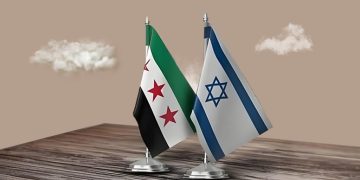
Dr al-Afandi also observed that the Syrian government made a serious miscalculation by negotiating with Israel through Azerbaijan, a country too weak to serve as a credible guarantor. He argued that this decision contributed to the deterioration of the situation in Suwayda Province, prompting Damascus to turn once again to Moscow in search of a more stable diplomatic framework – potentially including renewed discussions on the Israeli front.
He added that the United States does not necessarily oppose a limited Russian role in Syria, unlike European powers, noting that American and Russian forces have maintained a degree of coordination since 2015.
Yet, al-Khelewi stressed that the Syrian public remains strongly opposed to any continued Russian military presence on its soil, especially in the southern regions. “The United States is still a decisive player in Syria,” he said. “Any future settlement in the south is more likely to emerge through dialogue between Damascus, Washington, and Tel Aviv, rather than through renewed Russian intervention.”
While Western governments express unease at Moscow’s return to the Syrian scene – and despite Russia’s diminished international status following the war in Ukraine – many analysts believe that the Russian presence in Syria has become an entrenched reality within the region’s geopolitical landscape.