


Amid Syria’s complicated scene; marked by deep internal divisions and tangled regional and international interventions; new political formations have recently emerged. These include the “Council of Central and Western Syria” and the “Syrian National Bloc,” announced by political forces and figures inside and outside the country. According to their founding statements, both aim to rebuild authority on participatory and institutional foundations; distancing themselves from sectarian alignments and foreign dictates.
With these announcements, questions have arisen about their role in Syria’s future; whether they truly represent a launch toward a unifying national project; or if they are destined to become another link in the chain of political polarization.
Formation of New Political Entities
On September 10, Syrian figures declared the formation of the “Syrian National Bloc” through a statement read by Haytham al-Manaa, a member of its “Communication Committee.” He said the aim was “to build a democratic civil state founded on citizenship and social justice; and to put an end to the reproduction of dictatorship in an old-new guise.”
Committee member Tarek al-Ahmad then read the bloc’s binding principles, stressing that Syria’s territorial and political unity is a “red line,” and criminalizing any calls for division or secession. He underlined that “citizenship is the basis of belonging, with all citizens equal in rights,” and emphasized that the army, armed forces, and security agencies must remain neutral in political life.
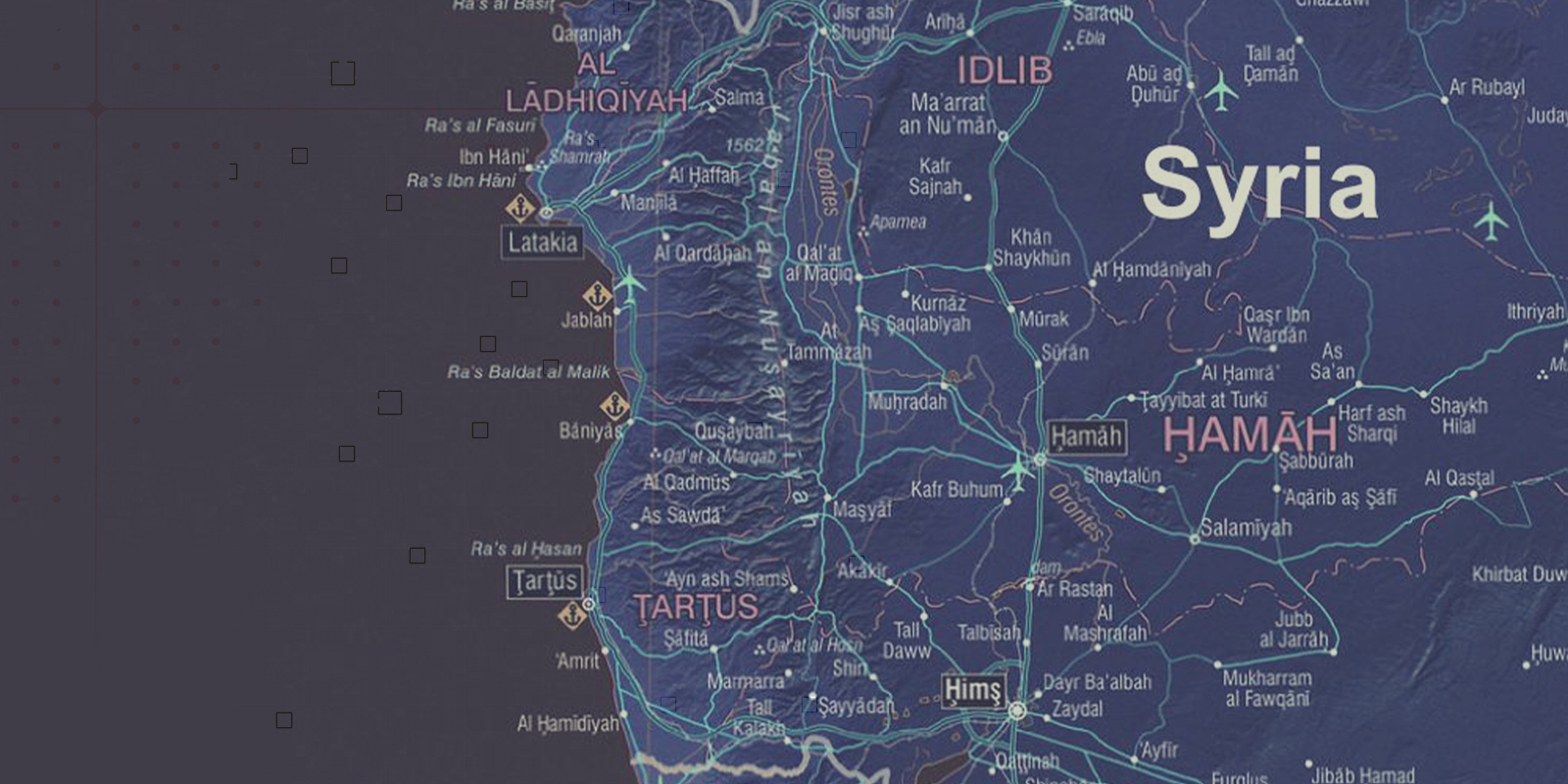
At the end of August, a group of Alawite politicians, activists, and journalists officially announced the establishment of the “Political Council for Central and Western Syria” as a body representing the Syrian coast. Its geographic scope includes Latakia and Tartous governorates, as well as areas in Homs and rural Hama, including the al-Ghab plain.
In its founding statement posted on Facebook, the council said its project rests on “a federal model based on a secular civil state.” It rejected what it called “a one-color government run by de facto authorities,” and declared its adherence to UN Security Council Resolution 2254 as the main reference for a political solution in Syria.
The council also stressed the need for a new national conference under UN supervision to draft a democratic civil constitution and a transparent electoral law, paving the way for general elections within 18 months. It outlined an economic vision based on free-market principles and social justice, while ensuring environmental sustainability. Federal authorities, it said, would set national policies on foreign trade and guarantee fair distribution of wealth and resources.
Also read: Mohammed Sarmini to +963: Syrian Nationalist and Religious Parties Are Not National Parties
Motives and Causes
Speaking to +963, Dr. Shaher al-Shaher, an international relations scholar, explained that the creation of new political bodies reflects Syrians’ desire to express their views and positions outside ethnic and religious affiliations. He noted that these councils were formed abroad due to the suspension of political life inside Syria; the dissolution of parties; and the refusal to license new ones during the transitional phase.
He added: “The transitional period is set at five years, which is relatively long. It makes little sense to suspend political life for that entire time. If it is suspended, the question becomes: what is the alternative? How can elections be held if politics is frozen? And when the five years end, where will presidential candidates come from if parties remain banned?”
Al-Shaher also argued that many Syrians feel power is monopolized by a group with specific ideological leanings, while key state institutions, like the army and police, remain dominated by one sect. He said recent unrest in the coast and in Suwayda further complicated the domestic scene; pushing some to retreat into sub-identities as the national identity wanes.
For his part, Syrian political and media consultant Nidal Zaghbour told +963 that the recent councils and blocs are a form of secret political and social mobilization that often arises when political systems change. He called it natural, though in Syria’s case unusual, given the dominance of “one-color religious authority” in the absence of real constitutional frameworks.
Challenges and Flaws
According to al-Shaher, the “Political Council for Central and Western Syria” made a misstep in choosing its name, as it conveys a regional character tied to part of the Syrian population. He said: “It would have been better to adopt a name inclusive of the Syrian whole. As it stands, someone from the east or south may hesitate to join a council that doesn’t reflect them.”
He added that some of the council’s founders are linked to the former regime and never criticized the Assad government’s crimes against Syrians. As for the “Syrian National Bloc,” while it raises inclusive slogans, its real test will be in turning them into a roadmap. He argued that the bloc also lacks meaningful political force on the ground.
Al-Shaher pointed out that all political forces in Syria are weak after decades of stifled political life. He cautioned that external support for these formations complicates matters further: “States are not charities; they pursue their interests. They may use such support as leverage against the Syrian government, nothing more.”
Also read: Transitional Justice: Gateway to National Reconciliation in Syria’s New Era
Future Perspective and Potential Role
On whether these entities could make a difference, al-Shaher doubted they would become the nucleus of a unifying national project. He commented: “The Council of Central and Western Syria seems focused on the Alawites; its founders even call for separation as a solution.” He noted that some southern voices have also floated separation, despite lacking the capacity to form a viable entity.
He concluded that such initiatives are primarily expressions of anxiety and rejection of Damascus’s policies; while the decisive factor remains the will of international powers, which still seem inclined to give the Syrian government more time.
Zaghbour, however, predicted these entities would deepen divisions, given the ruling authority’s rejection of pluralism. He argued that most Syrians still oppose partition and sectarian fragmentation, aspiring instead to a civil state governed by justice and law. Such a state, he said, is essential to rebuilding trust among citizens.
He added that if intentions are genuine, new political bodies could generate meaningful public support by distancing themselves from corrupt political symbols; and by providing tangible humanitarian aid rather than indulging in propaganda. Still, he warned, they must be wise enough to stand firm “in the dragon’s mouth.”
Zaghbour concluded it is too early to judge the intentions of the “Council of Central and Western Syria” or the “Syrian National Bloc,” especially given the opaque international dynamics around Syria’s political future. He stressed that distrust runs deep: “Syrians no longer trust any entity. That’s why some have turned to the idea of international protection, despite its dangers; because it seems the only shield for a people who have endured the worst forms of exploitation, revenge, and abuse.”











