


More than seven decades have passed in modern Syrian history since independence. The first years were marked by political dynamism and the rise of multiple parties with different affiliations and orientations. Later, the Arab Socialist Ba’ath Party came to dominate both power and political life, declaring itself “the leader of state and society” after years of bloody conflict with other parties, most notably the Muslim Brotherhood.
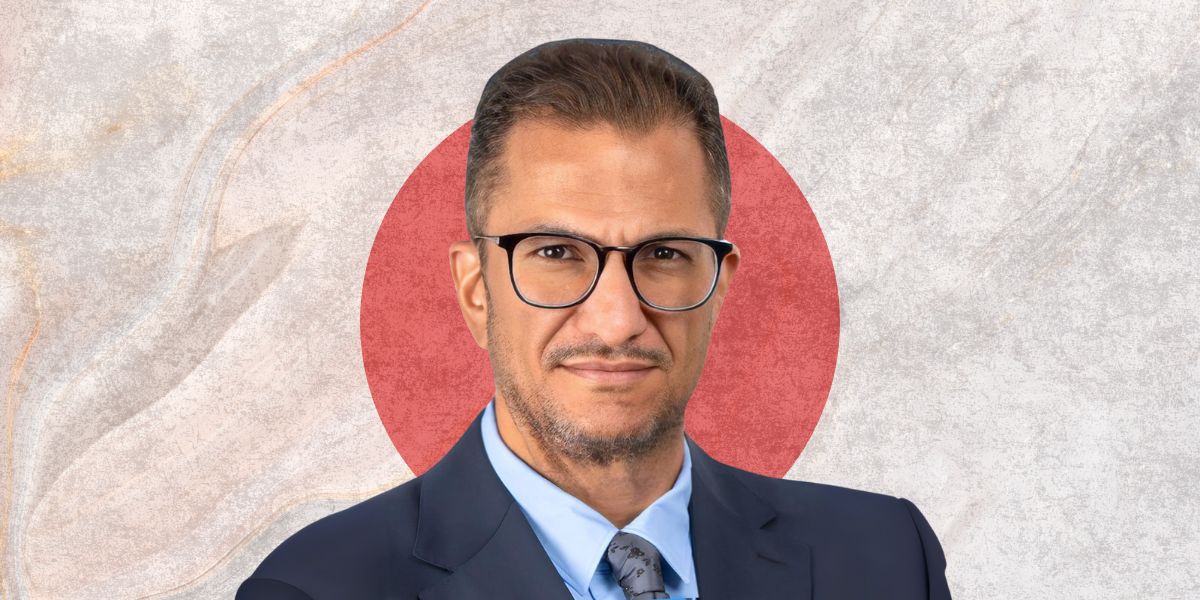
From 1963 until the fall of the ousted Assad regime in 2024, Syria was subject to the rule of the Ba’ath Party. During this time, various religious and nationalist parties had also participated in politics before Hafez al Assad assumed power. Against this historical backdrop, Mohammed Sarmini, founder and president of Jusoor Center for Studies, spoke to +963 about the role of these parties, addressing many questions, most prominently why Syrian nationalist and religious parties are not national parties and how they can learn from the past.
Below is the full dialogue:
How did nationalist and religious parties in Syria influence political and democratic life over the past decades?
In the first years after independence, nationalist and religious parties coexisted, allowing for a relatively pluralistic and democratic political life. However, the most prominent, or rather the only, influential role was that of the nationalist parties after the Ba’ath Party seized power through a military coup in 1963. It banned genuine political pluralism and settled for a superficial one by creating the National Progressive Front, which included Arab nationalist and Syrian nationalist parties of a leftist orientation and adopted a unifying socialist discourse.
The religious parties, represented by the Muslim Brotherhood, remained completely excluded from power and were considered illegal by the Ba’ath Party. This led to armed conflict in the late 1970s, culminating in the Hama massacre of 1982. Thereafter, Syria became a one-party state, with the Ba’ath Party fully responsible for the conditions that ultimately sparked the 2011 revolution.
The dominance of nationalist currents and the banning of religiously oriented parties resulted in the absence of real pluralism. This weakened all parties, whether inside the National Progressive Front or outside it, limiting their ability to build a popular base or influence political life. At the same time, official institutions such as the parliament and the government lost all independent roles due to the Ba’ath Party’s absolute control.
Read also: Nationalist and Religious Parties in Syria: From Unity to Division
Are Syrian nationalist and religious parties truly national parties?
Nationalist and religious parties in Syria adopted transnational projects, whether Arab nationalism or universal Islamic visions. Therefore, they cannot be considered national parties in the precise sense required by the modern political definition of a nation-state, which demands that “Syria first” be the guiding political principle.
The ruling party raised the slogan “One Arab Nation,” a supra-national vision aimed at Arab unity. The Syrian Social Nationalist Party called for “Greater Syria,” advocating unity among Syria, Lebanon, Palestine, and Jordan, also transcending Syrian national boundaries. Nasserist parties were tied more to Egypt’s pan-Arab project than to Syrian national specificity. On the religious side, the Muslim Brotherhood promoted the idea of the “Islamic Ummah,” though later they leaned toward political programs more focused on Syrian issues, differentiating themselves somewhat from Brotherhood branches elsewhere.
Why have conflicts and splits repeatedly occurred within and among nationalist and religious parties in Syria?
Conflicts within nationalist parties stemmed mainly from ideological differences between hardline and moderate factions, personal disputes over leadership and positions, and the weakness of internal democratic mechanisms. These factors led to the emergence of factions and even splinter groups. Some divisions were also rooted in regional and geographical dynamics. Similar issues arose among religious parties, such as between the Muslim Brotherhood and its militant offshoot, the Fighting Vanguard of the Mujahidin, or between the Damascus and Aleppo branches of the Muslim Brotherhood.
As for conflicts between the two currents, they were driven by deep ideological rifts and the violent repression suffered by the religious current. External factors also played a role. Leftist nationalist parties were influenced by communist hostility to Islam and political Islam in particular, seeking to block its rise to power. Conversely, religious groups were affected by the repression the Muslim Brotherhood faced in Egypt at the hands of nationalists, viewing Syrian nationalism as an extension of that same adversarial trend.
Read also: Can Syria Revive Its Political Parties?
What impact did nationalist and religious parties have on social cohesion and national identity in Syria?
The absence of genuine national parties in Syria undermined the establishment of a cohesive national identity for both the state and the people. This fragility became evident after 2011, when the state and social fabric fractured. Syrians lacked national institutions or forces that could unite them. Political and social structures collapsed in favor of sub-national and sectarian identities. Alignments splintered along Arab, Kurdish, and Turkmen lines, as well as religious identities such as Muslim and Christian, and sectarian affiliations such as Sunni, Alawite, Druze, Ismaili, and Shia. This fragmentation opened the door to regional and international interventions, most prominently Iran’s, which acted against what it saw as the rise of a Sunni Islamist project in Syria. Numerous sectarian massacres followed. It can even be said that the Assad regime abandoned the banner of Arab nationalism at that stage, resorting instead to sectarianism as a means of survival.
How can Syrian nationalist and religious parties benefit from past experiences?
As the Syrian revolution progressed and opportunities for change appeared, these currents should have advanced an inclusive national project. Nationalist parties must abandon the unification slogans that have proven ineffective, set aside hostility toward religious currents, and acknowledge the prevailing religious and social realities of the country. Religious currents must adopt a civic democratic Islamic discourse that recognizes Syria as the national homeland of all Syrians, accepts the principles of power rotation and minority rights, and emphasizes the moral and social values of Islam as a foundation for building society rather than as a tool for political control.
Do you believe Syria does not need ideological parties of any kind?
Every party in the world has an ideology. A political party without one is inconceivable. What is required is that parties align their ideologies with the realities and needs of the country, building them on national foundations rather than supra-national or sub-national ones, especially at this stage. Any party that fails to do so will drive Syria further toward division and fragmentation, paving the way for yet another cycle of conflict.











