

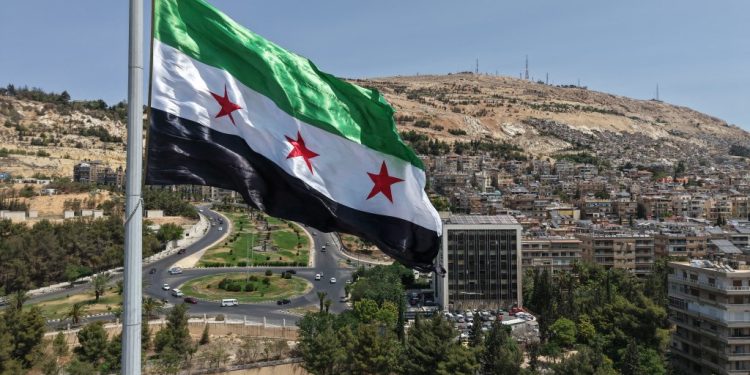
Damascus, Syria – A group of Syrian political figures announced on Wednesday the establishment of the “Syrian National Bloc”, through a statement delivered by Haytham Manna, a member of the bloc’s Communication Committee.
Manna said the initiative seeks to “build a civil democratic state based on citizenship and social justice,” noting that in recent years, the Syrian movement has been militarized and subjected to external powers, alongside the occupation of parts of Syrian territory by Israel and Turkey.
He added that the founding meeting aimed to “put an end to the re-production of dictatorship in a new guise,” stressing that foreign powers seeking to influence Syria’s trajectory had attempted to dominate the uprising through militarization or sectionalization.
Manna emphasized that the National Bloc is “civil and peaceful, striving to preserve national unity, guarantee freedom of opinion, conscience, and political pluralism, and build a participatory democratic system grounded in the separation of powers, popular sovereignty, and social justice.”
Also read: First Kurdish–Jewish Conference in Germany Urges Protection for Syrian Minorities
Francis Tannous, also a member of the Communication Committee, underlined the bloc’s goal of creating a modern democratic national state based on a social contract under the motto: “Religion is for God, the homeland is for all.”
The declaration of the bloc revived memories of an earlier “National Bloc” formed in 1928 by well-known Syrian political forces and personalities.
Tariq al-Ahmad, another committee member, said the bloc’s binding principles rest on the territorial and political unity of Syria, rejecting any calls for partition or separatism.
He called for the new constitution to enshrine key provisions such as freedom of the press, equality between men and women across all branches of government, the prohibition of sectarian or ethnic incitement, the right to form political parties and civil society organizations, and the protection of independent constitutional bodies.
Al-Ahmad further stressed that “the army, armed forces, and security agencies must remain neutral institutions in political life.”