


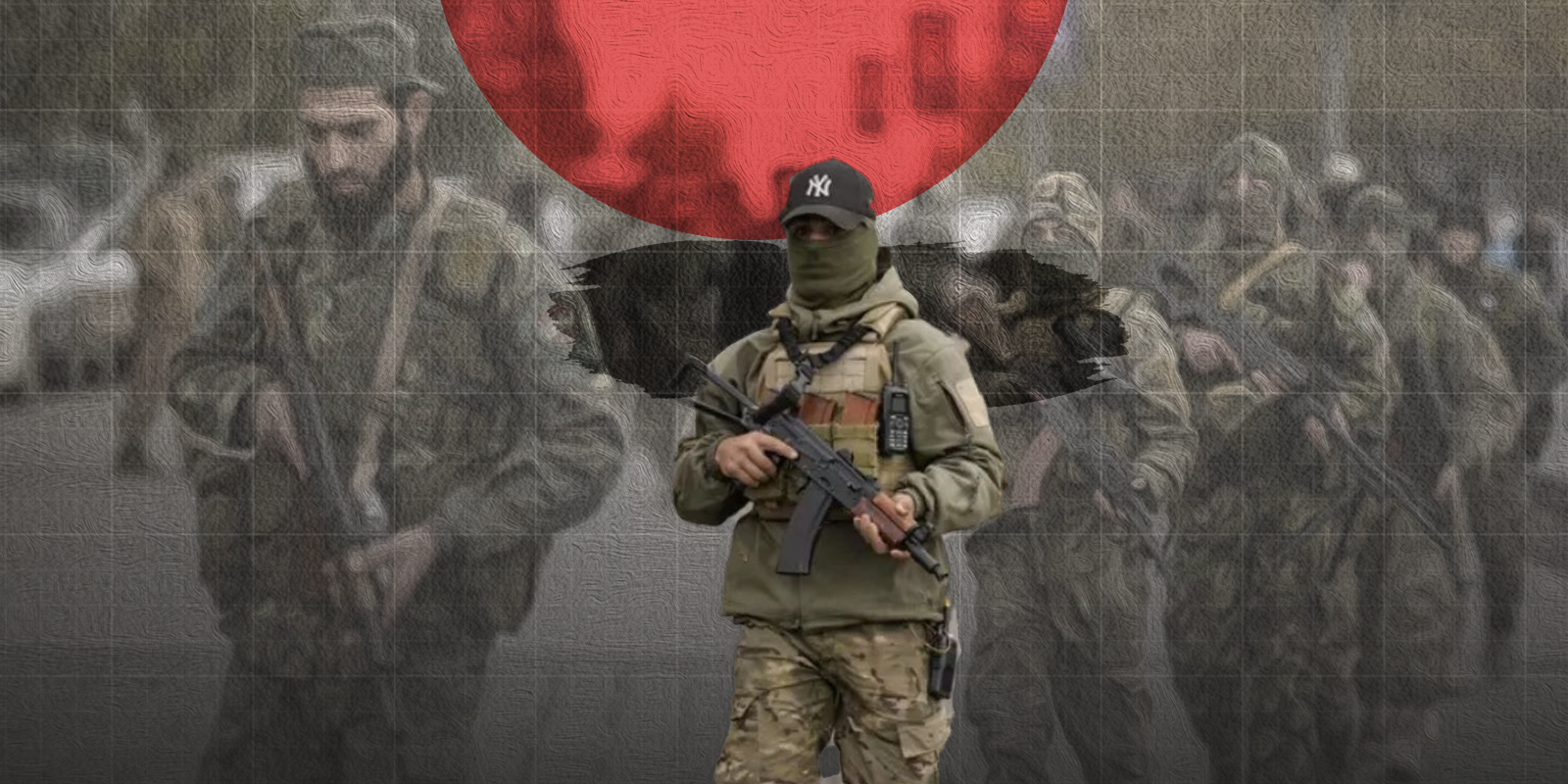
Many observers of Syrian affairs, since the fall of Assad’s regime, have considered the merging of the country’s fragmented armed factions into a single, professional army as one of the most important steps toward political transition and state-building. Such a move would consolidate the state’s monopoly over armed force, end the cycle of security chaos, curb extremist elements, and redirect efforts toward combating terrorism; conditions seen as prerequisites for reintegrating Damascus into the international community.
Indeed, the Syrian Ministry of Defense has announced, more than once, the merging of factions into a unified army under the name “Syrian Army,” since this is the official name of the armed forces of the Syrian Arab Republic, as defined in government documents.
Thus, many await the return of the “Syrian Army,” albeit in a new form: a professional army with a national combat doctrine. Yet this anticipation may be misplaced. The promised “army” already exists, here and now. No other force is likely to replace it. Its structures, functions, and ideology can already be discerned from what is unfolding on the ground. Those who wait for something else do so based on imagined ideals or personal aspirations, blinding themselves to the realities of the ruling authority and the systems it has produced.
From the very beginning, at what was called the “Victory Conference,” which laid the foundation of Damascus’ new authority, the legitimacy of governance was, in effect, “factional legitimacy.” A coalition of factions that claimed to have toppled Assad appointed Abu Mohammad al-Jolani (later renamed Ahmad al-Sharaa) as president of Syria, granting him sweeping powers without consulting the broader Syrian people. This arrangement was justified with phrases such as “revolutionary legitimacy” or “popular support,” though such claims were unverifiable and never gave rise to a genuine political framework with institutions or rules.
Also read: Rebuilding or Rebranding? The Illusion of Syria’s “New Army”
In practice, this was a factional coup, facilitated by favourable regional and international conditions, and imposed by force on all others; even if it was met with little resistance. The immediate next step was the “dissolution of factions,” including Hay’at Tahrir al-Sham itself. This dissolution was announced at least three more times afterward. Yet, the factions never disappeared. They remain the foundation of the “Ministry of Defense” and continue to play decisive roles in both the politics and military operations of Damascus’ authority. They surface repeatedly in critical contexts: committing “violations” or “individual abuses,” and being blamed for war crimes and crimes against humanity, acts that sometimes amount to genocide. Such blame conveniently exonerates the central “leadership in Damascus,” distancing it from responsibility or intent in those atrocities.
What does this mean? Does Damascus truly want to integrate the factions but simply fail to do so?
Integrating multiple armed groups, with different loyalties and hardened by a brutal civil war, is undeniably difficult for any government. Such efforts often risk renewed bloodshed, as one group attempts to impose dominance over the others. But Damascus shows no serious intent to pursue classical military integration. The problem isn’t fear of intra-factional conflict; rather, the opposite is true. Damascus repeatedly deploys these same “uncontrollable” and crime-tainted factions to extend state authority into sensitive areas. Later, it blames them for “violations.” This is a striking contradiction: if the state cannot control these factions, why send them into volatile, sectarian sensitive regions? Why insist on expanding state control into new areas before even securing control over its own core armed units?
This suggests that discussions about “integration” are not worth taking at face value. Instead, it is more useful to analyse the actual structure, methods, and doctrine of what is already called the “Syrian Army.”
Damascus abolished mandatory conscription, meaning the army is no longer a “people’s army” drawing recruits from all communities. Instead, the military now selectively recruits groups deemed acceptable to the ruling authority. The criteria for this selection are clear enough: the “state” is framed as the state of the majority, having long suffered under the “rule of minorities.” As Assad al-Shibani, appointed “foreign minister” by factional legitimacy, openly stated, the new order is one of majoritarian dominance. Reports also indicate that military training is now heavily ideological. Former Syrian officer Ahmad Rahhal, aligned with the opposition, noted that 70% of military instruction consists of “religious courses.” These sessions rarely mention Syria as a nation; rather, they focus on the broader “ummah,” and the instructors are not career officers but “mujahideen.”
Yet this does not necessarily mean the emergence of a unified, professional “jihadist army” operating in a conventional military style. Such an outcome does not fit the factional and jihadist mentality, nor its operational methods. Instead, what is emerging is a hybrid structure, partly modelled on al-Qaeda and similar jihadist organizations, partly rooted in the Syrian civil war’s factional practices, and adapted to the social and cultural environments from which Syria’s armed groups arise.
Also read: Are We Fooling Ourselves? The Syrian Illusion After Assad
This new structure relies on small, flexible armed groups capable of independent action without detailed central orders, but united in purpose. They can mobilize through mechanisms like “general calls to arms” (nafir) or tribal “emergency mobilization” (faz’a), supported by decentralized infrastructures: mosques, self-armed tribal communities, and flexible communication platforms like Telegram.
This system serves multiple purposes. First, it enables the dual tactic of “unruly and non-unruly factions.” Highly extremist “death squads” are sent into targeted areas to terrorize populations and defenders, breaking morale until communities surrender to the “less extreme” factions; cast as the “good cops.” This tactic also helps Damascus avoid accountability, as the chain of command is obscured and responsibility is shifted to supposedly “unruly” factions. Even then, these groups are not punished; rather, their leaders are promoted. After massacres in the coastal region, commanders of notorious groups like Al-Amshat and al-Hamzat were elevated to senior positions within the “Syrian Arab Army.”
In short, “unruly factions” are not a burden for Damascus; they are essential to its governance model. They are useful in civil wars and campaigns of mass killing, though ineffective in real wars against external enemies. This points to the reality of Damascus’ military doctrine: its focus is “internal jihadism,” treating rebellious communities and ethnic or religious minorities as the true enemy.
Seen in this light, “merging factions” is not an empty slogan, but a declaration of loyalty. It does not imply dismantling these groups as independent bodies but aligning them under Damascus’ authority. In such a system, loyalty and subordination – not professionalism, not national unity, not the classical concept of a national army – are the decisive factors.
Thus, the “Syrian Arab Army” has already returned. It exists now. And given the current factional-jihadist-tribal coalition that rules, this army could never have turned out any other way.











