


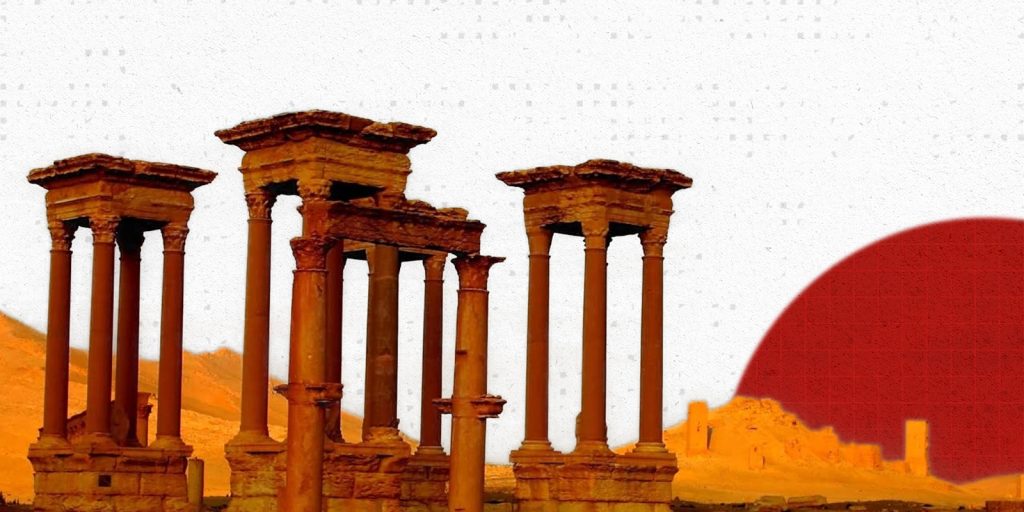
Before the outbreak of war, the tourism sector in Syria accounted for approximately 14% of the gross domestic product. It employed around 11% of the workforce and represented about 23% of the country’s foreign currency income, underscoring its vital role in driving economic development and bolstering national revenues.
However, with the onset of war in 2011, Syria’s tourism industry suffered a devastating economic blow. In the early months of that year, tourism declined by 60%, and the number of leisure tourists fell to approximately 3 million. Financial revenues from the sector dropped by 75%, and this decline persisted steadily throughout the conflict, during which Syria was classified as a high-risk tourist destination.
The fall of the ousted Syrian regime last December and the lifting of economic sanctions imposed by the European Union, the United States of America, and Britain marked a new turning point. These developments have sparked renewed investment interest in Syria, particularly in the energy, tourism, and infrastructure sectors.
Mazen al-Salhani, Minister of Tourism in the Syrian Transitional Government, announced a package of incentives aimed at revitalising the tourism sector. These include 10-year tax exemptions for new tourism projects, the allocation of $1.2 billion to restore 75 historic hotels in Damascus and Aleppo, and an agreement with a Saudi-Emirati alliance to construct 12 tourist resorts along the Syrian coast, with initial investments estimated at $850 million.
In April, Tiger Group UAE announced its intention to apply for a license to begin construction of “Trump Tower” in Damascus, the Syrian capital.
The British newspaper The Guardian quoted Walid al-Zoubi, head of Tiger Group, saying: “We are studying several sites and propose building 45 floors, which can be increased or decreased according to the plan.” He added, “The cost of the commercial tower will range between $100 million and $200 million. It is expected to take three years once we obtain legal approvals from the Syrian Transitional Government and secure the Trump Organisation’s licensing rights.”
He continued, “This project is our message, that this country, whose people have suffered and been depleted for so many years, especially during the last 15 years of war, deserves to take a step towards peace.” Once the building permit is granted, al-Zoubi will need to approach the Trump brand to obtain the licensing rights. However, the project could face complications due to Syria’s fragile political climate and struggling economy, according to the newspaper.
Read more: Antiquities Looting Surges in Syria After Regime Collapse
Professor of international law Muhammad Hossam Hafez believes that tourism is one of the most capable sectors of revitalising Syria’s economy following the collapse of the former regime. He highlighted that Syria possesses all the attributes of a top-tier tourist destination in the region. Its strategic geographic location, at the intersection of three continents and near major tourist hubs such as Türkiye, Greece, Lebanon, and Cyprus, offers it a distinct competitive advantage.
In a statement to +963, Hafez noted that Syria’s rich geographical diversity, from the sandy coastline and lush mountains to vast deserts, provides broad appeal across various types of tourism. This diversity is not only natural but also cultural and religious, encompassing ancient churches, Islamic holy sites, and historic cities such as Damascus, Aleppo, and Palmyra, alongside remarkable coastal and mountainous landscapes.
He added that there is a strong desire among Syrians, both domestically and abroad, to revive the tourism sector. It offers a direct channel for foreign currency inflow, job creation, and market stimulation. Moreover, it serves as a major avenue for attracting investments, both from the Syrian diaspora and foreign investors seeking to enter a promising market.
The revival of tourism is expected to help strengthen the Syrian pound, reduce the trade deficit, and stimulate other sectors, including transportation, construction, traditional industries, and energy. It will also contribute to enhancing infrastructure in both urban and rural areas.
Read more: Syria Moves Toward Rejoining SWIFT After Over a Decade of Financial Isolation
Camille al-Sari, professor of economics and international relations at the Sorbonne University, affirmed to +963 that Syria could indeed transform into a global tourist destination, given its rich civilizational, cultural, and environmental assets. He pointed to the country’s wide cultural spectrum and abundance of archaeological and tourism sites as fundamental pillars of its future appeal.
He emphasised, however, that the main prerequisite for attracting tourists is the establishment of security and stability, conditions that have been severely compromised for more than a decade. Tourists must feel confident that visiting Syria poses no threat to their safety.
In recent weeks, Syria has witnessed a remarkable shift in investment trends following the lifting of sanctions by the United States, the European Union, and Britain. It was announced that major deals have been signed with a total value exceeding $8.3 billion, and expectations are mounting that future investments could reach $400 billion in the coming years. These rapid developments reflect a strong response from regional and international investors eager to capitalise on emerging opportunities in an economy rebuilding itself after 14 years of war and sanctions.











