


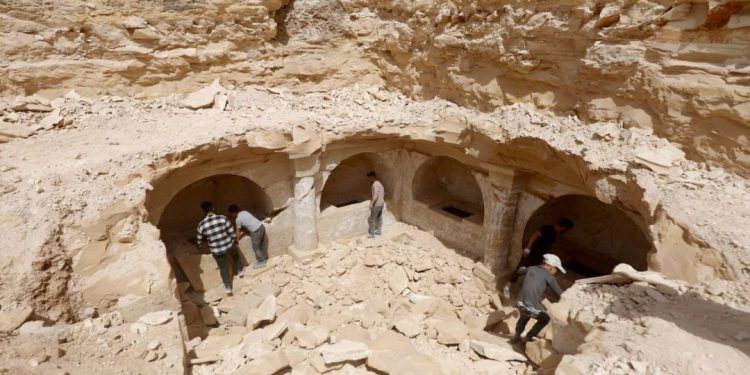
LONDON – The looting and black-market sale of Syrian antiquities have spiked dramatically via Facebook since the collapse of the former regime in December, The Guardian reported on Sunday.
The British newspaper said the breakdown of Syria’s once-feared security apparatus, combined with deepening poverty, has triggered a modern-day gold rush, with many Syrians turning to treasure hunting and illegal excavation.
Quoting archaeologists, local heritage officials, and NGOs, the report highlights a surge in looting across the country, exacerbated by the absence of effective law enforcement.
The Antiquities Trafficking and Heritage Anthropology Research (ATHAR) Project, which monitors the illicit trade in cultural property, documented that one-third of the 1,500 known cases of Syrian antiquities sold via Facebook since 2012 occurred after December’s regime collapse.
Read also: Ancient Syrian Rattles Show Toys Existed 4,500 Years Ago
“There has been an explosion of looting since the fall of the former regime,” said Amr Al-Azm, Professor of Middle East History and Anthropology at Shawnee State University in Ohio. He told The Guardian that any remaining restrictions that might have existed under the previous government have now completely disintegrated.
Katie Paul, co-director of the ATHAR Project, said the past three to four months have seen “the largest global spike in Syrian antiquities trafficking ever recorded.”
While Syria’s transitional administration has urged looters to cease their activities and offered rewards for surrendering artifacts, enforcement remains weak. Authorities have warned that violators could face prison sentences of up to 15 years. However, the government is primarily focused on rebuilding a devastated nation and has limited resources to protect its archaeological heritage.
Read also: Can Syrian Agriculture Reclaim Its Former Strength?
Metal detectors are now openly sold in Damascus, with social media advertisements promoting devices such as the “Extreme Hunter,” priced at just over $2,000.
According to The Guardian, Facebook has become a primary hub for the illicit trade, where both public and private groups offer a wide range of stolen items, from ancient coins to entire mosaic floors and large stone statues. These groups often serve as gateways, connecting small-scale looters inside Syria with smuggling networks that transport artifacts to neighbouring countries like Jordan and Turkey.
In late May, Syria’s Ministry of Culture publicly reaffirmed its commitment to safeguarding the country’s cultural heritage, calling antiquities a “national memory for all Syrians.” The ministry stated that it is working to restore and protect archaeological sites that have suffered extensive damage during years of conflict.











