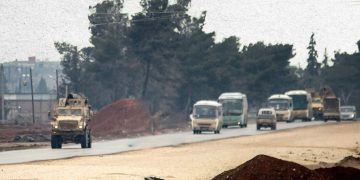
Evidence from northern Syria shows that what is happening in Afrin extends beyond the consequences of the armed conflict to a gradual process of demographic restructuring, based on displacing the original inhabitants and settling new groups in their place within arrangements supported by regional powers. Testimonies confirm that these shifts are not merely the product of wartime chaos, but are accompanied by organized policies that include extensive property confiscation, the imposition of newly introduced housing projects, and a tangible alteration in the pattern of urban development and property ownership. This has fragmented the traditional social structure of the region. Experts and human rights advocates also indicate that uncontrolled construction, unregulated urban expansion, the uprooting of trees, and the erasure of some local landmarks have all contributed to shaping a new demographic reality that threatens the historical identity of the region and places it in a prolonged state of imbalance and instability, in the absence of legal mechanisms that protect rights or ensure fairness in the demographic transition taking place.
The operations affecting the population and social structure in northern Syria have not receded, despite the year that has passed since the fall of the former Syrian regime in December 2024. On the contrary, evolving developments show that these transformations are still ongoing, and even accelerating in some areas, foremost among them Afrin and northern rural Aleppo. Military and political developments, as well as the dynamics of factional control, have contributed to producing a highly complex demographic scene that reveals regional ambitions, local rivalries, and continuous policies of population redistribution since 2018.
Field reports align clearly with statements made by several human rights advocates and political figures, which serve as a key to understanding the broader context of the ongoing changes. Fadel Nofal, a member of the General Secretariat of the Democratic Committees in Germany, told +963 that what has happened in Afrin since 2018 revealed “the existence of a systematic plan for demographic change in the region”, explaining that the plan relies on “displacing the original inhabitants and occupying their homes and properties, while resettling new groups that arrived with the factions, with direct support from the Turkish government”.
Nofal believes that this Turkish support comes within the framework of “achieving Turkey’s interests by pushing Kurdish inhabitants away from border areas under the pretext of the potential control of the Kurdistan Workers’ Party and its allied factions”.
This political interpretation places the shifts in Afrin within a regional strategy that goes beyond the immediate security dimension to reach the level of reshaping the population distribution in a manner that serves the balance of influence along Syria’s northern border.
Read also: Demographic Engineering in Syria: Old Patterns, New Realities
Afrin – The Center of Demographic Weight and Accumulating Transformations
Before 2018, Afrin was an area with an overwhelming Kurdish majority approaching 98 percent. But after Operation Olive Branch, the demographic equation was radically overturned. With the fall of the former regime in 2024, some believed these operations would halt or slow down, yet they continued at an even clearer pace, accompanied by extensive construction projects explicitly connected to resettlement initiatives.
Testimonies from Jiwan Youssef, a writer and human rights activist based in Switzerland, confirm this reality. He told +963 that Afrin is witnessing a systematic process of demographic change that includes “the displacement of the original inhabitants and the confiscation of their properties, and the resettlement of new settlers”.
He explains that these operations began with Operation Olive Branch, which led to “the displacement of residents of Eastern Ghouta and their settlement in the homes of Afrin’s people after an agreement with the regime and Jaysh al Islam”.
Youssef adds alarming details regarding the scale of violations: “The armed factions built on the lands of the original inhabitants, seized the houses whose owners had left, and some settlers took everything inside the homes, including doors, electrical and sanitary installations”. He notes that this renders the process of restoring property “subject to financial extortion and legal obstacles”.
These details, as other human rights advocates note, coincide with systematic operations of uprooting century old trees and transporting them to Turkey, indicating a dual track targeting the cultural and economic identity of the region.
Construction Projects and Systematic Alteration of the Urban Identity
Afrin has witnessed the establishment of around 150 new or expanded settlements, bearing Turkish names or names with Ottoman or religious significance, such as “Kuwait Al Rahma, Al Othmaniya Al Jadida, and Basma”, alongside the renaming of 70 Kurdish villages. Local residents view this as part of a deliberate effort to “change the cultural identity”.
Fadel Nofal points out that “allowing the establishment of new housing projects to alter the geographical reality of the region” has been one of the direct tools for cementing the new demographic landscape.
Ibrahim Shekho, Executive Director of the Human Rights Organization in Afrin, provides an additional angle: after the fall of the regime, Afrin witnessed “the return of a large number of original inhabitants and an expansion of chaotic construction harming vital agricultural lands”.
Sheikho told +963 that this urban expansion is not merely the result of housing demand, but part of a corruption network within local councils, as “random housing units are being built despite the presence of sufficient units for displaced people”, revealing economic interests intertwined with political changes.
He adds that projects funded by Qatari and Kuwaiti charitable organizations contributed to settling displaced people in the area, noting that “Kuwaiti support ended in late 2022, while Qatari support continued under the supervision of the Turkish Religious Endowment and AFAD”.
The Displacement Wave of Late 2024… A Broad Remapping of the Population Landscape
With the launch of Operation Dawn of Freedom on 30 November 2024 targeting Tal Rifaat and Al Shahba, one of the largest displacement waves since 2018 took place. Around 200 thousand Kurdish civilians were displaced within days, and several cases of kidnapping, looting, and forced displacement were documented in the areas of clashes.
This wave formed a new chapter of forced displacement. Many of those displaced were the original inhabitants of Afrin who had previously been forced out in 2018, finding themselves displaced once again toward Tabqa or northeastern Syria.
This carries serious political implications. Nofal notes that these measures “have created a constant state of tension… and that the original inhabitants may seek at any time to reclaim their rights, making the region vulnerable to renewed armed conflict”.
Read also: Rising Abuses Against Kurdish Civilians in Turkish-Held Afrin, Syria
Northern Rural Aleppo… Zones of Population Sorting Tied to the Map of Influence
After the expansion of opposition factions’ control in late 2024, resettlement operations began for families coming from Idlib, rural Damascus, and rural Homs as replacements for the original inhabitants.
Press reports indicated that resettlement is carried out according to military criteria, with priority granted to the families of fighters or individuals affiliated with the factions. Shekho states that the continued presence of some factions in the region “creates tension and potential disputes among residents”, threatening civil peace and complicating political deescalation in the north.
Field data indicates that Turkey seeks to shape a homogeneous population belt along the border areas. Nofal clarifies this, stating that Turkey’s unlimited support comes “in the context of achieving Turkey’s interests by pushing Kurdish inhabitants away from the border areas”.
In addition, competition among ideological and armed groups, including Salafi factions and groups close to the Muslim Brotherhood, has reinforced resettlement projects aimed at securing long term influence in the region.
On another level, Jiwan Youssef highlights a major legal obstacle represented in “Decree 49, which complicates the process of verifying property ownership, allowing factions to exploit these gaps to seize lands and forests”. This makes it nearly impossible for original inhabitants to even prove ownership, paving the way for recurring disputes for many years.
With escalating violations, civil and human rights organizations have issued statements calling for an end to land and crop confiscation and ensuring the return of original inhabitants. Shekho asserts that the solution lies in “a safe and dignified return for the displaced… and the relocation of newcomers to their original areas to end disputes and unrest”.
Youssef emphasizes “the necessity of documenting violations and ensuring the rights of original inhabitants to return to their properties”, while Nofal stresses that the first step toward a sustainable solution is “removing the resettled groups and compensating the original landowners”.
Field, political, and human rights testimonies show that what is happening in northern Syria is not a series of isolated events, but a systematic demographic process in which regional political interests, the military needs of factions, the economic gains of local councils, and the legal constraints imposed on original inhabitants all intersect.
Despite the fall of the former regime, northern Syria remains governed by the logic of force rather than law, making the recovery of rights more complex by the day.
In the absence of a comprehensive political settlement that ensures the return of displaced people, protects property rights, and dismantles factional authority, the risk of renewed conflict will remain, and demographic change will continue to be a reality that is difficult to reverse without broad international intervention and legal measures that restore the original rights of the population.