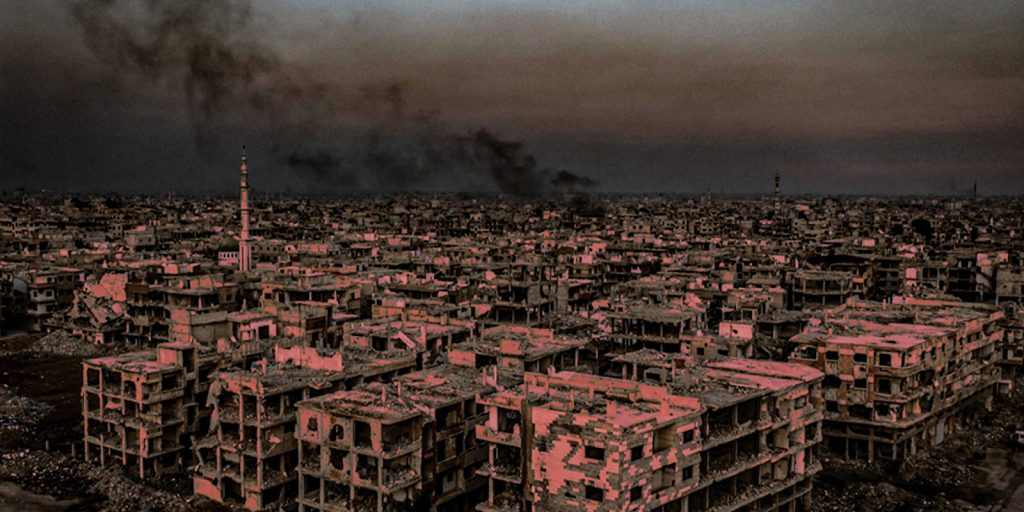
The collapse of Bashar al-Assad’s regime in December marked the end of a prolonged and destructive conflict that began in 2012. Over more than a decade of warfare, Syria witnessed the widespread use of weaponry, from airstrikes and barrel bombs to chemical weapons and landmines, leaving behind a devastating toll on human life and infrastructure. Today, the country faces enormous environmental and public health challenges, with pollution, unexploded ordnance, and environmental degradation posing long-term risks to recovery and reconstruction.
Between 2012 and 2024, over 220 chemical weapons attacks were documented across Syria, according to the United Nations-affiliated Organisation for the Prohibition of Chemical Weapons. The most infamous of these was the Eastern Ghouta attack in 2013, which involved the use of sarin gas, chlorine, and other toxic agents. These chemical assaults resulted in hundreds of deaths and injuries, with the now-ousted regime widely accused of responsibility.
Alongside chemical attacks, the widespread use and planting of landmines have left a dangerous legacy. The Syrian Civil Defence (White Helmets) reported in April that 832 areas across Syria remain contaminated with landmines and unexploded ordnance. The international NGO Handicap International warned in February that between 100,000 and 300,000 unexploded munitions still threaten the lives of roughly two-thirds of the Syrian population. Many of these are unconventional weapons with high failure rates, such as barrel bombs. Additionally, ISIS forces planted mines in several territories during their occupation, according to Agence France-Presse.
Beyond the direct threat of explosives, Syria faces an array of post-war environmental hazards. These include air and water pollution, land and vegetation degradation, biodiversity loss, and the depletion of natural resources. Contributing factors range from wildfires and haphazard industrial and agricultural activity to the use of polluting fuels, untreated sewage, industrial waste, oil spills, overgrazing, soil erosion, and the growing impacts of climate change.
Read more: Who Is Affected by Germany’s Decision to Suspend Family Reunification?
UN reports indicate that air pollution in Syria has significantly increased since 2015. The primary contributors include aerial bombardments by Russian and regime forces, international coalition airstrikes on ISIS-held oil infrastructure, and repeated chemical attacks. In 2019, the World Health Organisation ranked Syria 18th out of 92 countries in terms of air pollution severity. That year, the concentration of fine particulate matter in the air was three times higher than the WHO’s recommended exposure levels.
Syria’s carbon dioxide emissions reached 26.96 million metric tons in 2019, according to the data platform Our World in Data, resulting in an estimated $1.4 trillion in social costs. Climate-related events such as severe droughts, food supply disruptions, rising temperatures, and declining rainfall have also intensified, compounding Syria’s fragile recovery efforts.
Addressing these layered environmental crises requires urgent and comprehensive action. A nationwide environmental assessment is needed to map the full extent of war-related damage. Identifying and monitoring environmental hotspots, particularly those affected by chemical agents and heavy munitions, will be essential to mitigate long-term health risks and guide remediation strategies. Crucially, efforts must be community-focused, ensuring that local populations across Syria’s diverse geography are informed of potential threats and actively included in the recovery process.