


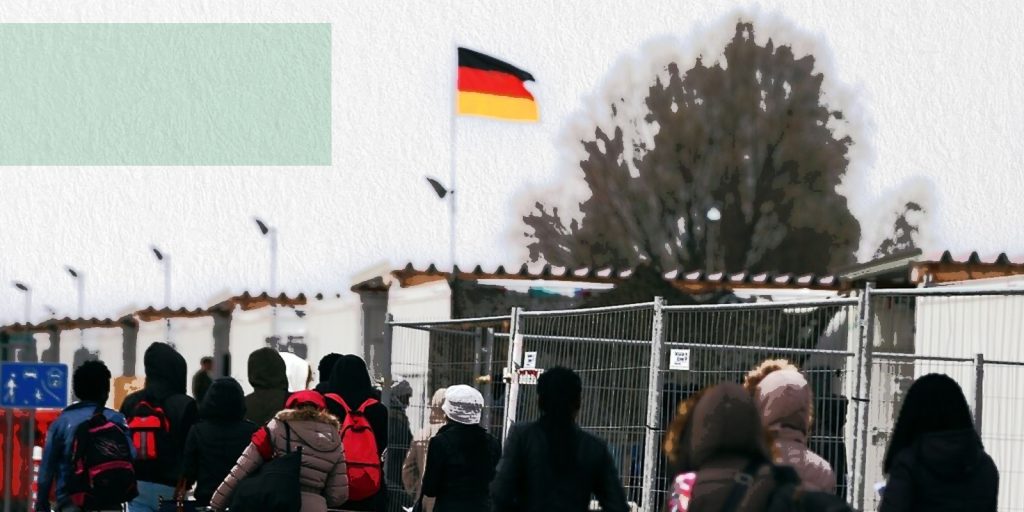
The German Bundestag approved a bill on June 27 to suspend the family reunification law for refugee families, with exceptions limited to emergency humanitarian cases.
According to the German outlet Bild, the law, passed with 444 votes in favour and 135 against, will take effect immediately and remain in force for two years.
The suspension primarily targets refugees granted subsidiary protection. Under the new law, these individuals will no longer be permitted to bring first-degree relatives, spouses, minor children, or the parents of minor children to Germany. This also applies to refugees who do not meet the criteria of the Geneva Refugee Convention and are not officially recognised as asylum seekers, but who cannot be deported due to the risk of torture, execution, or inhumane treatment in their home countries.
The measure is expected to impact many refugees from conflict zones, including an estimated 380,000 Syrians currently residing in Germany.
The bill was introduced by Interior Minister Alexander Dobrindt, who argued that the suspension aims to dismantle the business model of criminal networks exploiting the asylum system. “This step will reduce the number of immigrants by around 12,000 annually and alleviate pressure on both the government and society,” he said.
According to Der Spiegel, the ruling coalition, comprising the Christian Democratic Union (CDU), the Social Democratic Party (SPD), and the Alternative for Germany (AfD), voted in favour of the measure. The Green Party and the Left Party opposed it.
Criticism came from various quarters. Green Party politician Shahina Gambhir condemned the decision, saying it “undermines integration efforts and contradicts basic humanitarian principles.” Left Party MP Clara Bonger echoed this sentiment, accusing the government of implementing a “cruel deterrence policy.”
In contrast, the far-right AfD described the law as a “small step in the right direction.” While SPD members expressed reservations about the measure, they ultimately supported it in adherence to coalition discipline. Natalie Pawlik, the federal commissioner for integration (SPD), urged a shift away from negative rhetoric on immigration, stating that migration should also be seen as an opportunity for German society.
This is not the first time the German government has suspended family reunification for refugees. A similar measure was enacted from 2016 to 2018, during which the number of beneficiaries was capped at 1,000 per month.











