


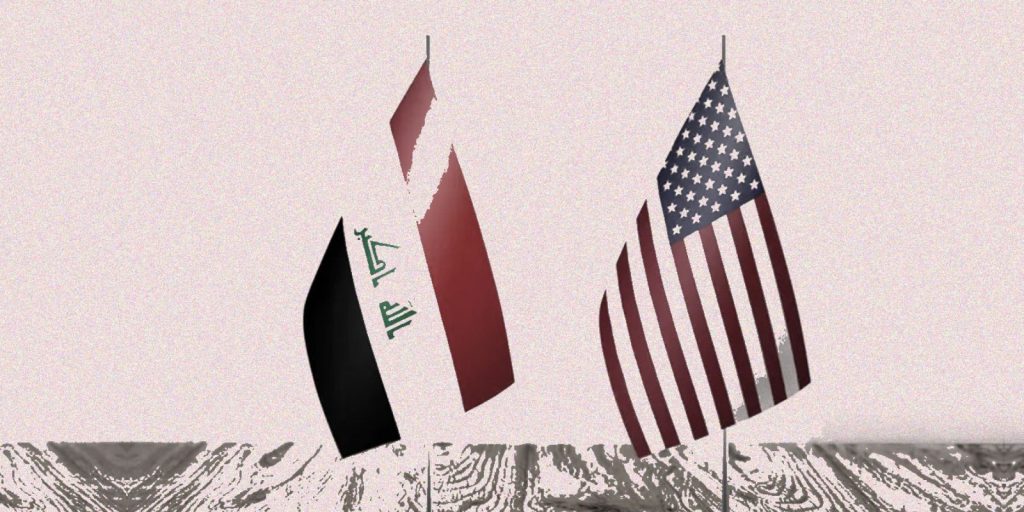
Since 2003, relations between Iraq and the United States have shifted rapidly, evolving from direct military presence to a focus on security and economic cooperation. In recent years, both sides have sought to recalibrate this relationship, emphasizing dialogue and partnership. The appointment of special envoys has become a key instrument in strengthening bilateral engagement.
At the start of this month, the U.S. Department of Defense (the Pentagon) announced its plan to scale down its military mission in Iraq. The new approach focuses on advisory and training roles rather than direct combat operations. This move aims to enable Iraqi forces to take full command in the fight against remnants of the Islamic State (ISIS) while reducing the U.S. footprint on Iraqi soil.
As of early 2025, the United States maintained around 2,500 troops in Iraq and more than 900 in Syria under the coalition formed in 2014 to combat ISIS.
In a significant economic development, Baghdad and the Kurdistan Regional Government reached an agreement to resume oil exports from the Kurdish region to Turkey. The deal reflects a joint commitment to coordinate economic policy and ensure fair revenue distribution; steps expected to bolster Iraq’s overall economic stability.
Meanwhile, U.S. President Donald Trump announced the appointment of Mark Savaya as Special Envoy to Iraq for 2025. The move aims to reinforce bilateral relations, particularly in the fields of security and economic cooperation. Savaya, who has extensive experience in the Middle East, is expected to play a pivotal role in strengthening dialogue between Washington and Baghdad.
As regional tensions mount, especially concerning Iran’s nuclear program, Iraq continues to pursue a policy of neutrality and balance. Although Baghdad seeks to avoid involvement in regional conflicts, these tensions indirectly affect U.S.–Iraq relations, making coordination and cooperation between the two nations increasingly essential.
Amid these strategic and regional shifts, Iraq and the United States now face a redefined framework for their long-term partnership.
Read also: Inside Damascus’s Diplomatic Dilemma: Russia, Sanctions, and Sovereignty
Reducing the U.S. Military Presence
Dr. Ahmad al-Hamdani, a Baghdad-based political researcher, told +963 that security cooperation between Iraq and the United States remains ongoing. He noted that Iraq is increasingly capable of defending itself but that the United States still maintains a limited military presence in northern Iraq and intervenes when it deems necessary.
According to al-Hamdani, even a reduced American presence remains influential, as Washington uses strategic pressure to influence Iraq’s government and political parties.
“The United States,” he explained, “cares little about the fate of Iraq’s political process, whether it succeeds or fails. It does not mind if withdrawal creates a security vacuum. Iraq’s armed forces, including the Popular Mobilization Forces, can defend the country. However, U.S. officials believe that reducing their presence might lead to instability or the resurgence of groups like ISIS.”
He added that Washington seeks to retain decision-making power in Iraq’s security affairs, which explains the ongoing political and governmental friction between both sides.
From Washington, Marco Massad, a researcher at the Middle East Policy Institute, told +963 that Iraq is steadily advancing toward full reliance on its own military and security apparatus. He highlighted Iraq’s efforts to modernize its weapons and defence capabilities.
Massad emphasized that Iraq’s security environment is improving and that the remaining coalition forces now serve primarily in advisory and training capacities. The Iraqi army has begun taking control of bases previously managed by the international coalition, signaling a transfer of authority to Iraqi leadership.
He added that Iraq is confidently moving toward reducing foreign military presence, as its security forces grow increasingly self-reliant and capable of addressing internal threats.
Diplomatic Gaps and Economic Cooperation
Al-Hamdani noted that the resumption of oil exports from the Kurdistan Region reflects a domestic Iraqi effort to unify national economic policy. The crude exported through Turkey’s Ceyhan port, he stressed, remains Iraqi oil in essence. Previous disputes over revenue distribution, with funds going to Kurdish parties instead of the federal government, had led to export suspensions.
The renewed agreement followed direct negotiations between Baghdad and Erbil but does not constitute a major economic transformation, al-Hamdani argued. He noted that Iraq’s key economic levers, especially in the oil sector, remain under the influence of the United States and the International Monetary Fund. He called for greater federal control over all oil exports to ensure equitable wealth distribution and build a unified, stable economy.
Al-Hamdani also stated that the absence of a U.S. ambassador has little practical effect on bilateral relations. U.S. policy toward Iraq, he said, is guided by institutions and direct channels of influence rather than by diplomatic representation alone.
“The ambassador,” he explained, “is merely an executor of pre-set policies, while the special envoy directly communicates Washington’s strategic vision.”
He added that Iraq’s government views the envoy as the formal representative of U.S. leadership. The United States, he noted, has maintained pressure on Iraq’s political system since the fall of Saddam Hussein’s regime, and that pressure continues, regardless of whether it is exerted through a diplomat or an envoy.
Massad added that President Trump’s reliance on a special envoy rather than a traditional ambassador signals a more personalized approach. The new envoy, he noted, was among Trump’s political allies and shares an Iraqi heritage, which could facilitate deeper understanding of Iraq’s local dynamics. Iraqi officials, including the prime minister, reportedly welcomed the appointment as a positive step for bilateral ties.
Read also: Syrian Refugees: Between Deportation Pressures and Challenges of Return
Regional Tensions
Al-Hamdani pointed out that negotiations between the “P5+1” group and Iran over its nuclear program in 2014 and 2016 influenced Washington’s policy toward the region but did not yield the outcomes the United States had anticipated.
He argued that Iran has since pursued an independent course, developing into an institutionalized state with long-term strategies. Should Iran obtain nuclear capabilities, he said, the shift would affect regional balance, particularly Israel’s security, more than Iraq’s.
According to al-Hamdani, U.S.–Iraq relations are shaped more by domestic factors such as the role of the Popular Mobilization Forces and armed factions. While Washington seeks to limit their influence, many Iraqis consider them integral to national defence.
He warned that a weakening U.S. stance in Iraq could lead to new power blocs or even a resurgence of ISIS, underscoring the need for Baghdad to maintain balance and protect state sovereignty amid U.S.–Iranian rivalry.
Massad noted that Iraq’s current leadership aims to keep the country out of regional conflicts, including those linked to Iran’s nuclear issue. By maintaining balanced relations with all parties, Baghdad hopes to preserve internal stability and sustain security cooperation with Washington.
A Subtle Shift in U.S. Strategy
According to al-Hamdani, the appointment of Mark Savaya as U.S. Special Envoy to Iraq does not signify a fundamental change in American strategy but rather a continuation of its long-standing policy of maintaining influence in Baghdad.
He said Washington’s approach remains consistent, faces may change, but the objectives do not. The envoy’s role, he added, fits within a broader, carefully planned strategy designed to serve U.S. long-term interests, often with limited regard for Iraq’s internal shifts.
Massad, however, views the appointment as a positive signal of renewed U.S. interest in Iraq. The decision to select an envoy of Iraqi origin, he argued, reflects Washington’s intent to deepen its understanding of Iraq’s complex political and social landscape. This approach may strengthen bilateral cooperation beyond the traditional embassy framework.











