


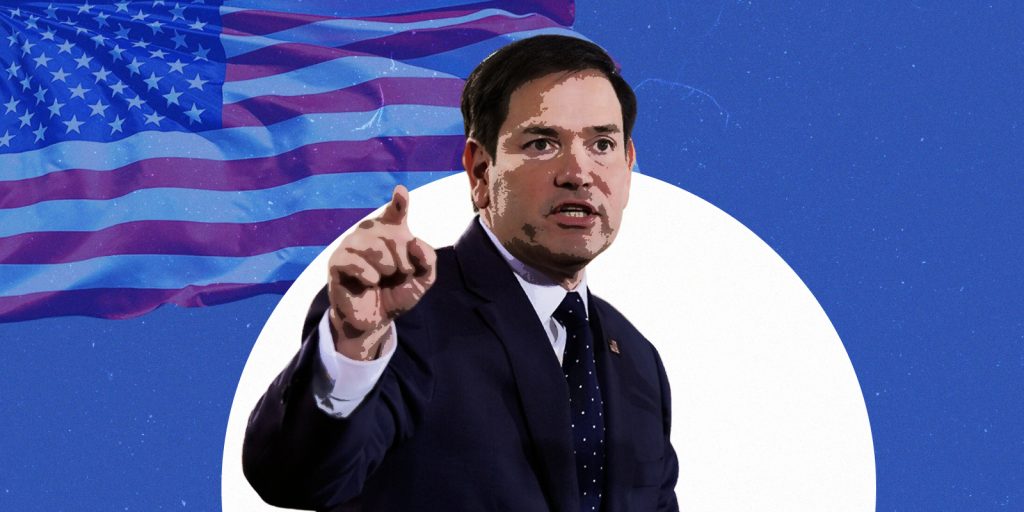
U.S. Secretary of State Marco Rubio has ignited significant controversy following recent comments regarding the future of the transitional administration in Syria, warning that it could collapse within weeks, potentially plunging the country into devastating civil war.
His remarks, made during a Senate hearing, have sparked debate among analysts; some interpret them as an attempt to pressure Congress into easing sanctions, while others view them as a genuine alarm over Syria’s internal instability.
Warnings of Imminent Collapse
“Syria’s transitional administration faces real challenges that could bring it to the brink of collapse in weeks, not months, triggering an all-out civil war of devastating proportions that could effectively divide the country,” Rubio said during last Tuesday’s hearing.
He underscored the importance of supporting the transitional authority, stating, “The success of this administration will remove the spectre of civil war from the country.”
Rubio warned that without serious engagement from Washington, the situation could quickly deteriorate. He outlined several challenges confronting the transitional government, chief among them a deeply rooted lack of internal trust, attributed, he said, to the longstanding policies of the Assad regime, which has deliberately fragmented Syrian society.
In a separate part of his statement, Rubio suggested that lifting U.S. sanctions could help facilitate aid from neighbouring countries. However, he described this step as “good but not enough,” and called for broader initiatives, including the potential for legislative exemptions from the Caesar Act to be discussed in Congress.
Related: How are Lifting Sanctions Used as a Political Tool?
Between Warning and Political Pressure
In private comments to +963, former U.S. State Department adviser Hazem Alghabra said Rubio’s remarks had been “misconstrued in the media,” emphasising that they were not intended as an official warning, but rather as clarification provided during an internal Senate hearing.
He explained that the primary objective of Rubio’s statements was to justify the urgency behind lifting certain sanctions on Syria, not to forecast an imminent explosion of the situation.
“Rubio was trying to explain the rationale for the accelerated decision-making process,” Alghabra said, “especially in light of congressional questions regarding the legality of bypassing the legislative branch in handling the sanctions issue.”
He also noted that within the U.S. policy establishment, particularly since the events of 11 September, there is a widely held belief that economic crises fuel extremism and internal conflict. This, he argued, reinforces the case for easing sanctions to prevent further destabilisation.
Real Warning and Demographic Concerns
Conversely, Dr Assef Melhem, director of the GSM Research Centre, believes Rubio’s statements go beyond political manoeuvring. He views them as a genuine warning of the risks of renewed civil unrest.
Speaking to +963, Melhem stated: “Lifting sanctions is not simply about Democratic approval, as some claim. It’s a multifaceted issue requiring consensus among several U.S. institutions, including Congress, the Treasury, and the State Department. It will not happen all at once.”
Melhem warned that the transitional government may be failing to manage the issue of foreign fighters. According to him, some of these individuals have begun relocating their families and settling in Syria’s coastal regions, raising fears of demographic shifts that could threaten the country’s social fabric.
“If this issue is not resolved quickly,” he said, “it could lead to renewed security breakdowns, sectarian and ethnic massacres, and ultimately, a return to full-scale civil war.”
He added that “a stable climate for investment and reconstruction is impossible while this matter remains unresolved, as it perpetuates long-term instability.”
Related: Washington Poised to Name Ambassador to Türkiye as Special Envoy to Syria
Challenges Among Transitional Leaders
Rubio also pointed out during the hearing that some leaders within the transitional administration “would not have passed an FBI security background check,” citing complex political or security histories, though he did not name individuals.
At the same time, he warned against disengagement: “Not engaging with these people may be even more dangerous,” he said. “If we do not engage, the outcome is clear: the political process will fail, and the impact will be felt not only in Syria, but in neighbouring countries as well, particularly Lebanon, which is already suffering from the repercussions of Syrian displacement.”
Despite the significance of Rubio’s warnings, the report remains limited by a lack of balanced perspectives, particularly from voices within Syria. As of now, there has been no official response from the Transitional Administration, nor have clear positions emerged from civilian opposition groups, political coalitions, or military factions in northern and eastern Syria.











