


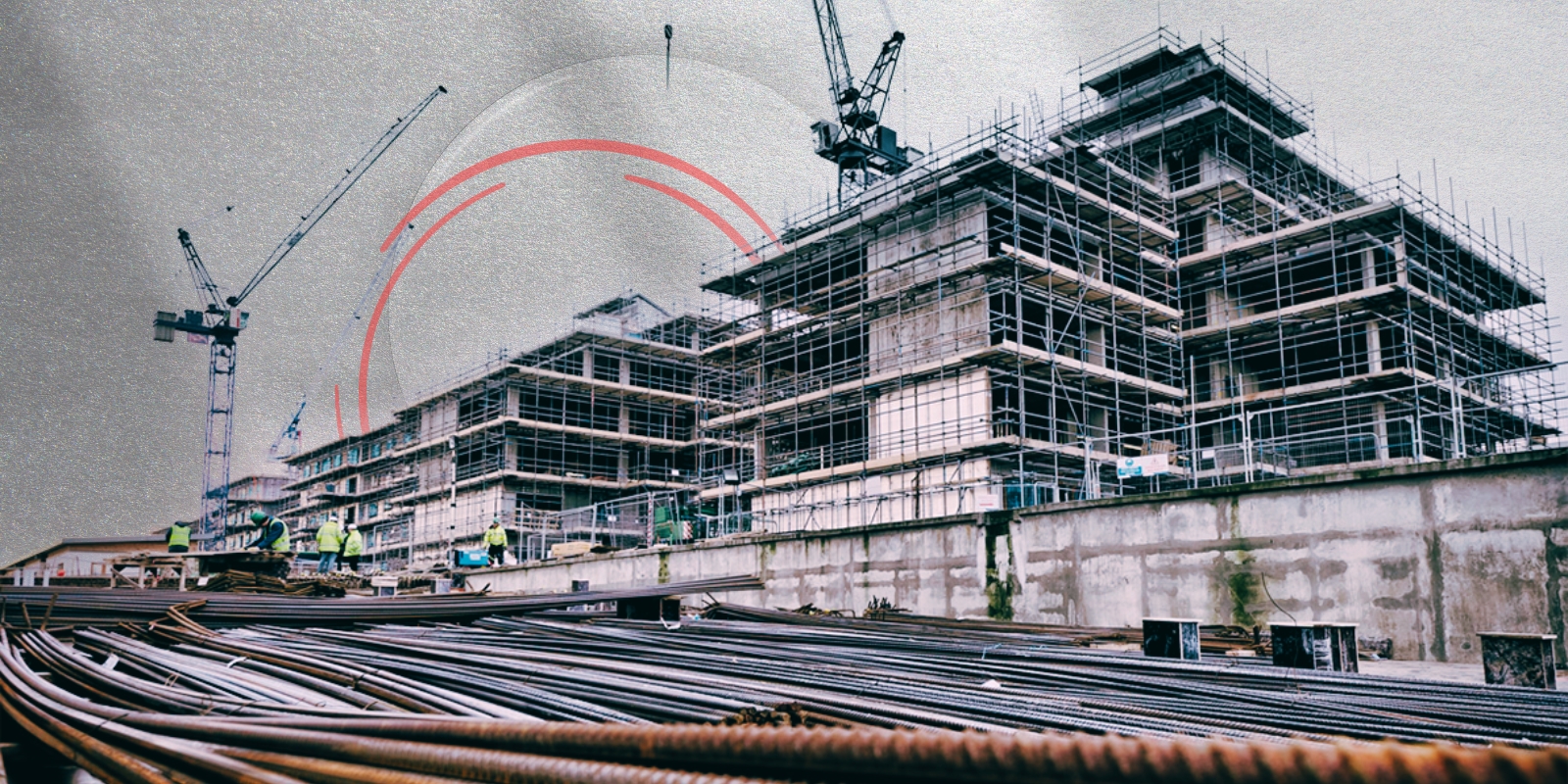
Nearly a year has passed since the Syrian Interim Government assumed power in Syria. A year is enough to speak about the post war phase, the phase of reconstruction and recovery. Yet while news circulates about luxury tourism projects, new hotels and shopping malls, beautification campaigns for Qasioun, the opening of the “Boulevard”, and projects in Qarabis and Al Aziziyah, the most important and most painful question remains: what about the homes of millions of Syrians that have turned into rubble?
Despite government statements that emphasize the priority of rebuilding housing and supporting returnees, implementation remains tied to massive funding that has not yet materialized, compounded by bureaucratic, procedural and legal challenges such as property ownership disputes. The actual result on the ground is slow progress in addressing destroyed housing and considerable reliance on private capital to enter the market. This explains why real estate and investment development projects continue to appear before the social reconstruction of popular residential areas.
This reality pushes many potential returnees to hesitate in returning, given the lack of adequate housing, deteriorating economic conditions, and the high cost of living. Millions of Syrians are without homes or a clear plan, making return unrealistic. The most pressing question remains: where is the housing reconstruction file?
Official silence regarding reconstruction
Political activist Hisham Shmeit tells +963 that reconstructing destroyed homes and returning owners to them must be the government’s foremost concern and the highest priority for all officials responsible for this file, in a manner befitting a dignified return for Syrian citizens.
Despite repeated promises, the old streets of Aleppo, Eastern Ghouta, destroyed Homs, Deir Ezzor and Daraa remain silent witnesses to the absence of a clear vision or tangible projects to return residents to their homes.
Shmeit adds: “Tens of thousands of Syrians living in neighboring countries or inside Syria await a single criterion to decide whether they will return: will I regain my home? What we see raises the question of whether this is reconstruction or reinvestment. The matter is clear. Profit driven investment is faster, easier and more attractive to capital than rebuilding homes that generate no profit. Why do the displaced not return? Because no home awaits them. No official has asked the essential question: what is reconstruction without residents?”
He continues: “No state can speak of stability while neglecting the essence of stability: the home. It cannot speak of growth while beginning with hotels before apartments. It cannot claim a new phase while entire neighborhoods remain as if they are memorials to a war that has not ended. If officials truly had the will, there would at least be a clear national plan to rebuild homes, transparent announcements of funding sources, a timeline, legislation that protects property rights, and priority for those seeking to return rather than those seeking to invest. What is happening now is a complete reversal of priorities. The displaced do not need political speeches or festivals. They need a clear answer: will I return to my home?”
Shmeit points out that some destroyed areas are left to their fate, without support or protection against looting, and without any vision as to whether they will be restored or erased in favor of new housing plans. He adds: “This ambiguity is not a minor flaw. It is what makes every Syrian who owns a damaged home feel he is on the brink of losing the last thing he has in his country. So far, no one has answers. There is no timetable, no real reconstruction fund, no financing, no clear map. It is therefore natural that hundreds of thousands of Syrians hesitate to return.”
Read also: Why Syrian IDPs Still Fear Returning Home in 2025
Displaced people and the fear of the unknown
Millions of Syrians in the diaspora are waiting for a glimmer of hope to return. Yet reports and conversations with the displaced indicate that their biggest obstacle is the absence of habitable homes or real guarantees for reconstruction.
Khitam al-Mohammed, a refugee in Turkey, tells +963: “Even if I were given the chance to return, where would I go? My home is rubble, and I cannot afford to rebuild it.”
Khaled al-Faisal, from Deir Ezzor and currently living in Damascus, explains that his home is completely destroyed and he now lives in his brother’s house. He adds to +963“: “The situation is difficult. Construction costs are extremely high. I can barely afford daily food. Meanwhile, on television during every conference and government statement, we hear about hotel projects and lavish malls. The question Syrians ask openly is: how can a country where half the population is displaced consider a new hotel a priority rather than a destroyed home?”
Among the ruins of his home in rural Damascus, Mohammad Ali, 65, holds an old photo of the house he built with great hardship thirty years ago. He tells +963: “Whenever I hear about a new tourism project or luxury hotel, my heart asks: when will it be our turn?”
A displaced man from Homs adds: “Silence shrouds the most important file. My home stands on my land. It is mine. Why is its reconstruction ignored while new investment projects are proposed just a few hundred meters away? What value is there in a new mall if its people have no roof? Syrians today are not asking for a miracle, nor for a utopian city, nor for entertainment projects. All they ask for is their home.”
Absent solutions
Bilal al-Hammoud, a volunteer with a local humanitarian relief association, describes the scene to +963: “A full year is nearing its end since wide areas returned to government control. It was expected to mark the true beginning of reconstruction and the return of the displaced. But the reality presents Syrians with another scene: destroyed homes still waiting, their owners stuck between the desire to return and the inability to rebuild, while tourism projects and commercial complexes that cannot house a single family dominate the landscape.”
He adds: “Reconstruction is not only about building. It creates jobs, stimulates the construction materials market, and generates local demand. The file most tied to national identity and dignity is rebuilding destroyed homes and returning owners to them. Millions of displaced Syrians inside and outside the country watch the scene, packing their bags while waiting for the green light, only to step back again because returning to nothing, amid rubble, is not a return but a new tragedy. Delays in planning residential reconstruction open the door to despair and exacerbate social and economic crises. Some raise a legitimate question: why is there no clear plan to rebuild devastated neighborhoods with international support or by encouraging Syrians themselves to invest in restoring their homes rather than investing in hotels and entertainment markets?”
A genuine national vision
Economic researcher Diala al-Khateeb tells +963: “As the first anniversary of regaining the country approaches, Syrians inside and outside the country expect the reconstruction crisis to top the agenda of the government and the international community. Returning to homes is not simply rebuilding walls. It is the return of life and hope to a country that embraces all its children. There is a lack of national reconstruction companies to oversee the process with resident participation and support from international institutions. Legal complexities and lack of transparency hinder any serious start.”
She adds: “What we see in terms of priorities contradicts reality. How can entertainment and luxury real estate projects come first while most Syrians lack basic shelter? The rationale for this tilt toward tourism and commercial projects is clear. Investment projects produce quick profits, while rebuilding homes requires massive funding, and the state suffers from a major financial deficit. As a result, residential reconstruction remains outside declared priorities, creating a growing gap between what citizens need and what is being implemented. The question remains open: how long will cosmetic projects and hotels precede the rebuilding of poor people’s homes? Will the moment come when we realize that returning people to their homes is more important than building new malls?”
Read also: Syria’s Refugees Return to a Country Still in Ruins
Why the delay in rebuilding homes?
When officials are asked why reconstruction is delayed, Dr. Moan al-Abdullah, adviser to the Ministry of Housing, explains to +963 that tourism and commercial projects attract Arab and foreign investors, while home reconstruction requires massive government budgets that may not be available under economic sanctions. He adds: “We have plans for residential reconstruction, but the priority now is for productive projects that create jobs and strengthen the economy.”
A real estate contractor who preferred to remain anonymous tells +963 that the cost of construction per square meter for the structure alone is about two million Syrian pounds, while finishing begins at two million and may reach two and a half million depending on materials and quality. Basic material prices such as steel reinforcement (12 mm per ton) are around 6,600,000 to 6,800,000 pounds, cement around 1,200,000 pounds per ton, sand and gravel around 125,000 to 130,000 pounds, and 24 cm concrete blocks around 6,500 pounds each. Finishing a one hundred square meter apartment may reach fifty million pounds, covering ceramic tiles, marble, fixtures and electrical and plumbing work.
Civil engineer Elias Jabrou says: “Residential reconstruction is extremely costly compared to individual income. Any delay increases costs due to exchange rate fluctuations, fuel shortages or changes in taxation. Families that own land or a destroyed foundation struggle to secure the funding for full reconstruction, especially if relying on returning displaced relatives or remittances. Compared with entertainment and investment projects, commercial or hotel construction is more profitable despite initial costs. This explains why investment projects come first in some cases. Solutions are not easy, but the starting point is setting a clear plan for residential reconstruction, engaging local communities and displaced Syrians in funding, freezing any investment projects on destroyed residential areas until property issues are resolved, establishing a national fund under independent oversight, and giving priority to rebuilding destroyed homes.”
Financing mechanisms for reconstruction
Economist Dr. Ali al-Hassan explains to +963 that estimates of reconstruction costs after years of conflict amount to around two hundred and sixteen billion dollars, according to the World Bank report issued in October 2025. These costs include residential buildings at around seventy five billion dollars, non residential structures at fifty nine billion dollars, and infrastructure at eighty two billion dollars including electricity, water, transportation and sewage networks.
Financing depends on integrated domestic and external sources, including state funds, local donations and fundraising campaigns through dedicated funds such as the Syrian Development Fund, grants and support from friendly states and regional and international partners, direct foreign investment, and cooperation with organizations such as the United Nations to support sustainable development projects.
Regarding why officials have not launched a national housing program, al-Hassan says: “Reasons include the enormous cost of residential reconstruction, the absence of international partners due to sanctions and political instability, property disputes and missing ownership records, and the government’s preference for projects with quick economic returns. Hotel and luxury mall projects represent a small portion compared to the residential reconstruction needed. Every day without rebuilding increases costs and makes return more difficult due to rising construction prices, material shortages and inflation.”











