


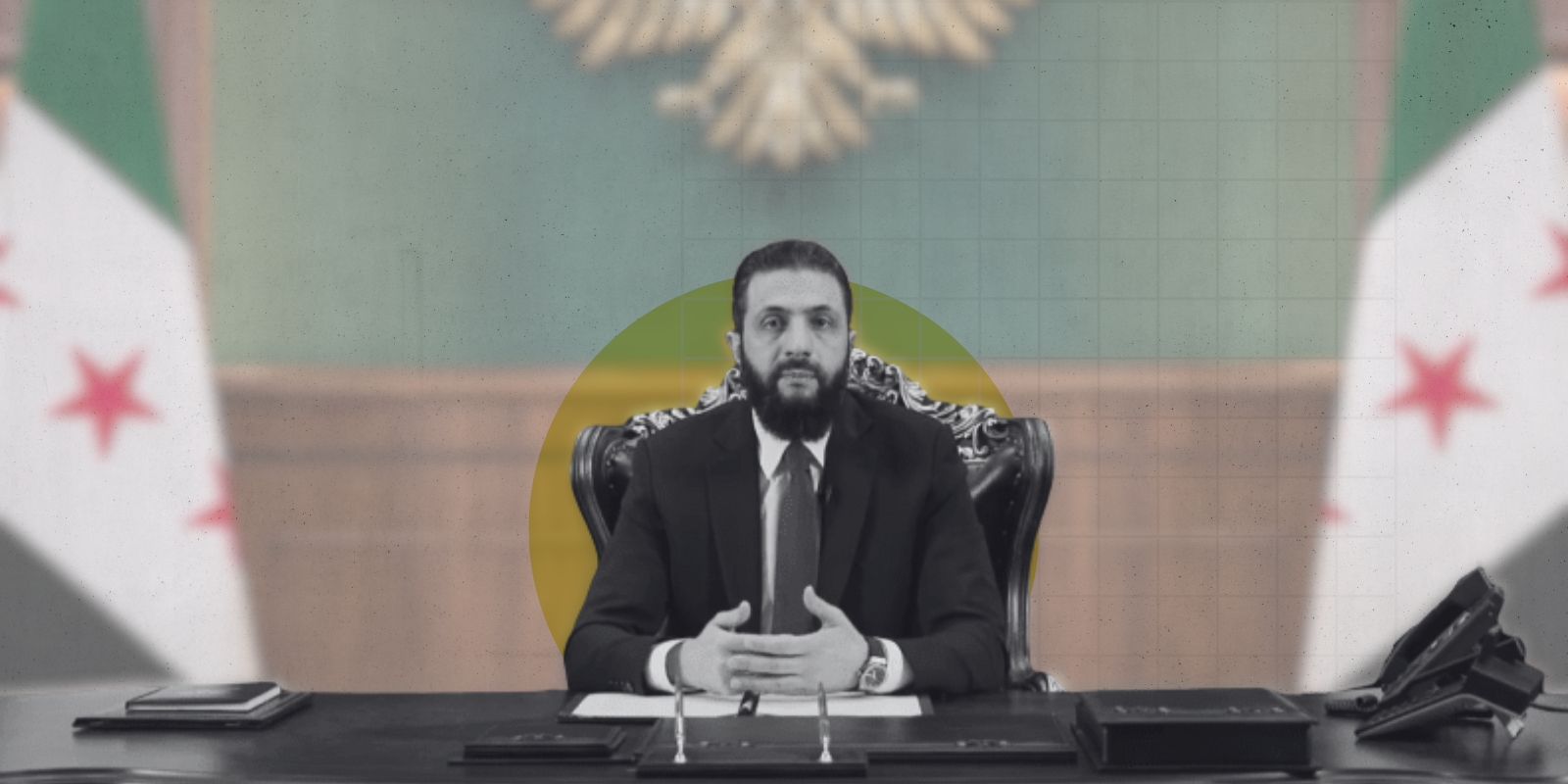
In the context of rapidly unfolding developments on the Syrian political scene, a presidential decree has emerged that has generated wide debate and diverse reactions, both domestically and internationally. On the evening of 16 January 2026, Syria’s interim president, Ahmed Al-Sharaa, issued a special decree announcing a package of rights for Syrian Kurdish citizens. These measures included the recognition of the Kurdish language as a national language and its inclusion in school curricula, the granting of Syrian citizenship to Kurds who had been deprived of it since the 1962 census, the designation of Nowruz as a paid public holiday, and formal guarantees for the protection of cultural and linguistic diversity, alongside an explicit prohibition of ethnic or linguistic discrimination. The step was widely described as unprecedented since Syria’s independence in 1946.
Supporters of the decree have framed it as a historic turning point in the trajectory of Kurdish rights in Syria, while critics have questioned both its timing and its underlying political motivations. For the latter, meaningful and lasting recognition of Kurdish rights requires constitutional entrenchment and robust legal mechanisms embedded within a comprehensive political framework, rather than reliance on a presidential decree that may remain contingent on shifting political circumstances. As a result, the decree has become a focal point for broader debates about identity, sovereignty, and the cultural and political rights of minorities in Syria, raising hopes among some while reinforcing scepticism among others about whether it represents genuine integration or merely a symbolic gesture.
Within this charged context, the Kurdish rights file has once again moved to the centre of Syria’s political landscape, prompting fundamental questions about the country’s future social contract and the sustainability of measures introduced in a transitional phase marked by institutional fragility and unresolved power struggles.
A necessary step
Darwish Khalifa, a writer and political figure, told +963 that the political and legal background to the decree is primarily rooted in the constitutional declaration issued on 13 March of the previous year. According to Khalifa, this declaration granted the president broad powers, including explicit legislative authority, and all presidential decrees issued since then fall within the scope of those powers. From this perspective, Decree No. 13 of 2026 is legally consistent with the authority vested in President Ahmed Al-Sharaa and does not constitute an exceptional or unlawful measure within the current constitutional framework.
Khalifa emphasised that the significance of the decree lies not only in its legal content but also in its timing. He argued that Syria has recently witnessed the early formation of a growing social rift between Arabs and Kurds, making the decree a particularly notable intervention. In his view, the widespread public celebration and positive reception among large segments of Syrian society reflect a genuine desire to address this long-standing issue, as well as a broader longing for steps that signal recognition and inclusion after decades of marginalisation.
From Khalifa’s standpoint, the decree carries particular importance for Kurdish rights at both cultural and legal levels. He argued that once a Syrian parliament or elected legislative council is formed, the decree could be referred to parliament for a vote, thereby acquiring full legal force. Parliament would then be able to issue interpretive and regulatory legislation, transforming the decree from a political statement into enforceable law. Such a process, he suggested, would strengthen Kurdish citizens’ sense that a real transition from rhetoric to action is under way, reinforcing their perception of full and equal citizenship in a future Syria.
Khalifa also noted that the decree guarantees the rights of all components of Syrian society, including the right to speak their mother tongues and promote their cultures, arguing that this approach aligns with international standards, particularly those adopted by the United Nations in 1992. He added that similar principles are enshrined in the International Covenant on Civil and Political Rights, which, through Articles 2 and 26, guarantees ethnic and religious minorities the full enjoyment of rights without discrimination.
Looking ahead, Khalifa stressed that the next phase will require Kurdish representatives in any future parliament to reopen this file and place it at the centre of serious legislative debate, with the aim of addressing not only the harm suffered by Kurdish citizens but also the broader socio-economic consequences borne by Arab communities in the same regions.
Read also: The Kurdish Question in Post-War Syria
A decree in need of constitutional guarantees
By contrast, political analyst Hussein Qassem told +963 that it is not possible to speak of genuine legal foundations for Al-Sharaa’s decree. In his assessment, the decree is the product of a specific political moment and must be read in the context of an announced political and military confrontation with the Syrian Democratic Forces. He argued that it forms part of an attempt to prepare the ground for dividing Kurdish ranks and weakening internal cohesion, rather than constituting a principled or rights-based initiative.
Qassem recalled that former president Bashar Al-Assad had issued a similar decree in April 2011 granting citizenship to those stripped of it or registered as undocumented, a move he described as an effort to neutralise Kurdish street mobilisation at the time. For Qassem, Kurdish rights are fundamentally national rights encompassing linguistic, cultural, and political dimensions, and cannot be reduced to administrative measures or situational decrees. He therefore raised a core legal question regarding whether Al-Shar‘a, as an unelected transitional president, possesses the constitutional authority to issue such a decree in the first place. Even if such authority were assumed, Qassem questioned the legal and political value of the decree and asked what would prevent it from being revoked later by another executive decision.
In Qassem’s view, the Kurdish issue cannot be resolved through temporary decisions or symbolic gestures. Instead, it requires explicit constitutional recognition, whether through inclusion in the constitution itself, incorporation into supra-constitutional principles, or ratification by an elected parliament or an equivalent legitimate national framework. While he acknowledged that the citizenship file itself is no longer the central problem, given that many of those affected by the 1962 census have already been naturalised, he argued that the core challenge lies in securing durable cultural and linguistic rights.
Qassem pointed out that educational and cultural structures have existed on the ground for nearly a decade, despite suffering from limited resources, legal ambiguity, and institutional shortcomings. These structures, he argued, provide a foundation upon which a comprehensive and sustainable framework could be built, but only if supported by clear legal guarantees that ensure implementation beyond temporary political promises. He further noted that Syria currently lacks an operative constitution and instead relies on a constitutional declaration drafted by a committee emerging from what he described as the “Victory Conference”, which he characterised as a gathering of extremist factions.
Emphasising that Kurds are not a minority but a people living on their historical land, Qassem argued that the cultural, linguistic, and political rights of national components must be enshrined in clear constitutional texts that include defined mechanisms for protection and enforcement. In the absence of such provisions, he warned, the decree remains a temporary administrative measure that can be easily amended or reversed, falling short of providing sustainable legal guarantees. At the international level, he added, instruments such as the Universal Declaration of Human Rights and the International Covenant on Civil and Political Rights require national implementation mechanisms, clear anti-discrimination rules, protection of language and culture, and guarantees of political participation – requirements that cannot be met by a decree alone without supporting legislation and independent oversight.
Qassem concluded that talk of national integration in this context is premature. In his assessment, the concept of integration advanced by the Syrian interim government is not based on pluralism and partnership, but on forced assimilation into a single model. The absence of genuine decentralisation, he argued, undermines any possibility of proper or sustainable implementation of the decree, particularly in the absence of an accompanying economic or social vision to address the long-term effects of marginalisation in Kurdish regions or to offer meaningful development and compensation programmes.











