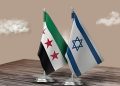



At the crossroads of internal stakes and external pressures, the March 10 agreement between the Syrian government and the Kurdish-led Syrian Democratic Forces (SDF) stands at a decisive turning point. While President Ahmad Al-Sharaa emphasizes that only a few months remain before the deal enters into force under U.S. sponsorship and Turkish approval, serious questions emerge about the parties’ ability to overcome obstacles related to the Kurdish file, military integration, and regional and international balances.
Will the agreement serve as a gateway to unifying the country under a single state, or is it merely a transitional phase dictated by major powers and regional actors’ interests? And how will Syria’s new administration deal with the heavy legacy of divisions, marginalization, and power struggles left behind by the previous regime?
Deadline by Year-End
During a dialogue session in Idlib with academics, politicians, union leaders, and local notables, published last Saturday, Al-Sharaa noted that the SDF “has expressed readiness to implement the agreement’s terms,” but warned that “some of their practices on the ground differ from what was agreed in negotiations.”
Meanwhile, Syrian academic and politician Abdulbaset Sida told +963 that “the timeframe for implementing the agreement is set until the end of this year,” adding that the deal “came under U.S. sponsorship and Turkish approval,” and that both Damascus’ and the SDF’s calculations remain “linked to regional and international agreements that reshaped the Syrian landscape and paved the way for Al-Sharaa administration’s rise to power.”
Between Division and Unification
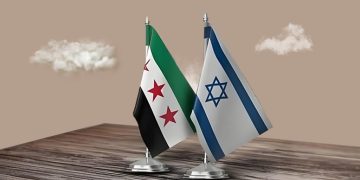
The Syrian president stressed that “some parties desire to divide Syria,” but described these ambitions as “political dreams doomed to fail.” He added: “Those calling for division are like someone standing at a mountain edge, destined to fall into the valley below.” He also accused Israel of trying to intervene directly in Suwayda province “to weaken the Syrian state,” affirming the government’s commitment to “hold violators accountable.”
Sida commented that “the sacrifices of the Syrian people over fourteen years were decisive in thwarting division projects, as popular insistence on ending the Assad rule changed the balance of power, particularly concerning Iran’s role in Syria and Lebanon.”
Agreements and Contacts Despite Violations
Al-Sharaa noted that “Syria faces a unification battle that should not be waged through combat,” emphasizing that “the firm principle, locally, regionally, and internationally, is Syria’s territorial unity and the monopoly of arms by the state.”
In this context, Sida explained that “mutual accusations between the Syrian administration and the SDF over violations do not halt negotiations,” noting that “joint committees continue their work, and practical understandings have been achieved in areas like Sheikh Maqsoud in Aleppo and the Tishreen Dam, along with undisclosed security and economic arrangements.”
Sida sees these accusations as “part of a point-scoring game to strengthen negotiating positions before key sponsors, namely Washington and Ankara, with Israel playing a minor role.”
Paris Meeting Cancelled, Moving to Damascus
Syrian Foreign Ministry official Qutaiba Idlibi stated that the previously scheduled Paris meeting between the government and the autonomous administration “is no longer taking place,” explaining that negotiations will now be held “either in Damascus or in northern and eastern Syria.”
In an interview with Rudaw, Idlibi said, “We have entered the stage of practical steps to implement the March 10 agreement. The next phase involves drafting a permanent constitution after the election of the People’s Assembly, with the possibility of proposing an official state name amendment during the constitutional referendum.”
He stressed that the government aims to “create a positive atmosphere between the Kurdish community and other components” to address the effects of “political marginalization and ethnic-sectarian discrimination linked to the ousted regime.”
Idlibi added, “The challenge is not purely constitutional but primarily political,” emphasizing that “implementing practical policies is more important than mere legal texts.”
Political analyst and writer Rustam Mahmoud, however, sees “one of the key challenges in the political clause concerning Kurdish rights and their constitutional status,” warning that “the success of the process depends on genuine intentions to amend the constitutional declaration and agree on a new constitution.”
Integrating the SDF into the Syrian Army: The Biggest Challenge
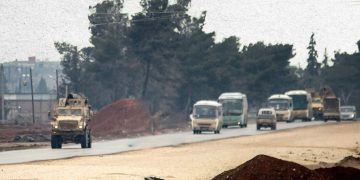
On the military front, Idlibi stressed “the necessity of integrating the SDF into the Syrian army alongside other factions to avoid creating a state within a state,” explaining that “the integration process is ongoing and requires time to distribute military expertise in a way that serves all Syrians.”
Mahmoud sees this clause as “one of the most sensitive files, as it touches the political and security structures of the country,” noting that “U.S. sponsorship is the main guarantee to prevent the situation from escalating into confrontation.” He added that “Turkey lacks real incentives to support the agreement and at most can avoid direct military intervention.”
Regional and International Dimensions
Abdulbaset Sida noted that “France, despite cancelling the Paris meeting, remains part of the international coalition and has strong relations with the SDF, coordinating with the U.S. in role distribution within the Syrian file.”
He concluded that “the success or failure of the agreement will not be determined solely within Syria but will depend on broader regional developments, from Palestine and Lebanon to the Kurdish issue in Turkey and Iraq,” stressing that “Syria remains a key pillar in regional balance equations.”
Rustam Mahmoud argued that “the biggest challenge lies in whether the new political system is willing to open up to a real democratic process involving all Syrians,” noting that “so far, there are insufficient indications of this.”
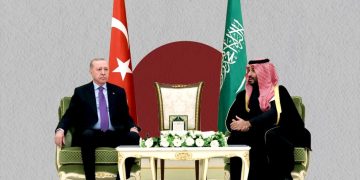
He emphasized, however, that “overcoming these obstacles is possible through clear U.S. and regional pressures, particularly from Saudi Arabia, to ensure that the Syrian issue remains primarily political and amendable.”