


Darius Al-Darwish
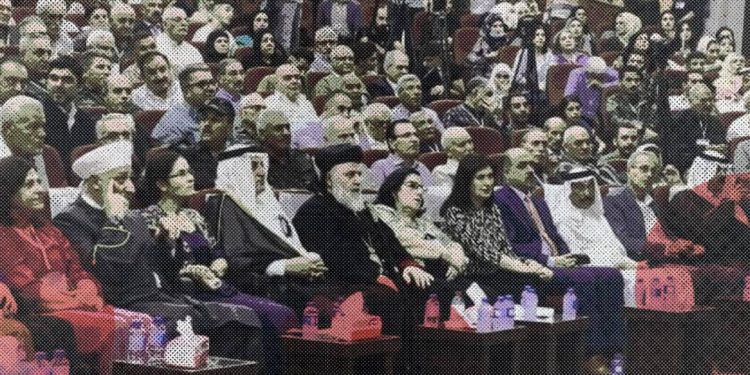
The Hasakah Conference, held on August 8 under the title “Conference for the Unity of Position of the Components of North and East Syria”, has sparked a storm of accusations from supporters of the current regime. They claim it is another version of the so-called “alliance of minorities” standing against Damascus’s supposed “Sunni rule.” Yet what these critics overlook is that everything about this conference undermines those myths. Instead, it represents a new way of practicing politics; one that seeks to transform Syria into a functioning state rather than leaving it mired in the swamp of failure it has endured for over five decades.
The first striking feature of this conference lies in its very title. By cantering the notion of “components”, it breaks sharply from the language of “majorities and minorities” that has dominated political discourse for at least fourteen years. Unlike the older framework, the idea of components includes both the majority groups and the minorities, placing them on equal footing. This language recognizes their existence, but more importantly, acknowledges their fears: whether those stem from threats of extermination, cultural erasure, or chronic marginalization. By treating all components as equals, the framework seeks to neutralize those fears and move them out of narrow sectarian trenches into a shared political space.
Seen this way, the very idea of ‘components’ challenges the meaning of “minority” altogether. A community ceases to be a minority the moment its existential fears are removed. As Hannah Arendt, the German-Jewish thinker, once wrote: “If one is attacked as a Jew, one must defend oneself as a Jew. Not as a German, not as a world-citizen, not as an upholder of the Rights of Man.” What the Damascus regime, and much of the opposition, too, has done is precisely the opposite: targeting people for what they were born as, not what they chose politically. The result, in the case of Syria’s Druze for instance, was to push even secular activists into rallying around their religious identity in the face of threats of annihilation.
Read also: Beyond the Centre’s Control: Damascus Clashes with Emerging Voices of Plurality
By reframing the debate away from “majorities” and “minorities,” the Hasakah Conference restored politics to Syria in a way that authoritarian rhetoric has long suffocated. After all, the notion of a non-political majority has no grounding in the history of states, ancient or modern. States have always belonged to individuals, not to collective identities. The belief in a “Sunni rule” in Damascus, for example, is nothing but a dangerous illusion. History shows that identity-based states, whether Nazi Germany, Fascist Italy, Franco’s Spain, or the Baathist regimes of Iraq and Syria, inevitably collapsed into political exclusion and dictatorship.
The outcomes of the conference went further, laying out a triad of principles that could lift Syria from tyranny and protect it against its return. This triad rests on three pillars: democracy, the entrenchment of ethnic, religious, and cultural diversity, and a decentralized state. The first two pillars ‘democracy and pluralism’ may seem widely accepted, at least in theory, among Syrians not tied to the current regime. But the third pillar, decentralization, is just as essential. It provides the only real safeguard against backsliding into dictatorship.
Syria’s bloody history shows why democracy and constitutions alone are not enough. Even Germany’s strong democratic institutions could not prevent the rise of Nazism. How then can one trust such safeguards in a country like Syria, where time and again unarmed communities have been massacred or plundered simply because they lacked military means of self-defence? Some argue the ultimate solution is to disarm the state itself, but until that day, decentralization ensures that communities retain the ability to protect themselves.
In this sense, the Hasakah Conference offers Syrians a rare opportunity. For the first time, they are practicing politics differently; based on addressing fears directly and pulling communities into a common public space. And by articulating the triad of democracy, pluralism, and decentralization, the conference offers a long-awaited blueprint for building a real state in Syria, a full century after its founding. Most importantly, it proves that democracy in Syria need not be toothless rhetoric. It can carry real weight, and real defence, against tyranny; provided this approach expands to include all Syrian components, not just those in the northeast.











