By Ghandi Al-Muhtar
Israeli Turkish relations are witnessing a renewed escalation, as Syria turns into a regional battleground between the two powers. A report from the Israeli “Nagel Committee,” alongside recent military developments, underscores Israel’s mounting anxiety over Turkey’s growing foothold in Syria, especially in the wake of the fall of the Assad regime, which had served for over four decades as a de facto guarantor of Israeli border security. The timing of Israel’s leak of recorded conversations between Assad and the Israeli intelligence handler known as “Musa” raised eyebrows.
Turkey as an Adversary
The Israeli “Nagel Committee” now identifies Turkey as the primary threat. According to its findings, Ankara is actively pursuing a neo-Ottoman agenda in the Middle East, with Syria as a key area of strategic interest.
The committee warns that Turkish forces or their proxies in Syria could soon pose a direct threat to Israel if they evolve into instruments of Ankara’s regional ambitions. Following Assad’s ousting, Turkey supported the establishment of an interim government led by Ahmad Al-Sharaa. However, Israel perceives this government as a security risk due to its links with radical Islamist factions, including groups with jihadist roots.
Channel 12’s reporter Sabrina Levy commented that Israel “has taken a further step in its deteriorating relationship with Ankara, following the release of Yaakov Nagel’s report. The focus is now squarely on the Turkish threat, which is seen as even more dangerous than Iran, especially since Syria is on the verge of becoming Turkey’s proxy on Israel’s border, as part of Ankara’s revived imperial vision. There’s now a growing fear that this proximity could spark a devastating conflict between the two countries.”
Read also: In Southern Syria: Israeli Incursions, Security Vacuum, and a Government Missing in Action
At Our Doorstep
In a televised statement, Israeli Turkish affairs expert Guy Cohen declared, “Turkey is a hostile state by all metrics. Its threat is right at our doorstep. Israel and Turkey are now de facto neighbours, and soon, we may well see Turkish soldiers on the streets of Damascus. After what happened on October 7, we cannot afford to dismiss any potential threat.”
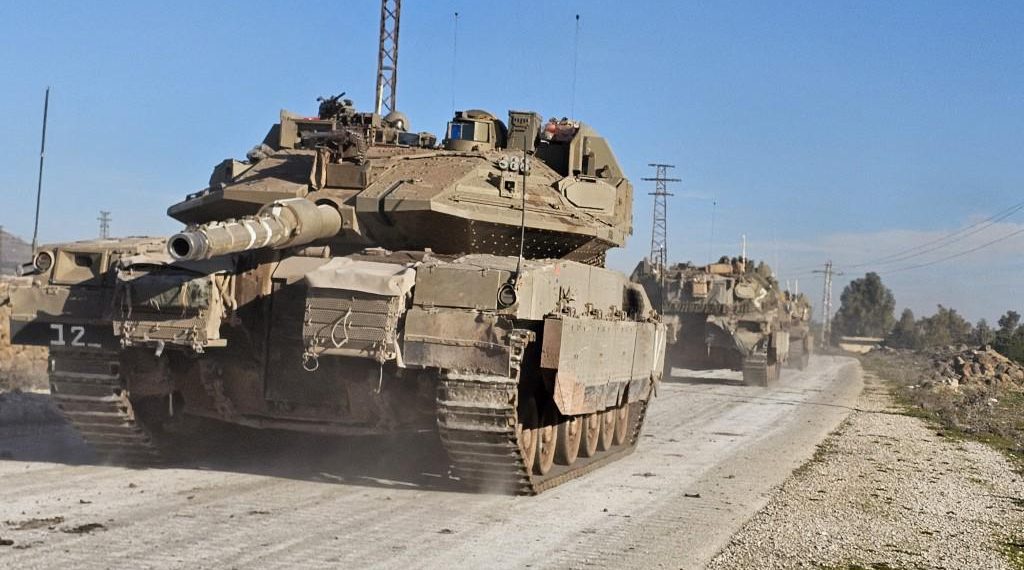
Israeli intelligence reports have persistently sounded the alarm over Turkey’s efforts to bolster its military presence at bases such as Hama Airport and the T-4 airbase. These concerns have prompted Israeli airstrikes targeting Turkish and Syrian military facilities as a stern warning to Ankara, focusing particularly on fuel depots, radar stations, and missile platforms. The objective is to prevent Turkey from deploying air defence systems or strengthening its military footprint in the region.
Israeli officials stressed that these strikes send a direct message: “Any attempt by Turkey to expand its military presence in Syria will be met with firm military retaliation,” particularly amid reports of ongoing negotiations between the interim Syrian government and Ankara regarding potential defence agreements.
Read also: Israel’s Strikes in Syria: Is Turkey Shielding or Provoking Conflict?
What Does Israel Want from Al-Sharaa?
In a recent interview, Tamir Hayman, head of Israel’s Institute for National Security Studies, described Al-Sharaa as “a highly problematic Islamist figure surrounded by dangerous individuals, many of them former jihadist fighters who have been targets of our forces. Most Israeli analysts don’t trust Al-Sharaa; they believe he’s a wolf in sheep’s clothing who ultimately seeks to establish an Islamic jihadist state.”
Nevertheless, Israeli media suggests Tel Aviv may be exploring limited engagement with Al-Sharaa to achieve specific strategic goals: curbing Turkish expansion in southern Syria, cooperating against jihadist factions that threaten Israeli national security, and weakening both Iranian and Turkish influence. Israeli policymakers believe that conditional support for Al-Sharaa could create leverage to expand Israel’s indirect influence in the region.
Nagel Committee’s Analysis of the Turkey-Syria Threat
The committee’s report uncovered secret negotiations between Damascus and Ankara to hand over strategic zones near Palmyra to the Turkish military, in exchange for financial and military backing of Syria’s new regime. This move could grant Turkey control over key land corridors between Iraq and Syria and facilitate the deployment of advanced air defence systems like the Russian-made S-400.
Read also: Israel-Turkey Rivalry in Syria: Is a Confrontation Imminent?
The report also noted that the new Syrian regime has begun rebuilding its southern military infrastructure, with direct Turkish support, near the occupied Golan Heights. Key developments include the reconstruction of Palmyra’s military airbase, which had suffered repeated Israeli strikes, and the deployment of medium-range J-600T ground-to-ground missile batteries.
Compared to the Iranian Threat
Despite Iran being traditionally considered Israel’s primary adversary, the Nagel Committee report points out that the Turkish threat is distinguished by three defining characteristics.
First, regional legitimacy: Turkey is a NATO member and maintains a far-reaching diplomatic network, broader than that of Tehran.
Second, military capabilities: The Turkish military is ranked second in NATO after the United States, with 500,000 active-duty troops and 320,000 reservists.
Third, social base: The cultural ties between Turks and Syrians may facilitate broader acceptance of Turkey’s presence in Syria as a form of “soft colonial power.”
The report calls for strengthening Israeli deterrence through launching intensified airstrikes on Turkish Syrian targets and expanding the buffer zone in southern Syria into a fully demilitarized area under international supervision.
Prime Minister Benjamin Netanyahu warned that Israel “will not hesitate to confront Turkish expansion,” viewing Ankara’s alliance with Damascus as a violation of the 1974 Israeli Syrian disengagement agreements. He has also pressed Hebrew media outlets to increase coverage of what he describes as “the historical inevitability of confrontation.”
Read also: https: U.S. to Begin Troop Withdrawal from Syria Within Two Months, Despite Israeli Concerns
Military Budget Adjustments
The Nagel Committee recommends increasing Israel’s military budget by 15% annually until 2030. Investments should prioritize electronic warfare systems to counter Turkey’s “Koral” jamming technology and air Force enhancements including more F-35I fighter jets capable of breaching advanced air defences.
Classified documents cited in the report suggest Russia may tacitly allow a limited conflict between Israel and Turkey as part of its strategy to weaken all actors involved. The report also expresses concern that U.S. focus on its rivalry with China may reduce American support for Israel, thereby emboldening Turkey.
The report concludes that the next five years will likely see one of two outcomes: the collapse of the Turkish Syrian alliance due to economic pressures, or military escalation culminating in a direct confrontation.
Final Recommendation: Committee chairman Yaakov Nagel called for the formation of a counter-alliance led by Israel to balance shifting regional power dynamics. He warned that Syria is no longer just a front in the conflict with Iran but has become the eastern gateway for a new existential threat to Israel.