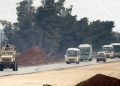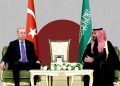



The recent meeting between Syrian and Turkish officials in Ankara took place within a broader regional realignment following the fall of the Assad regime and the decline of Iranian influence. Turkey, which considers the Syrian theatre a vital part of its geopolitical security, is seeking to expand its role in northern Syria and strengthen political and security coordination with Damascus. This comes amid mutual efforts to control the borders and reshape relations to serve regional stability, with particular attention to the fate of the Syrian Democratic Forces (SDF) and their potential integration into Syrian state institutions.
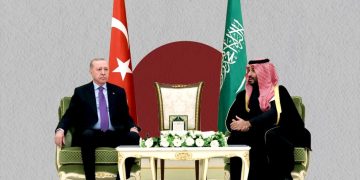
Turkish President Recep Tayyip Erdoğan stressed that Ankara hopes the SDF will soon integrate with the Syrian army, declaring that “those who move towards Ankara and Damascus will win, while those who seek other patrons will lose.” He added that Turkey continues its comprehensive contacts with Damascus to enhance cooperation and preserve the gains of stability.
The meeting, attended by the foreign, defence and intelligence ministers of both sides, discussed field developments and security cooperation, a step reflecting gradual progress towards building practical understandings between the two capitals.
A Regional and International Issue
Syrian writer and politician Mohammad Erslan told +963 that the Syrian crisis is no longer a purely domestic matter but has become a regional and international issue where the interests of multiple powers intersect.
Erslan explained that neighbouring countries, especially Turkey, have long sought to expand their influence within Syria, either by supporting certain factions or through direct military intervention. He said Turkey’s objectives are clear: to dominate Syrian geography and influence political decision-making in Damascus.
According to Erslan, President Erdoğan has been working to assert his control in Syria through multiple tools. His repeated meetings with international leaders, including former US President Donald Trump, aimed to secure political cover for these moves. Erslan believes that Trump’s public support for Erdoğan was not coincidental but reflected implicit understandings.
He noted that shuttle meetings between Turkish and Syrian officials are not new and will not be the last. Most of these meetings, he added, coincide with movements by the Kurdish-led Syrian Democratic Forces or delegations from the Autonomous Administration of North and East Syria towards Damascus; evidence that Ankara seeks to shape the course of those talks.
Erslan argued that Turkey aims to have the final say in the Syrian file, but this ambition faces many obstacles, chiefly the involvement of other regional and international powers unwilling to leave Syria entirely under Turkish influence.
He added that Ankara uses its allied factions as tools to pressure the SDF, even attempting to provoke armed confrontations in areas such as eastern Euphrates and near the Tishreen Dam, efforts that have repeatedly failed.
Erslan explained that Turkey’s main goal is to weaken the Kurdish component in Syria, either by forcing its integration into the Syrian army or dismantling its independent military structure. For Ankara, any organised Kurdish force within Syria represents a direct threat to its national security.
He added that Turkey does not want a political solution to the Kurdish question inside Syria, since any formal recognition of Kurdish rights would, from Ankara’s point of view, amount to acknowledging a “Kurdish issue” — something Turkey fears could spill over into its own territory.
Erslan concluded that Turkey is pressuring the Syrian Interim Government and its allied factions to intensify their stance against the SDF in order to extract concessions that Ankara can later use domestically; especially regarding Abdullah Öcalan’s file and the Kurdish question within Turkey itself.
Read also: Ahmad al-Sharaa in Moscow: New Phase in Syrian–Russian Relations
Turkish Inflexibility
For his part, Tariq Hemo, a researcher at the Kurdish Centre for Studies, told +963 that Turkish intervention in Syrian affairs is not new, particularly concerning the Kurdish issue.
Hemo explained that Turkey refuses any constitutional recognition of Kurdish identity and rejects the notion of decentralisation. It also opposes integrating the SDF into the Syrian army as a unified body.
He added that the Syrian Interim Government faces significant pressure, as Turkey now wields broad influence over Syria and seeks to play a larger role than Iran itself. Damascus, in turn, is attempting to use this Turkish pressure to curb the SDF’s gains in the ongoing negotiations.
He noted that recent remarks by Syria’s transitional president Ahmad al-Sharaa in Turkey’s Milliyet newspaper included explicit threats to the Kurds and the SDF, using Turkey’s growing role as leverage; a development that, Hemo said, requires a stronger and firmer Syrian position.
However, he added, Syria today is weak both economically and politically and depends heavily on Turkey in many vital areas such as agriculture, where Ankara controls the water flow, and industry, giving Turkey wide influence over Syrian policy and internal decision-making.
Hemo stressed that this imbalance will not change unless Turkey redefines its approach to the Kurdish issue by resolving it domestically and reaching a lasting peace with its own Kurdish population.
When asked about Ankara’s approach to Syria, he said: “Turkey’s perspective remains purely security driven. It wants to integrate SDF fighters into the Syrian army as individuals, not as a collective force, even though it knows this is impractical. Individual integration is one thing, but acknowledging the SDF as an organised structure, as was the case with Turkey’s own allied ‘National Army’ factions, is another matter entirely.”
Hemo explained that Turkey’s view of the Kurds is primarily a security concern but expands into a broader geopolitical strategy for Syria as a whole. Ankara sees Syria as part of its sphere of influence, where no actor should move without its consent.
He added: “After every meeting between Damascus and the SDF or the Autonomous Administration, Ankara immediately summons Syrian officials to demand details and announces its position, often in the form of public threats or rejection. This pattern has remained constant and will not likely change unless Turkey reaches a permanent domestic peace with the Kurds.”
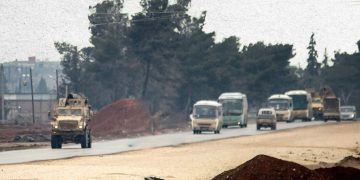
Hemo continued: “Turkey does not want any development in Syria without its approval. It effectively dominates Syrian decision-making. The Syrian foreign, intelligence and defence ministries coordinate directly with Ankara. There are monthly reciprocal visits, and Turkish military bases are spread inside Syrian territory.”
He noted that Turkey has imposed its own administrative, educational and financial systems in areas under its control. Some local officials even hold Turkish citizenship, shop signs are bilingual (Arabic and Turkish), and the Turkish language has entered local education.
In conclusion, Hemo warned of a “soft invasion” underway in northern Syria, particularly in Aleppo, which could eventually lead to annexation or the establishment of a special administrative status under Turkish hegemony.
The Turkish Foreign Minister confirmed that the Ankara meeting with the Syrian delegation served as a comprehensive assessment of bilateral security cooperation, emphasising that Syria’s security is an integral part of Turkey’s national security.
He added that the discussions covered strategic aspects of the relationship and possible joint steps to safeguard Syria’s territorial integrity. The minister also said that the Syrian administration showed clear determination to overcome current challenges, affirming Turkey’s continued support for its “Syrian brothers” to promote cooperation and regional stability.
Read also: Trump’s Gaza Plan: Ceasefire or New Middle East Era?
A New Phase
Turkish researcher İslam Özkan told +963 that the latest Ankara talks between Turkish and Syrian officials mark a new phase in regional power dynamics.
Özkan explained that these discussions coincided with reports of a broad agreement between Damascus and the SDF to integrate the latter into the Syrian army, a development that could reshape the negotiation process.
From Ankara’s perspective, this means that the party directly linked to its security concerns is no longer the SDF alone but the Syrian government itself.
Thus, the talks have evolved beyond security and counter-terrorism issues to focus on state sovereignty and territorial integrity; a significant shift in the trajectory of Turkish-Syrian relations.
According to Özkan, this shift offers Damascus new diplomatic and field legitimacy while forcing Ankara to redefine its military and political role in northern Syria.
Despite persistent mistrust, the potential settlement of the SDF question provides a more realistic foundation for comprehensive political negotiations.
In short, these meetings are no longer limited to narrow security agendas. They have become a platform for discussing Syria’s future governance structure and Turkey’s place within it.