


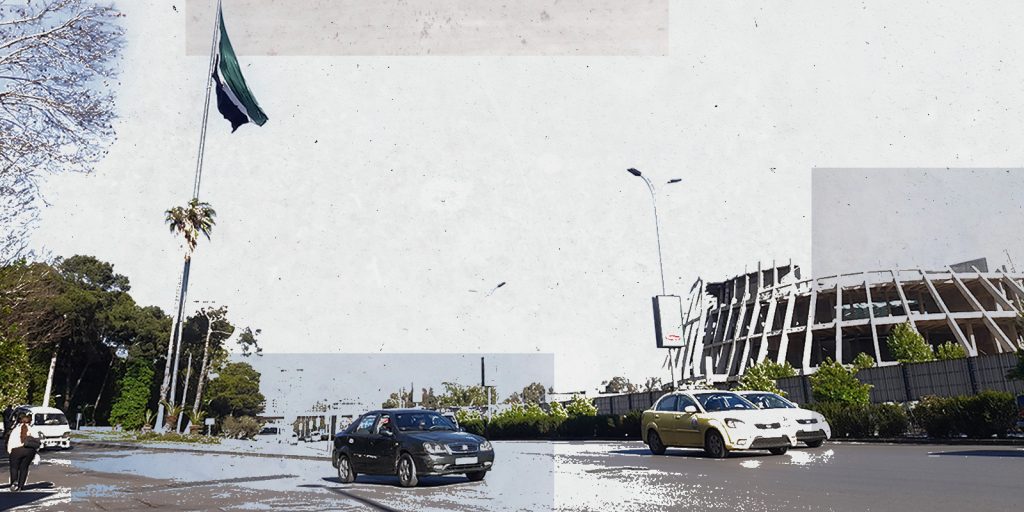
Nearly five months after the fall of the Assad regime, the Syrian capital, Damascus, is undergoing rapid and complex transformations that are reshaping various aspects of life. From clear popular relief on people’s faces, to tangible improvements in service and the economy, as well as a relative opening in public freedoms, signs of a new phase are emerging, one in which the transitional government is striving to shape the future amid the challenges of shifting from an era of tyranny to a space of national participation.
General Relief and a Shift in the Popular Mood
Since the formation of the Participatory Transitional Government following the end of the Interim Government’s mandate, Damascus has shown signs of slowly emerging from its long-standing crisis. Optimism is no longer confined to political speeches; it is visible on the ground, where ordinary Syrians are experiencing real improvements in elements of daily life for the first time in years.
In university neighbourhoods, as well as in the streets and markets, people speak of better access to electricity and water, and the disappearance of the long queues that had worn them down day after day. But what stands out most in their testimonies is a renewed sense of “dignity” and “relative security” from being persecuted for their opinions.
Unprecedented Response in University Services
Suleiman Deeb, a student at the Faculty of Health Sciences at Damascus University, described the signs of change to +963, saying, “The situation has changed a lot, especially in university housing. Before the fall of the ousted regime, we lived in constant darkness, no electricity, no running water. But now, there is a regular supply between eight in the morning and noon, and that alone feels like a small revolution. Even the housing management’s attitude toward us has changed; they now respond quickly and handle requests efficiently.”
Deeb added that this seemingly simple shift, in the eyes of some, represents a transformation in the management’s mindset, one that previously regarded students as mere numbers, not as human beings with voices and rights.
Related: Trump Urges Syrian President to Expel ‘Palestinian Terrorists,’ Take Over ISIS Prisons
“We Were Living in a Play of Fear”
For Omar Abdel-Hay, a computer science student, the previous situation was nothing short of a “circus of oppression.” He believes the change goes beyond material conditions, it touches the essence of life.
He told +963, “We were treated as suspects at checkpoints, even though we carried study deferments from compulsory service. One word, or even your facial expression, was enough to drag you into interrogation.”
“The real disaster,” he added, “was that even inside the university, there were agents from the Palestine Branch writing reports on students.”
Omar considers the mere disappearance of that fear to be “true liberation,” and confidently adds, “We endured 14 years under the tyrant’s rule, and we are ready to be patient for another year or two until the transitional phase is completed.”
Omar al-Faqir, a computer engineering student, emphasises the importance of dignity above all else. He told +963, “Bread, fuel, and cars are now available at lower prices, but what matters most to me is that I can go to the market and buy what I want without anyone asking: Who are you? What’s your affiliation? That’s the real change, feeling like a human being with rights, not just a follower.”
Kindness Lingers, But Without Fear
Majd al-Fahl, who returned to Damascus after 11 years in Türkiye, where he studied cybersecurity, noted that while “people’s spirit has not changed,” the biggest difference lies in freedom of expression. “Before, just one word could get you jailed or forcibly disappeared. Now, discussions are happening in cafés, universities, homes, even on the street, without fear of the “Big Brother” watching over us,” he said.
Engineer and politician Basil Kouevi, head of the National Bloc, described the current stage as “constitutive par excellence,” requiring patience and collective awareness. Speaking to +963, he said, “The current government is made up of technocrats and is participatory to a reasonable extent, but we hope it will expand further to include a broader spectrum of society. We believe that transitional justice and the institutionalisation of political action are the two pillars for building a new Syria.”
Kouevi emphasised the importance of forming a representative legislative council, describing it as one of the foundational steps for which Syrians paid a high price in their pursuit of a democratic, civil state.
Related: Syrian Pound Surges After Trump’s Riyadh Remarks, Relief Rally or Temporary Mirage?
Internationalist Speech and the Flag of the Revolution
Among the most significant political developments, Kouevi pointed to the speech by Syrian Foreign Minister Asaad al-Shaibani at the United Nations, calling it “historic and pivotal,” particularly since it marked the first time the Free Syria flag was raised in front of the UN building.
“This is not just symbolic, it’s a message to the world that Syria is returning to the international community with a new, free identity,” Kouevi said. He praised Minister al-Shaibani for delivering a balanced speech that included political reassurances and promises of justice and reconciliation.
Kouevi also called for expanding the scope of Syrian-Syrian dialogue to include all governorates. “We need an honest conversation about transitional justice. We cannot build the future without holding accountable those who shed blood or looted public funds. But accountability must happen without revenge, within a clear legal framework.”
He stressed that civil society and political parties must play a strong role, not as tools, but as genuine partners in the reconstruction process.
Economic Revival: The Citizens’ Priorities
Concluding his remarks, Kouevi emphasised that citizens’ top priority now is achieving a decent standard of living. “People want electricity, job opportunities, medicine, and education for their children. We are only four months past the fall of the regime, we have to be realistic. Even in democratic countries like the United States, transitions take time. A new government takes three months just to assume office. In our case, we emerged from institutional collapse, and that demands time and patience.”
He concluded, “Economic recovery is the key to dignity, and dignity cannot be achieved without balancing income and expenses. The transitional government has taken the right steps, but it must accelerate its efforts to maintain public trust.”











