Since its formation a few months ago, Syria’s new government under President Ahmad Al-Shara has been pursuing an intensive diplomatic push to reposition the country both regionally and internationally. Following the ousting of Bashar Al-Assad’s regime in early December, the government has promoted what it calls a policy of balance; rebuilding ties based on mutual respect and shared interests while avoiding conflicts and wars that have deepened the region’s crises. This comes amid Syria’s complex realities after more than 14 years of conflict.
The new Syrian authorities face the difficult task of reshaping foreign relations after years of devastating war, economic collapse, and the destruction of essential infrastructure; all under persistent security challenges and a lagging recovery process. Despite the lifting of sanctions by the United States, the EU, and other Western countries, reconstruction remains slow amid competing regional and global interests seeking influence in a country now redefining its statehood and alliances.
In this exclusive conversation, Dr. Salah Qirata, Professor of Political Science and International Relations in Madrid, answers questions for +963 about Syria’s evolving foreign policy and its emerging relations with neighbors and the world.
How do you view Syria’s current foreign policy?
Since Ahmad Al-Shara assumed leadership following the major political shift that ended Bashar Al-Assad’s rule, Syria’s foreign policy has focused on repositioning itself both regionally and globally. Under the theme of “restoring sovereignty and balanced openness,” the new Damascus is quietly engaging through regional and international channels to define its future role;; including its complex relationship with Israel.
Read also: UAE, Lebanon, and USA: A New Roadmap for Syria and Israel
With talk of possible normalization between Damascus and Tel Aviv, how might Syrian–Israeli relations develop?
While normalization with Israel remains highly divisive within Syria, there are signs the new leadership is handling the issue with pragmatic realism rather than strict ideology. Diplomatic sources mention indirect contacts through Gulf and international mediators to de-escalate tensions in southern Syria and reaffirm commitments under the 1974 disengagement agreement. So far, however, there are no clear steps toward a full political normalization. Official Syrian statements maintain that any negotiations or normalization must be conditioned on Israel’s withdrawal from the occupied Golan Heights, full respect for Syria’s sovereignty, and an end to all air and military strikes.
Given this equation, it’s too early to predict a decisive turning point in Syrian–Israeli ties, but it’s clear that Syria’s new approach views the file through the lens of regional security and domestic stability rather than old ideological alignments. This shift alone marks a notable political change that could shape a more pragmatic phase of Syrian foreign policy.
In this light, the Syrian–Israeli relationship could evolve into what some call “silent normalization,” starting with security coordination via mediators and potentially progressing toward a political track; if clear conditions safeguarding Syrian interests and public sentiment on the Arab–Israeli conflict are met.
Where does Syria stand with its neighbors, including Turkey, Iraq, and the Arab world in general?
Syria under President Ahmad Al-Shara is actively redefining its regional position after years of isolation and severed ties under Assad. Relations with neighboring countries are undergoing a clear shift, based on mutual sovereignty, shared interests, and conditional openness.
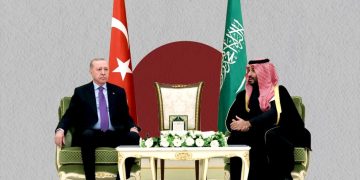
With Turkey, there has been an unprecedented breakthrough: diplomatic relations officially resumed at the end of 2024, and high-level meetings between President Al-Shara and Turkish President Recep Tayyip Erdoğan have resulted in security and economic understandings. Turkey has expressed support for Syria’s stability, and both sides agreed on a security roadmap to secure borders, combat terrorism, and curb the influence of extremist factions. In return, Damascus has called for a phased Turkish withdrawal from northern Syria within a framework that respects on-the-ground realities.
Syria’s ties with Iraq are also improving, especially in coordinating security along the eastern border and fighting remnants of ISIS. Damascus views Baghdad as a natural partner in reactivating transit routes and economic integration, with joint discussions underway to reopen border crossings and boost trade.
At the Arab level, Syria has regained full membership in the Arab League and has taken part in official summits hosted by Gulf countries, especially Saudi Arabia and the UAE. The Gulf is clearly leaning toward supporting Syria’s stability not just politically but also through initial investment plans in infrastructure and energy, particularly after the leadership change ended the previous era
Read also: Britain’s Return to Syria: What Role Can London Really Play?
Is the Syria–Egypt–Saudi Arabia triangle returning in a new form?
The revival of the Syria–Egypt–Saudi Arabia axis is more than just a political aspiration; it represents a strategic realignment in the Middle East after years of tension and division. Under Ahmad Al-Shara, Damascus is rebuilding ties with Cairo and Riyadh based on shared interests in counterterrorism, resisting foreign meddling, and promoting regional political and economic stability.
Egypt, under President Sisi, sees Syria as an important partner for Arab national security and is keen to strengthen political and military coordination, viewing Syria as a vital link between the Gulf and the Mediterranean.
Saudi Arabia, after reassessing its regional policies, has shown clear openness to the new Syria and taken practical steps to reopen diplomatic and trade channels, focusing on supporting reconstruction efforts and counterterrorism.
If this triangle returns in an official, functional way, it will likely rely on:
- Deep security coordination to secure borders, share intelligence, and combat extremist groups.
- Expanding economic cooperation, including reconstruction projects, energy links, and free trade.
- Regional political consensus to strengthen the Arab role in managing competing influences, especially amid rivalries involving Iran and Turkey.
What is the main difference between foreign policy under the ousted regime and the new government?
Syria’s foreign policy over the past decades saw dramatic shifts, but under the former regime, it was largely defined by isolation and rigid alliances with countries like Iran and Russia, using ideological conflict and force as core tools. This approach marginalized Syria both Arab-wide and globally, intensified sanctions and external pressure, and deepened its regional isolation.
In contrast, under Ahmad Al-Shara’s leadership, Syria is embracing a more open and pragmatic approach focused on diversifying regional and international partnerships; especially with neighbors like Turkey, Iraq, and the Gulf states. The new foreign policy aims to build balanced relationships that support domestic stability and economic development, avoiding the old polarizations while seeking to reintegrate Syria as a sovereign player advancing its interests with confidence and balance.
Who loses most in Syria’s new foreign policy era?
With the new leadership repositioning Syria based on sovereignty and openness instead of isolation and dependency, some external actors tied to the old regime have lost ground. Iran, which built its influence through military intervention and political alignment, now faces a leadership looking to loosen dependency and balance relationships. Russia’s role is also gradually shrinking as Damascus moves toward more diversified ties, especially within the Arab world.
Algeria missed an early chance to engage with the new Syria due to its support for the deposed regime, leaving it sidelined in the evolving regional landscape. Similarly, some external opposition factions that relied on temporary alliances or foreign agendas have seen their influence wane as domestic realities reshape a more pragmatic political balance.
Read also: Shebaa Farms: Untangling Lebanon and Syria’s Border Dispute
Is there a new outlook for Syria–Russia relations?
After the political shift in Damascus and the end of the old regime, Syrian–Russian relations have entered a phase of reassessment. While Moscow was a major backer of the previous regime since 2015, offering extensive military and political cover, the new Syria under Ahmad Al-Shara is working to dismantle the dependency model and seek more balanced partnerships based on mutual interests rather than guardianship.\
This does not mean a break with Moscow, but rather a shift from dependency to balance. Russia, having invested heavily in Syria militarily, knows its continued presence must adapt to the new reality: Syria is no longer a pawn in a global power contest but an independent state redefining its regional role.
At the same time, the Syrian leadership is aiming to limit Moscow’s influence over core political decisions while maintaining cooperation in military and security areas; so long as it respects national sovereignty and does not hinder Syria’s outreach to its Arab and global partners.
Given the clear American support for the new Syrian government, could Syria become a strong U.S. ally in the region?
Growing American acceptance of Syria’s new government suggests a possible strategic shift in Damascus–Washington ties after years of hostility and isolation. Yet this openness does not necessarily mean Syria will become a traditional U.S. ally. The new leadership is focused on restoring full sovereignty and avoiding entanglement in foreign alignments; so any partnership with Washington will be strictly based on national interests, not political bloc dynamics.
The United States recognizes Syria’s importance in reshaping regional balance and sees the new government as a rare chance to curb Iranian and Russian influence without direct intervention or imposing external solutions. For its part, Washington is handling Syria’s shift with measured flexibility, seeking to leverage the moment without undermining Damascus’s sovereignty or forcing it into a rigid strategic camp.