


The relationship between the Kurdish-led Syrian Democratic Forces (SDF) and Turkey is undergoing a noticeable shift, from years of military confrontation dominating the scene to a trajectory focused on diplomatic and security dialogue. This shift has not come in a vacuum; it is the result of regional and international pressures, as well as U.S. efforts to open direct communication channels between Ankara and the SDF.
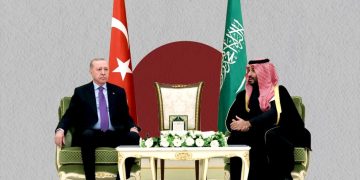
U.S. Special Envoy to Syria, Thomas Barrack, confirmed that continuous meetings are taking place between SDF commander Mazloum Abdi and Turkish Foreign Minister Hakan Fidan, with the participation of senior Turkish officials such as Intelligence Chief Ibrahim Kalin, and with direct support from President Recep Tayyip Erdoğan.
Barrack noted that “Ankara’s engagement in direct dialogue with Kurdish forces, despite deep-seated conflicts, demonstrates that understanding is possible,” while warning that the absence of dialogue could lead to decades of recurring violence.
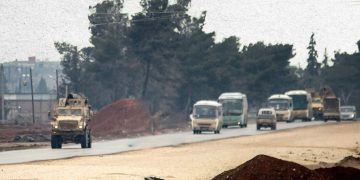
This diplomatic shift comes after years of confrontations between the SDF and Ankara-backed factions in northern Syria, which have subsided in recent months, opening the door to new communication efforts.
Earlier discussions in June, also U.S.-facilitated, addressed sensitive issues including the fate of prisons holding ISIS members, the future of U.S. forces in Syria, and even the potential integration of the SDF into the Syrian army under Damascus.
Meanwhile, Ankara and Damascus have shown increasing rapprochement, exemplified by a memorandum of understanding to enhance military and security cooperation, including joint training and logistical support for the Syrian army.
However, negotiations between the SDF and the Syrian government regarding the March 10, 2025, agreement between the Syrian president Ahamad Al-Sharaa and SDF leader Mazloum Abdi have stalled, especially after Damascus refused to participate in the Paris round and froze dialogue.
Turkey’s Role in SDF-Damascus Relationship
Turkish affairs specialist Sarkis Kassarjian told +963 that the March 10 agreement remains effective in opening dialogue and avoiding military confrontation, though further understanding is needed.
He highlighted two key aspects of the agreement’s effectiveness: first, it opened channels of negotiation between Damascus and the Autonomous Administration of North and East Syria, forming the foundation for subsequent meetings; second, it largely reduced the likelihood of clashes along the frontlines between the army and the SDF.
Kassarjian added that Turkey’s role complicates reaching an understanding between Damascus and the Autonomous Administration. Ankara’s considerations are not only security and foreign policy-related but also tied to internal political alliances within Turkey.
While a permanent solution remains difficult, he ruled out additional escalation due to U.S. and regional efforts to stabilize the situation. Yet, the unilateral mindset in Damascus and refusal to involve other Syrian components in the transitional process increases the risk of failure in negotiations for a final, peaceful resolution.
Political Maturity
International relations expert Tarek Ziad Wahbi told +963 that recent understandings reflect “political maturity” on Ankara’s part, following the Kurdistan Workers’ Party’s (PKK) abandonment of armed activity and engagement in the political process.
He argued that “the SDF has proven to be a capable force on the ground, primarily focused on protection rather than attack, making dialogue a practical choice,” noting that the model of autonomous governance in Iraq could serve as a basis for a similar decentralized and participatory settlement in Syria.
According to Wahbi, regional and international balances, from U.S. and French presence to Turkey’s position, create both pressure and guarantees, potentially opening the door to political solutions that could revive the Syrian and Kurdish economies.
Implementation Fragility
Former Syrian diplomat Bashar Ali Al-Haj Ali cautioned against excessive optimism, emphasizing that the latest agreement “still suffers from weak field implementation amid mutual violations and delays in integration steps.”
He identified three main obstacles: power struggles between Damascus and the SDF, the influence of external actors, and complexities related to resource and border management.
Ankara operates along two parallel tracks: secret communication channels with Kurdish actors on one hand, and continuous security pressure on the ground on the other. This reflects a policy of politically supporting Damascus while maintaining effective deterrence tools.
According to Al-Haj Ali, the best-case scenario is a “long-term truce with gradual integration,” while the worst case involves “calculated Turkish escalation combined with hardline positions from Damascus.”
These assessments show that the SDF–Turkey relationship is suspended in a “sensitive balance”: on one side, opportunities arise from Turkey’s political maturity, as Wahbi sees it, with dialogue and willingness to explore parallel political solutions. On the other, risks stem from fragile implementation and structural complications, as Al-Haj Ali warns, including disputes over leadership, control, and resources.
Between these two perspectives, the future of the relationship hinges on the parties’ ability to manage the trio of power, borders, and resources. Otherwise, analysts warn, current understandings may remain “a temporary truce, postponing an inevitable explosion.”