


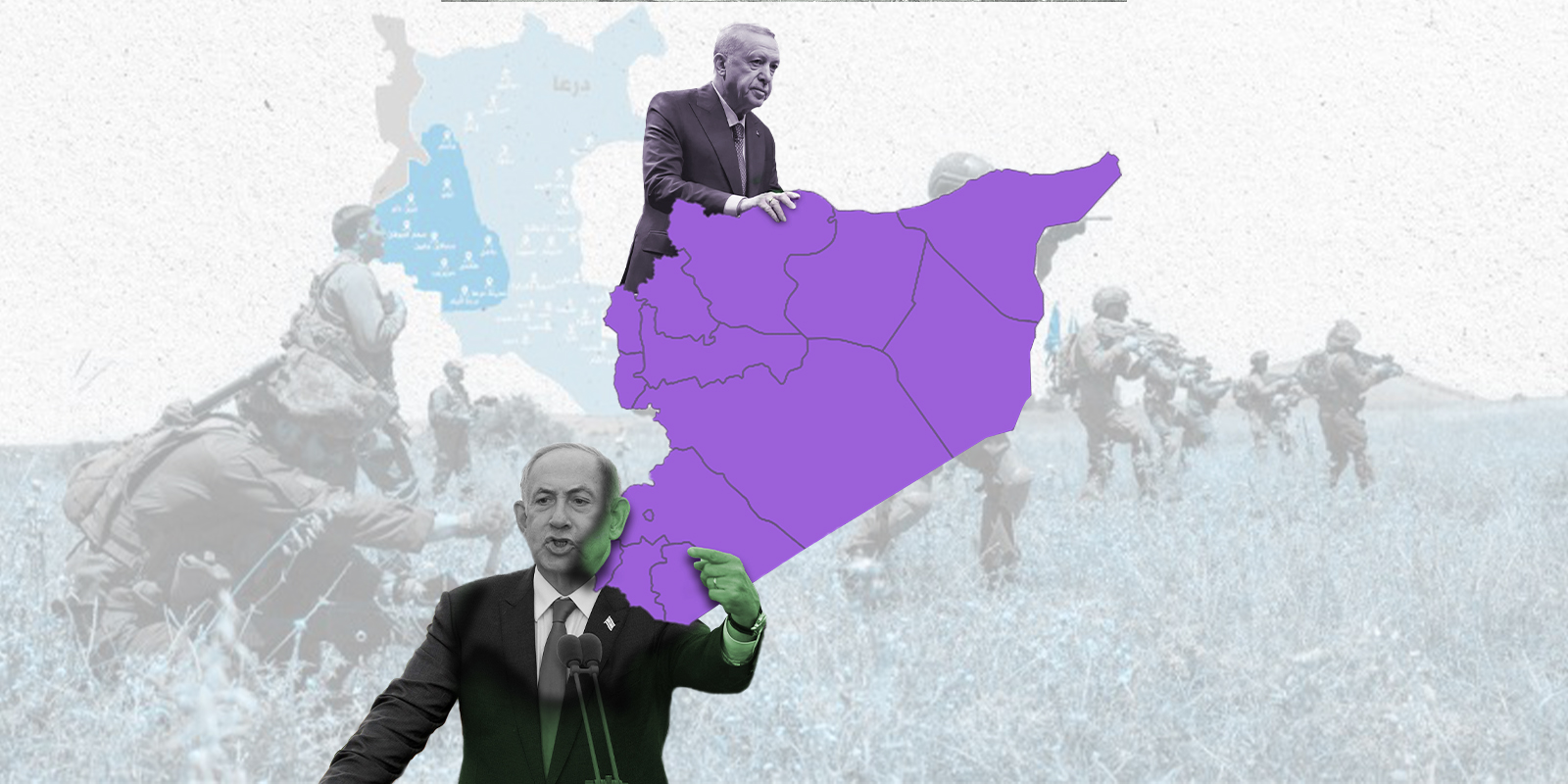
As Syria continues to suffer from overlapping crises for over a decade, it remains a land of immense natural wealth, from oil and gas reserves to phosphate mines and fertile agricultural lands. These resources offer significant economic potential, especially in a post-conflict recovery phase.
Given this, the competition, or rather the conflict, over Syria’s natural wealth, following the collapse of the Assad regime, has become a key axis in the strategic and economic rivalry among regional and international powers. Turkey and Israel are both vying for strategic footholds in this ongoing struggle. Recently, signs have emerged of indirect coordination between the two in attempts to gain control over Syria’s natural resources.
The ongoing instability has created fertile ground for regional ambitions. Both Turkey and Israel operate within what could be described as Syria’s “economic geography,” exploiting the country’s resources without regard for Syrians’ rights or the interests of future generations. Their actions also lack adherence to frameworks that protect against looting, depletion, or long-term external domination.
Meanwhile, the average Syrian remains sidelined, watching for signs of stability, better public services, and access to the wealth of their own homeland; the very factors that should provide jobs, income, and a secure future.
Grabbing Economic Opportunities
Dr. Firas Shaabo, an economic researcher and professor of financial management at Istanbul’s Basaksehir University, tells +963 that Ankara and Tel Aviv are not interested in saving Syria or supporting its people but in seizing economic and geopolitical opportunities.
“The Syrian land is treated as an investment resource,” he says, “while the Syrian people are left without a homeland, protection, or future.”
Read also: How Does Israel Want a “New Abrahamic Syria” to Look?
Shaabo emphasizes that both countries view Syria as a strategic and economic asset. Syrian refugees, in contrast, are seen as burdens or bargaining chips.
Israel, for instance, has been vocal about its interest in the occupied Golan Heights, rich in water, agriculture, and renewable energy. The Israeli government has even awarded oil exploration rights in the Golan to foreign firms such as Genie Energy.
“Israel is not interested in refugee return or regional stability,” he says, “but rather fears their return.”
As for Turkey, Shaabo notes that Ankara’s goals extend beyond national security to controlling a strategic border strip that facilitates influence over trade routes, energy corridors, and agricultural zones.
Turkey has exploited northern Syrian territories (e.g., Tal Abyad, Ras al-Ain, Afrin, Idlib) through intensive Turkish agriculture, replacing the Syrian pound with the lira, and dominating key services like electricity, telecom, and healthcare.
Turkey has not developed a serious plan for the voluntary or dignified repatriation of refugees, instead using them as leverage in negotiations with the EU, especially during the 2016 migration-for-funding deal.
This policy has turned Syrian refugees into political liabilities rather than human capital. Turkey has also built a 911-km border wall, enforced with electronic surveillance and mass deportations.
Shaabo concludes by noting that these policies demonstrate how Syria has become an investment project for regional powers, ignoring the fate of Syrians and their right to return, safety, and dignity.
Since the collapse of the Assad regime, signs have pointed to a shift from coordination to competition between Ankara and Tel Aviv over Syria’s wealth, particularly in areas like northern and southern Syria where natural resources abound, from fresh water to energy.
This fuels growing questions among Syrians about their country’s future and the destiny of the next generation.
A Geo-Economic Knot
Syrian academic Imad Musbah explains that Turkey and Israel are not fighting over limited oil or gas but over Syria’s position as a geo-economic node connecting the Eastern Mediterranean, Anatolia, the Gulf, and Central Asia.
“Whoever controls the Syrian corridor,” he says, “controls the flow of energy, water, and trade, securing regional strategic depth.” Syria’s location makes it inseparable from regional security frameworks, explaining the intensity of the competition.
Read also: Turkey’s Role in Syria: From Hafez al-Assad to Ahmad al-Sharaa
Musbah describes the Turkish Israeli race as just the visible tip of a broader battle to dominate vital supply chains.
He points out that Turkey has reduced the Euphrates River flow as political pressure on northern Syria, while Israel accelerates drilling in the Golan to integrate it into its Eastern Mediterranean gas infrastructure.
Despite their rhetoric about “stability” and “security,” both nations disregard Syrians’ basic rights and needs, prioritizing influence and economic control over well-being.
In northern Syria, replacing the local currency with the Turkish lira has turned the region into a monetary extension of Turkey. Meanwhile, plans to pipe Qatari gas through Syria into Europe challenge both Damascus and Israel’s energy exports.
The result: new logistical and economic maps drawn from outside Syria’s borders, reshaping the country’s economic geography to the benefit of foreign powers and at the expense of national sovereignty.
With state institutions collapsed and oversight absent, Syria’s resources have been privatized by outside actors.
Turkey’s damming of the Euphrates has devastated agriculture and electricity for over five million people. Olive groves in Afrin have been looted. Militias have been funded, creating a shadow war economy aligned with Ankara’s interests. Israel, meanwhile, forces Golan farmers to pay exorbitant fees for water from their own land, turning natural resources into tools of pressure and control.
In this equation, Syrians face environmental destruction and economic hardship, with little to no benefit from their country’s wealth.
Musbah concludes that these developments illustrate a modern model of covert economic colonialism. Through public-private partnerships, Israel turns military occupation into a profitable long-term enterprise, while Turkey embeds deep economic dependencies using soft-power tools like relief aid, national currency, and services.
Syria, in this light, becomes a battleground not just for land; but for the very soul of its economy.











