


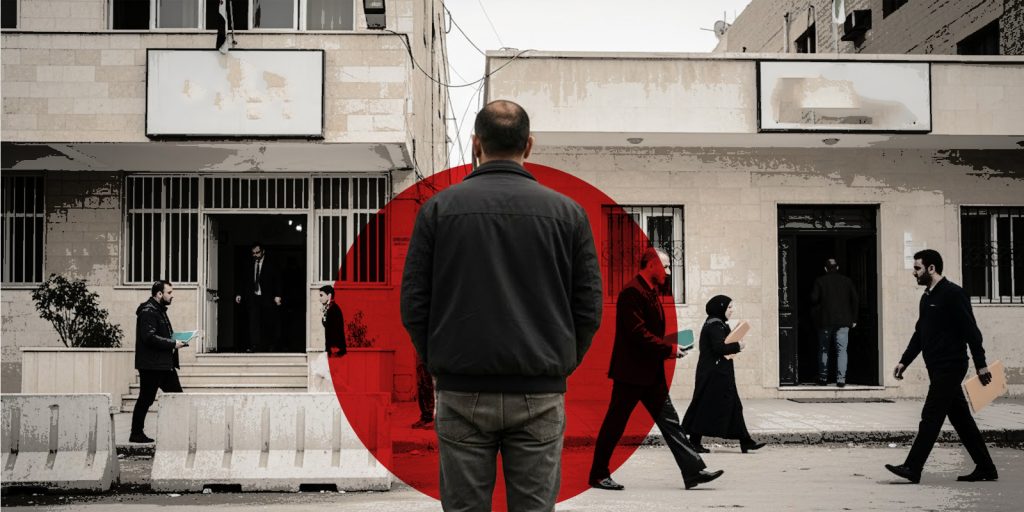
The Autonomous Administration of North and East Syria, with over 130,000 employees in its civil institutions, faces a pivotal stage in integrating its civil and military institutions with the Syrian state under the March 2025 agreement. Parties hold differing visions of the process: the administration seeks to preserve its local structure and employee rights while unifying security, military, and civil functions, whereas the central government in Damascus sees integration as a means of bringing all institutions under state authority and ensuring national unity. Success depends first on agreeing on a comprehensive constitution defining the relationship between local and central authorities, maintaining sovereign resources as public property, and keeping local services under self-administration management, all while leveraging regional and international conditions for maximum gains.
Since its establishment in 2014 as separate cantons and its evolution into a unified political entity in 2018, the self-administration has built a full civil governance model covering political, economic, social, educational, and financial sectors, employing tens of thousands of staff. This model now sits at the forefront of the integration process, in accordance with the March 10 agreement signed between the Syrian Democratic Forces (SDF) and the interim Syrian government.
March 10 Agreement
On March 10, 2025, SDF Commander General Mazloum Abdi and Interim President Ahmad Al-Sharaa signed an eight-point agreement outlining the integration of civil and military institutions in northeastern Syria into the Syrian state, including Qamishli Airport, border crossings, and oil and gas fields. Both parties conducted multiple negotiation rounds on implementation.
Civil Institutions and Integration Process
By early 2025, the self-administration reported employing over 200,000 staff across all sectors, with monthly costs of approximately $50 million, mostly allocated to salaries and subsidies, particularly for fuel and utilities. Negotiations with the central government proceed alongside military integration discussions, with specialized committees managing each sector. Questions remain over how to unify institutions while preserving local autonomy and ensuring an agreed approach.
Yasser Suleiman, spokesperson for the Autonomous Administration negotiation delegation, told +963 that upcoming steps in talks with the government aim to overcome obstacles in implementing the March 10 agreement. The administration seeks to begin this stage alongside the launch of the new currency, ensuring civil peace, unifying command, and building a unified army for all Syria. A new negotiation round with the government is scheduled for early January.
Read also: SDF Integration into the Syrian Army: Political, Military, and Societal Aspects
Differences Over Integration Approach
Ahmad Bakro, head of the Political Authority in Idlib, explained that the central government views integration as a comprehensive solution, bringing all institutions under the central administration to maintain national unity and prevent future federalist pressures or political leverage against the state. In contrast, the Autonomous Administration sees integration as mutual recognition and sharing of resources and authority while preserving its administrative, political, and military structure. The partnership is primarily focused on joint counter-terrorism efforts, satisfying international expectations while allowing local governance to continue.
Zara Saleh, a UK-based peace and conflict researcher, noted that the government sometimes bypasses clauses of the March 10 agreement. Integration is Clause 4, preceded by guaranteeing participation of all Syrian components in governance and constitutional rights for the Kurdish population. Saleh emphasized that unification will only succeed with a constitution agreed upon by all Syrians, which would automatically define the relationship between local administrations and the central government.
Centralized vs. Local Jurisdiction
Saleh explained that natural resources like oil, water, and border crossings remain public property, while services such as education and healthcare remain under local self-administration authority. Education in self-administration regions is delivered in Arabic, Kurdish, and Syriac, with staff operating under local social contracts and institutions, maintaining indirect relations with the central government.
Yasser Suleiman confirmed that significant progress has been made on military and security integration files, rejecting any form of country partition. He emphasized the need to reactivate state institutions, such as civil registries and universities, and open borders with Turkey and Iraq. Planned adjustments aim to align self-administration institutions with state structures while protecting employee rights without exclusion.
Bakro noted that Damascus shows flexibility on issues like SDF military units, certain constitutional amendments respecting Kurdish geographic, cultural, and social particularities, expanded appointments within state administration, and administrative decentralization for local governance of education and staff appointments. Both the central government and self-administration are leveraging timing and regional conditions to maximize gains, while Damascus seeks to ease pressure and workload amid limited resources.
Saleh highlighted that civil status institutions and courts pertain to local administration law, not central state sovereignty. Last week, the SDF media center announced that General Mazloum Abdi’s planned visit to Damascus, along with the Autonomous Administration negotiation delegation, was postponed due to technical reasons. No changes occurred regarding the communication track or objectives, and ongoing dialogue with Damascus continues directly and indirectly, despite occasional violations.











