


Widespread popular protests continue across Iran, with large crowds gathering in several cities. In some demonstrations, security forces reportedly opened fire on protesters, according to media reports.
In the city of Fasa, in Fars province, residents organised a protest gathering, stormed the governorate building and set fire to the street opposite it. Protesters chanted slogans including “Death to the dictator”, “Reza Shah, rest in peace”, and “The clerics must go”. Iran International reported receiving videos and eyewitness accounts showing direct gunfire by security forces against protesters in Fasa.
This latest wave of protests appears as a broad social mobilisation led by traders and shop owners – an economically influential class – with notable repercussions for Iran’s political and economic climate.
The protests have been fuelled by mounting economic hardship in recent months, driven largely by Western sanctions. These pressures have led to a sharp collapse in the value of Iran’s national currency and unprecedented price increases.
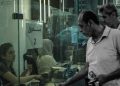
According to media reports, the initial spark came from Tehran’s Grand Bazaar, where goldsmiths and currency exchange shops closed in protest. A sudden spike in gold prices and a steep decline in the rial severely disrupted business activity, inflicting significant losses on these sectors.
Accumulated grievances
This wave of unrest is closely linked to the accumulation of economic, social and political grievances, prompting protesters to raise political and economic demands simultaneously.
Reports indicate that the spread of protests to new areas and social groups – including traders in Tehran and other cities such as Isfahan, Shiraz and Kermanshah, as well as university students – prompted security forces to intervene using tear gas, according to Le Monde.
The French newspaper reported that Iranian President Masoud Pezeshkian adopted a conciliatory tone, pledging to listen to the protesters’ “legitimate demands” and tasking the interior minister with opening dialogue with their representatives. Measures announced in response included changes in the management of the Central Bank.
At the same time, warning text messages were reportedly sent to citizens cautioning against participation in “illegal gatherings” and threatening strict measures should protests continue. Authorities also announced a brief official holiday at the end of the year in an attempt to curb their expansion.
The participation of influential economic and social groups has intensified criticism of Iran’s political leadership and decision-makers, placing this protest wave at a critical intersection between domestic conditions and regional and international pressures – particularly following the recent war with Israel and the continued impact of sanctions on prices and living standards.
Read also: Israel and Iran: Escalation Ahead or Enforced Restraint?
A different kind of protest
Researcher on Iranian affairs Wijdan Abdulrahman told +963 that the current protests differ markedly from previous waves. Earlier movements often erupted rapidly in a single city before spreading nationwide, driven primarily by poorer and working-class groups – a dynamic that explained their swift expansion.
“This time, the protests are fundamentally different,” Abdulrahman said. “They began among the affluent and economically influential classes. As a result, we are seeing an unusual expansion from the top down, rather than from the poorest segments upwards.”
He noted that the protests initially emerged in Persian-majority areas and among higher social strata, before spreading to universities and professional unions, such as truck drivers’ syndicates, and then outward from central cities to provinces and non-Persian regions. This, he argued, reflects a qualitative shift in the social composition of the movement.
Abdulrahman added that the protests appear more organised and focused, with clear Western media attention, making them a genuine threat to the Iranian system amid overlapping pressures – economic sanctions, political isolation, the risk of war, and growing internal dissent.
He also pointed to signs of discontent within the military, police and Revolutionary Guard, with videos circulating of individuals expressing sympathy with protesters. While still limited, these cases suggest latent unease within Iran’s security apparatus.
Regarding external actors, Abdulrahman said Western countries, including Israel, are closely monitoring developments and favour their continuation. While Israeli Prime Minister Benjamin Netanyahu has not commented directly, the presence of intelligence networks inside Iran cannot be discounted, even as commentators avoid framing the protests as foreign-backed.
Should protests spread nationwide, Abdulrahman warned, pre-positioned internal actors could move according to pre-arranged plans, potentially triggering dramatic transformations beyond protest alone.
A system with limited flexibility
Iranian affairs researcher Ammar Tassai argued that the protests are unlikely to produce fundamental change within the system. He noted that the regime no longer possesses the flexibility it once showed during the reformist era under former president Mohammad Khatami.
Speaking to +963, Tassai said this rigidity has intensified under current economic pressures, international isolation, and disputes over Iran’s nuclear and missile programmes. While the protests stem largely from economic demands, he argued that addressing these grievances requires transparency and sound governance – reforms that take time and cannot be achieved through short-term fixes.
Tassai questioned whether the current moment might invite external intervention. While Israel may theoretically welcome change in Iran, he said there are no indications of an imminent military plan, especially as Israel does not wish to divert attention from the internal unrest rooted in economic hardship.
Read also: End of UN Resolution 2231 Triggers a New Standoff Between Iran and the West
Students join the protests
University students have emerged as a prominent force in the protests, with demonstrations reported at several Tehran universities and in Isfahan, according to the reformist ILNA agency and Asharq Al-Awsat. These included Shahid Beheshti, Khajeh Nasir, Sharif, Amirkabir, the University of Science and Culture, and Iran University of Science and Technology, as well as Isfahan University of Technology.
Videos circulating online show student marches in solidarity with protests against rising prices and the economic crisis, with some campuses echoing anti-regime slogans. In one video from Mollasadra Street in Tehran, protesters can be heard chanting: “Neither Gaza nor Lebanon – my life for Iran.”
Historical context and an uncertain future
Dr Raouf Fanni, a researcher at the Middle East and North Africa Studies Centre, told +963 that Iran has witnessed five major protest waves over the past 26 years. The first erupted in July 1999, when Tehran University students were met with repression. This was followed by the Green Movement protests in June 2009, labour-led unrest in December 2017, the nationwide protests of November 2019 that left over 1,500 dead according to rights groups, and the 2022 protests following the death of Mahsa Amini.
Fanni argued that the current wave comes at the weakest moment for the Iranian system since its establishment. Supreme Leader Ali Khamenei, now 86, has confronted every protest cycle since 1999 while sidelining many former allies. The regime has also lost senior Revolutionary Guard commanders in the recent war with Israel, while Hezbollah in Lebanon is no longer able to provide the same level of regional support.
Iran’s economy, described by Fanni as effectively bankrupt, combined with declining regime credibility after the war, has widened the gap between state and society. Unlike previous movements, the current protests target the system as a whole, with some chants openly calling for the return of Crown Prince Reza Pahlavi as a transitional leader with domestic and international acceptance.
While Fanni does not rule out an internal Revolutionary Guard coup, he considers its chances of public acceptance low given the Guard’s record. The most stable scenario, in his view, would be the formation of a transitional government led by Reza Pahlavi.
According to Iranian affairs researcher Mona Al-Silawi, these protests are the first to be driven entirely by purely economic grievances. She argues that the central problem lies in the absence of a credible leadership capable of organizing and directing the movement, a vacuum that has allowed some voices to call for the return of the monarchy.
Al-Silawi told +963 that there are deliberate attempts to hijack and redirect the protests in ways that undermine their original purpose, contributing to reduced participation in some areas. She added that the authorities are trying to portray demonstrators as monarchist groups by amplifying selected slogans and manipulating the narrative, even though the demands on the ground are fundamentally different, stressing that these tactics are intended to instill fear and discourage broader public participation in the protests.