


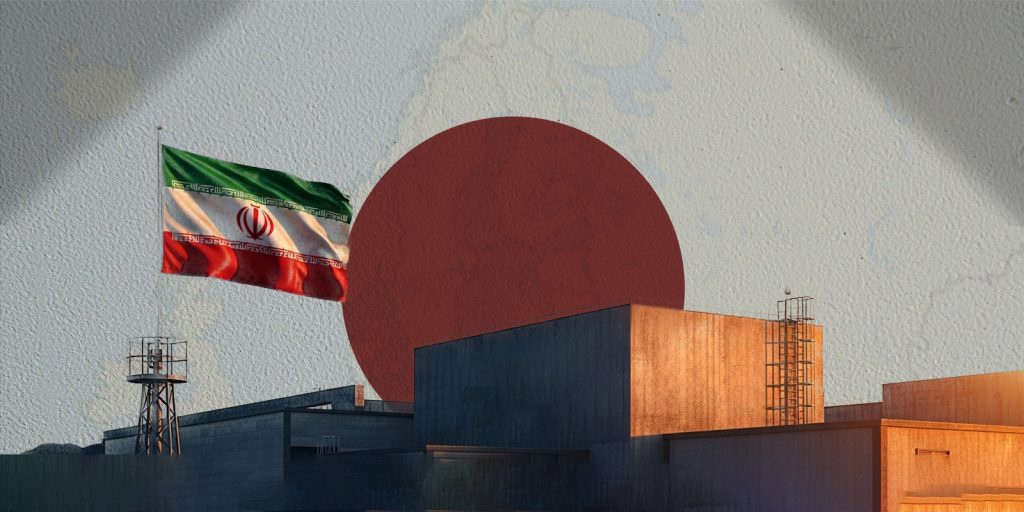
Through a letter addressed to the UN Secretary-General and the President of the Security Council, Iran announced that it had abandoned all UN Security Council resolutions, stressing that it is no longer subject to Resolution 2231, which was adopted in 2015 to support the nuclear deal.
According to an official correspondence, Iranian Foreign Minister Abbas Araghchi stated last Saturday that the international resolution had fully expired on October 18, 2025, in accordance with paragraph eight of the resolution’s operative text.
Despite the decisive tone of the letter, it did not disclose any future steps nor indicate any specific implications related to uranium enrichment or cooperation with the International Atomic Energy Agency (IAEA).
On October 10, French President Emmanuel Macron, British Prime Minister Keir Starmer, and German Chancellor Friedrich Merz issued a joint statement affirming that “the activation of the snapback mechanism was the right decision.” They called on all countries to adhere to the sanctions they deemed necessary to respond to Iran’s “continuing violations.”
In recent days, the United States, several European countries, and Turkey imposed a new series of sanctions on dozens of Iranian individuals and entities as part of this mechanism, which Tehran considered an illegal escalation in violation of the UN Charter.
Iran’s message to the UN can thus be understood as a clarification of its legal position, arguing that the “European notification” to activate the snapback mechanism lacks any legal foundation and carries no binding effect, emphasizing that activating the mechanism after the expiration of Resolution 2231 contravenes legal procedures and the provisions of the nuclear accord.
Read also: Netanyahu’s Southern Syria Card in the Power Equation
“The Agreement Has Effectively Ended”
Researcher on Iranian affairs Ammar Tasai told +963 that one of the main reasons Iran announced its release from the constraints of the Security Council and Resolution 2231 is that this resolution “no longer means anything to Tehran” after the activation of the snapback mechanism and the related conditions and procedures.
Tasai explained that the resolution “was fully activated against Iran,” rendering it practically irrelevant, noting that Tehran’s declaration of independence from it is more of a public statement than a new political decision. He stressed that “Iran’s disengagement from the resolution occurred automatically once the snapback mechanism was triggered, and today’s announcement is merely symbolic.”
Regarding the impact of this stance on the future of the nuclear deal and Iran’s relations with Western states, Tasai pointed out that the agreement effectively ended with the activation of the mechanism, leaving no existing framework.
He added that Western nations, except the United States, which had previously withdrawn from the deal, continue to demand Iran’s full and unconditional compliance with their terms, while Washington and Tel Aviv apply direct political and security pressure on Tehran.
Tasai noted that Iran is caught between two pressures: a European one demanding adherence to the accord and an American-Israeli one exerting military and political force. He said, “In truth, whether Iran complies with the nuclear agreement or not, it gains nothing. The Europeans hold only half the cards, while the United States and Israel possess the other half.”
He emphasized that Iran no longer perceives any political or practical benefit in upholding the nuclear deal, considering that the current situation confirms its complete ineffectiveness from Tehran’s perspective.
Regarding Iran’s regional influence, particularly in Lebanon, Yemen, and Iraq, Tasai remarked that the post-Gaza War developments, alongside the situation in Syria, have resulted in a tangible decline in Iran’s influence. He added that Tehran’s affiliated factions “are themselves under growing pressure,” and any domestic shifts in Iran will inevitably affect them, given their logistical, military, and financial dependence on Tehran.
He continued, “Iran is currently facing mounting international pressure following the activation of the snapback mechanism, which will undoubtedly have adverse repercussions for its regional allies in the coming phase.”
Tasai concluded, “Iran is in a delicate transitional stage, seeking to balance its internal conditions with international and regional pressures. Its recent declaration of liberation from Resolution 2231 is a symbolic political message rather than a practical step on the ground, yet it reflects the scale of challenges Tehran faces ahead.”
Researcher in Iranian affairs Wijdan Abdulrahman told +963 that Iran insists that terminating the nuclear deal, under Articles (22–31) of the Joint Comprehensive Plan of Action (JCPOA), must follow a defined legal process if the “snapback mechanism” is activated.
He explained that Iran’s position stipulates a forty-five-day period to review Tehran’s compliance with the agreement. If any breach is confirmed, the case should be referred to the IAEA for fifteen days to discuss possible resolutions.
If no settlement is reached within that period, the matter is then transferred to the Security Council, where Iran is granted an additional month before a vote. If no permanent member objects, the decision automatically takes effect.
Abdulrahman stated that Tehran believes these procedures were not followed properly, as it was not granted the fifteen-day grace period, rendering the decision in its view as illegal, especially since the European troika referred the case to the Security Council more than a year after the dispute began.
He added that Iran is mistaken if it believes the nuclear deal has ended according to its own interpretation. The European states had granted Tehran ample time through the IAEA Board of Governors to respond to questions regarding its nuclear activities, yet Iran failed to provide the required answers.
Once that period expired, the case was transferred to the Security Council. Thus, the European states’ activation of the “snapback mechanism” is, in their view, a lawful measure consistent with the agreement’s provisions.
Abdulrahman added that Iran currently lacks any real means of response, and all its statements amount to political rhetoric. He confirmed that “the number of countries joining the sanctions against Iran has risen to nine new members, and this circle of measures is expected to expand in the coming stage.”
Regarding Russia and China, he explained that both are attempting to find legal justifications to avoid full compliance with sanctions, but in the end, Moscow and Beijing will likely adhere to international resolutions, as they cannot afford the cost of confronting the Western system on this complex issue.
Read also: No Stability, No Investment, No Growth: Syria’s Economic Deadlock
The Decline of Iran’s Regional Proxies
Abdulrahman noted that Iran’s allied groups in Yemen, Lebanon, and Iraq have become increasingly constrained, even while receiving direct orders from Tehran. Their ability to execute Iran’s regional agenda has clearly diminished.
In Yemen, despite the blows suffered by the Houthi movement, it announced that it would refrain from attacking Israel or the United States to avoid further strikes, reflecting its weakened operational capacity and limited maneuverability.
In Lebanon, Abdulrahman stated that Hezbollah is experiencing its weakest political phase in years, due to growing internal pressures, reduced flows of money and weapons, and recurrent Israeli strikes that have undermined its military and logistical structure.
In Iraq, he highlighted that many militia leaders loyal to Iran have retreated into hiding, much like senior Iranian officials, which has weakened these groups both politically and militarily, particularly as the upcoming elections are expected to reduce the influence of Tehran-aligned forces.
He added that the American and coalition presence in Iraq, along with Israeli threats targeting Iran-backed factions, restricts the freedom of movement of this entire axis.
Abdulrahman concluded that what is known as the “Axis of Resistance” is undergoing its weakest phase since its formation and will not be able to pose a real threat to Israel or Western presence in the region, given the mounting international pressure and domestic constraints facing Tehran and its allies.
Lebanese writer Hassan Fahs told +963 that Iran’s declaration of liberation from the Security Council’s constraints, particularly Resolution 2231, stems from the July 2015 nuclear deal, or Joint Comprehensive Plan of Action, which granted Tehran ten years to lift international sanctions and restore normal relations with the world.
Fahs noted that Tehran believes the agreement has reached its legal and political conclusion, and that what is now referred to as the “sunset of the nuclear deal” marks its release from UN obligations, despite European efforts to reinstate sanctions.
He explained that Iran views the expiration of the deal’s provisions as an opportunity to redefine its relationship with the international community and the IAEA, seeking to move beyond isolation and pressure without withdrawing from the agency, in order to avoid providing its adversaries with a pretext for military action.
He added that Tehran remains wary of leaks from the IAEA that have been used in Israeli strikes targeting nuclear facilities and Iranian scientists, creating a deep crisis of trust that it is now trying to address cautiously.
Fahs emphasized that Iran’s “regional allies”, in Lebanon, Syria, Yemen, and Iraq are not direct participants in the nuclear negotiations and are likely to remain neutral unless Iran faces a large-scale military attack.
He concluded that the future of Iran’s relationship with the international community depends on how it manages its nuclear file within the IAEA and its ability to rebuild international trust without compromising sovereignty, while maintaining a defensive and cautious strategy as it awaits the outcomes of upcoming geopolitical shifts.











