


By Abdulrahman Ali
The health sector in Deir ez-Zor is no longer what it was just a few months ago. Since around four months back, signs of gradual improvement have been visible across the city’s health centers, giving residents renewed hope after years of hardship.
On August 9, a crowd gathered outside the newly opened Blood and Oncology Center, established with support from the Syrian American Medical Society (SAMS) and attended by the Minister of Health. Among those present were patients in need of treatment and their companions, many expressing relief that they could now access care within the province instead of traveling hundreds of kilometers to Damascus or Aleppo.
In another development, Aisha Hospital and a blood bank were inaugurated, offering residents ready access to blood units for critical cases.
“I used to spend hours searching or traveling to secure blood,” said Ibrahim Al-Shatti, a resident of the Joura neighborhood. “Today it is available right here. That’s a major achievement.”
Inside the new dialysis unit, patients receive treatment on more than 18 modern machines brought in over the past few months. Fazila Al-Sheikh, a kidney failure patient, told +963:
“Now we no longer wait long for a session, and the new equipment has eased our suffering. I used to travel to Damascus, over 850 kilometers away, just to receive treatment.”
Read also: Over 200 Iraqi Families Depart Syria’s Al-Hol Camp
Health Centers
There are currently 45 active health centers across Deir ez-Zor city and its eastern and western countryside. Most have been equipped by the Directorate of Health in cooperation with the World Health Organization and SAMS, as part of a plan to revive all centers and reinforce them with medical staff. Another 22 remain non-operational but are included in future rehabilitation plans with international partners.
The province has eight public hospitals, six of them under government control: the National Hospital, Martyr Ahmad Howaidi Hospital, Mayadin Hospital, Al-Furat Hospital, and the Cardiac Hospital. Most remain out of service due to damage, except the National Hospital, Aisha Hospital in Al-Bukamal, and Mayadin Hospital. Al-Furat and the Cardiac Hospital were completely destroyed. Two other hospitals, in Kasra and Hajin, lie outside government control.
Hospital Capacity
The Directorate of Health has rehabilitated several departments within the National Hospital, including surgery and inpatient wards, raising its capacity to 362 beds.
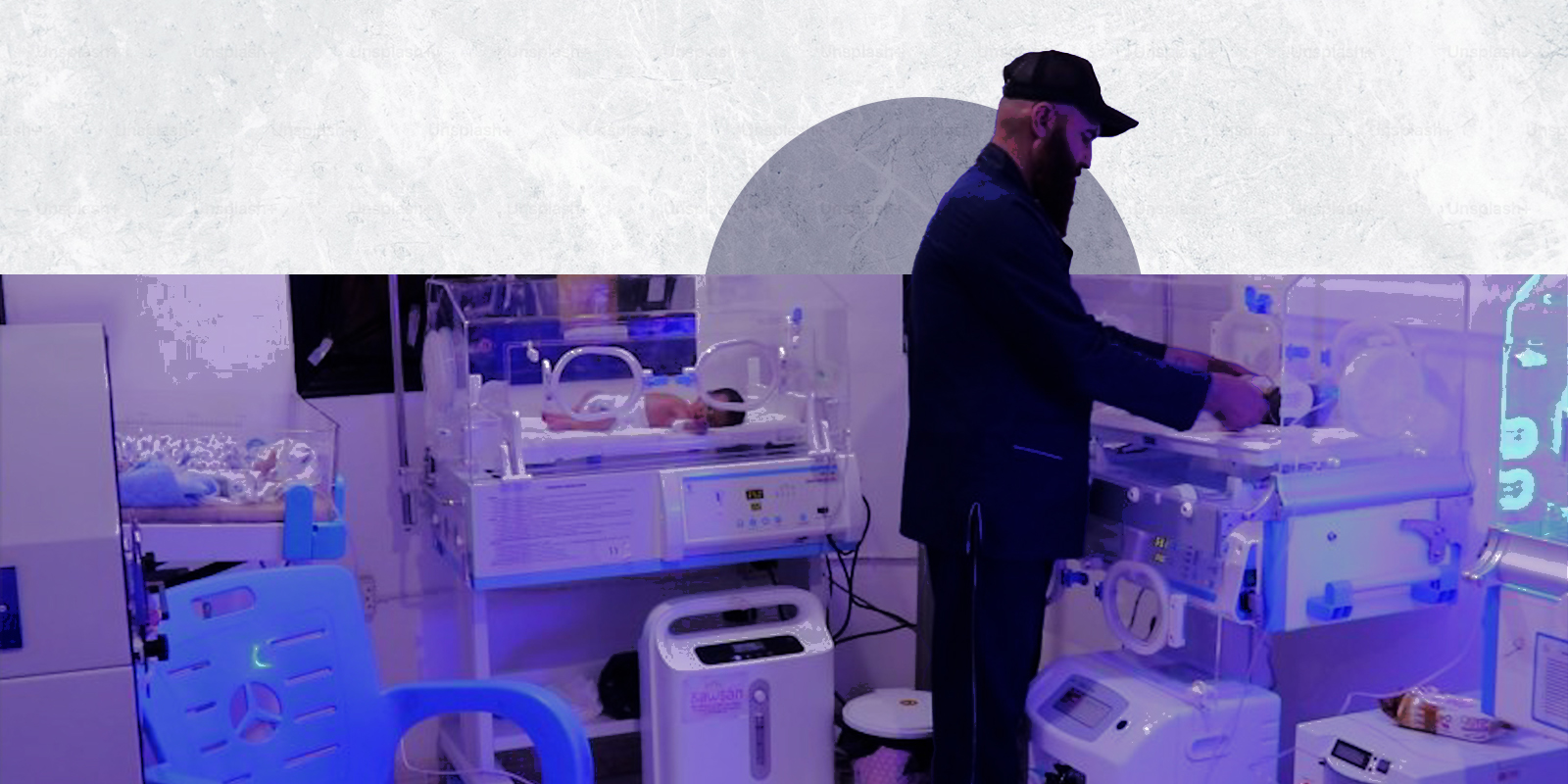
At Shahid Ahmad Howaidi Hospital, the maternity, pediatric, and emergency departments were reactivated, with 85 available beds. A separate kidney unit was equipped with 22 dialysis machines, serving around 150 patients.
Mayadin Hospital reopened pediatric, surgical, maternity, and dialysis departments, with six machines and 44 inpatient beds. In Al-Bukamal, Aisha Hospital now operates surgery, maternity, and dialysis wards with four machines, and work is underway to equip its blood bank.
Medical Staff
During previous years, many health workers were dismissed under various pretexts by the former regime. After the fall of Bashar al-Assad, the Directorate of Health reopened applications for those wishing to return to their jobs.
According to the Directorate’s Statistics and Planning Office, more than 510 people have applied online, and 962 staff members have already been reinstated.
The blood bank now receives 80–90 donors daily, collecting 267 units supplied to public and private hospitals such as Al-Salloum and Al-Zein. Each unit is priced at 200,000 Syrian pounds. The bank provides all blood types in addition to platelets, plasma, and red cells, with a surplus available, according to officials.
Also read: https://963media.com/en/13/08/2025/desertification-ravages-deir-ez-zor/
Health in Rural Areas
Rehabilitation projects have extended to rural health centers. In the town of Mariyah, the local health center reopened after years of closure, providing vaccines and basic treatments. “Our center is back to serving everyone,” said a young resident. “We no longer need to travel to the city for the simplest medicines.”
In eastern Deir ez-Zor, Mayadin Hospital has expanded its capacity through newly opened departments. Meanwhile, the National Hospital in the city has undergone major rehabilitation, restoring part of its role as the province’s main medical facility.
During his recent visit to Deir ez-Zor, Health Minister Musab Al-Nazzal affirmed that the ministry would continue to support medical staff and equip hospitals in line with citizens’ needs.
Deputy Health Director Dr. Ahmad Shlash told +963: “There has been a tangible improvement in services, with the introduction of dialysis machines, the opening of the blood bank, and the rehabilitation of departments in the National Hospital. Work is ongoing to further expand medical care.”











