


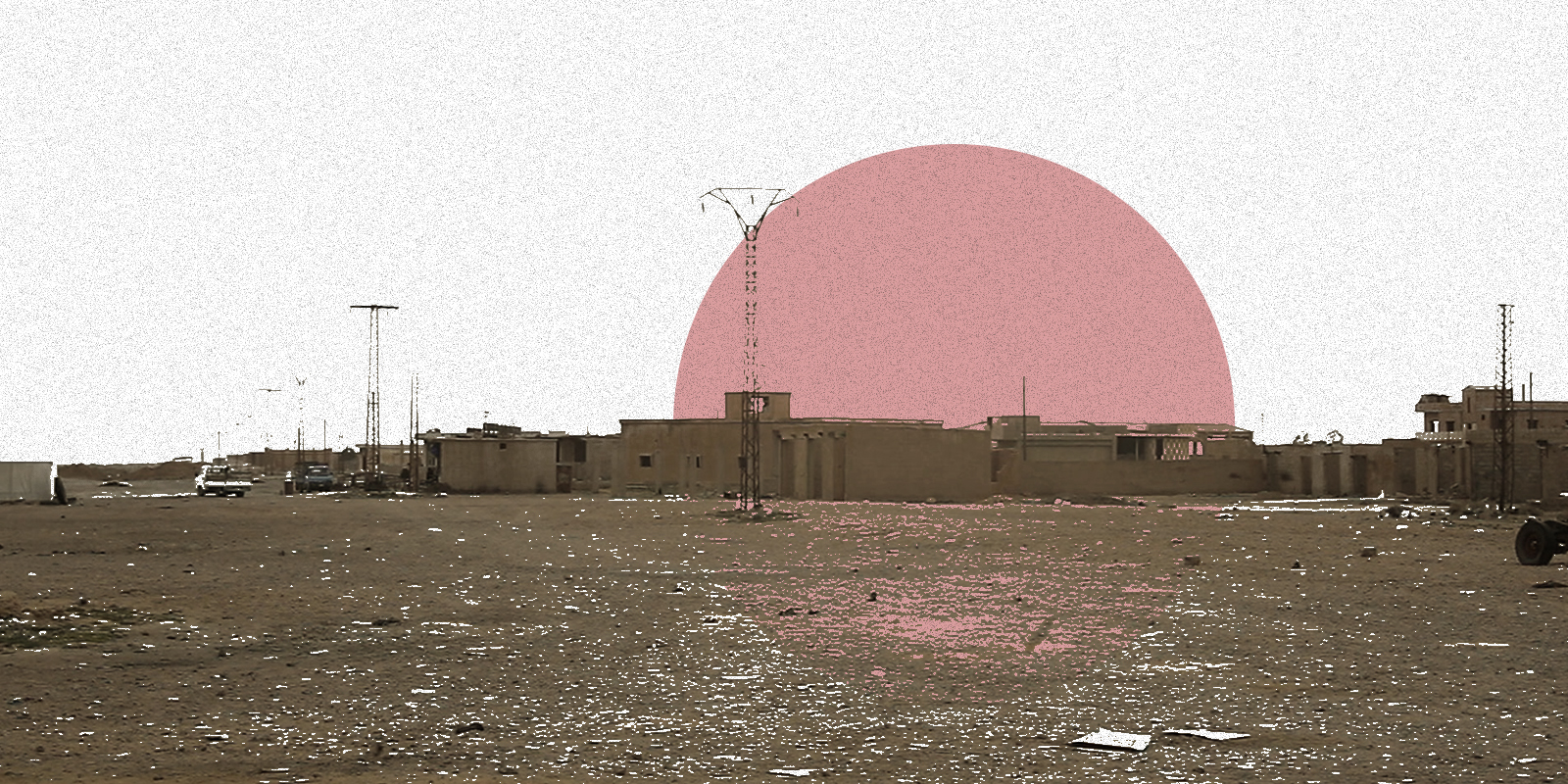
Desertification is one of the most pressing environmental challenges facing many regions around the world, especially those already suffering from drought and limited water resources. Deir ez-Zor governorate in eastern Syria, once a key agricultural hub along the Euphrates River, is a vivid example of the crisis. Here, both natural and human factors are severely damaging the local environment. The impact goes beyond biodiversity loss: food security for the governorate’s residents is at stake, adding to mounting economic and social pressures.
The story of desertification in Deir ez-Zor goes back many years. The area has experienced marked climate shifts, with declining rainfall and rising temperatures. Combined with unsustainable farming practices and overuse of water, these changes have steadily degraded agricultural lands, cutting yields of staple crops. As the crisis has deepened, many farmers are unable to provide enough food for their households, pushing poverty and unemployment rates higher.
Severe hardship from desertification
Mohammad Ahmad, a farmer from Deir ez-Zor, told +963: “Our lives depended heavily on agriculture. But with crops failing due to water scarcity and desertification, we face major hardships. I can’t provide for my family the way I used to.”
He added “We need government and international support to introduce sustainable farming methods and teach farmers better water management. We must all work to protect our land.”
In eastern rural Deir ez-Zor, farmer Ghazi Ismail described dramatic changes to his fields in recent years: “The land that used to produce 50 sacks of wheat per dunam now barely yields 10. Desertification has crept in like a disease. The soil is cracked, winds cover the crops in dust. Water shortages have destroyed us, the Euphrates no longer even meets drinking needs, let alone irrigation. Many have abandoned their farms, and now we import wheat.”
He warned: “If this continues, there will be no bread on our tables. The land that raised us now betrays us. Authorities must find direct, effective solutions to save our beautiful environment, achieve food security, and ensure self-sufficiency.”
Also read: UN Warns of Worsening Health System in Syria
Health and livelihoods at risk
Um Ali, a housewife from Deir ez-Zor, told +963 about how desertification is affecting daily life: “Dust invades our homes even with the windows shut. My children suffer from asthma. Prices for vegetables and fruit are soaring, tomatoes are 10,000 Syrian pounds per kilo, and meat is a luxury. We depend on food aid.”
She appealed to decision-makers: “Save our land before it turns into a barren desert. Our children deserve a green future.”
Far-reaching consequences
Activist Mohammad al-Saleh told +963 that desertification has “large and frightening” repercussions, from the collapse of local production and higher prices, to erosion of livelihoods. “It drives people into internal displacement or forces them into other trades. Malnutrition increases, especially among children and women, as people rely on fragile food aid,” he said.
He added: “We have tools to fight this, such as modern irrigation systems, drought- and salinity-resistant seeds, and large-scale rainwater harvesting using earthen dams.”
Triple causes, targeted solutions
Agricultural engineer Naji al-Sultan, who works at a local agricultural research center, identified three main causes of the crisis: recurring drought due to climate change, depletion of groundwater through unlicensed wells, and loss of vegetation after extensive logging.
He suggested solutions such as shifting to drought-resistant crops like sorghum and sesame, and promoting drip irrigation systems.
Jamal al-Owaid, from the Environmental Office at Deir ez-Zor’s Agriculture Directorate, said his department recognizes the seriousness of desert encroachment: “We have some initiatives, like planting drought-resistant trees in green belts around affected towns and villages, and protecting rangeland by regulating irrigation and preventing illegal logging.”
But, he added “We face huge obstacles, ack of funding, limited technical staff, scarce resources, and ongoing drought. We need a clear strategy to address these challenges in Deir ez-Zor.”
Once considered Syria’s breadbasket, the governorate now meets less than 30% of its own needs. Al-Owaid warned: “This situation could trigger new displacement if we don’t act. The desertification crisis here is not just environmental degradation, it is a direct threat to food security and social stability in a vital region.”
Read also: The al-Shaitat Massacre a Decade Later: The Euphrates’ Unquiet Memory
He stressed that saving what remains of the Euphrates greenery requires urgent action at local, national, and international levels. “Time is not on Deir ez-Zor’s side. Delay means more sand, more hunger, more displacement. The fight against desertification is a fight for life itself in this drought-stricken area.”
Desertification and its causes
Desertification is defined as the degradation of land in arid and semi-arid areas due to natural and human factors, stripping soil of its fertility and agricultural productivity. It is considered one of the most dangerous environmental issues facing the world, threatening not only ecosystems but also food security, economic stability, and the social fabric of affected communities.
Its causes include both natural and human-driven factors. Natural causes involve climate change, increasingly frequent droughts, reduced and erratic rainfall, and high winds that erode soil. Human causes include poor management of natural resources, unsustainable farming, overgrazing, removal of vegetation for fuel or urban expansion, overuse of groundwater (often via unlicensed wells), and weak or poorly enforced environmental policies.
Globally, the United Nations reports that more than 40% of the Earth’s land is threatened by desertification, affecting over 3 billion people.
In the Arab world, the danger is heightened by the region’s naturally arid or semi-arid climate. More than 70% of Arab lands face varying levels of degradation and desertification, putting food and water security under constant strain, increasing dependence on imports, and driving migration from rural to urban areas.
Deir ez-Zor: from breadbasket to warning sign
Deir ez-Zor is among the Syrian provinces most severely affected by desertification. It lies in a semi-arid zone and relies heavily on the Euphrates River as its main water source. Falling river levels, due to regional and climatic factors, have made water scarce. In recent years, the governorate has seen intensive, poorly planned farming and uncontrolled drilling of wells, which have depleted groundwater. Years of conflict have also devastated agricultural infrastructure, eroded environmental oversight, and displaced thousands of farmers.
These combined factors have transformed Deir ez-Zor from Syria’s “breadbasket” into a region suffering extreme land degradation, steep drops in production, and frequent dust storms, making it a sharp and urgent example of the desertification crisis in Syria and across the region.











