


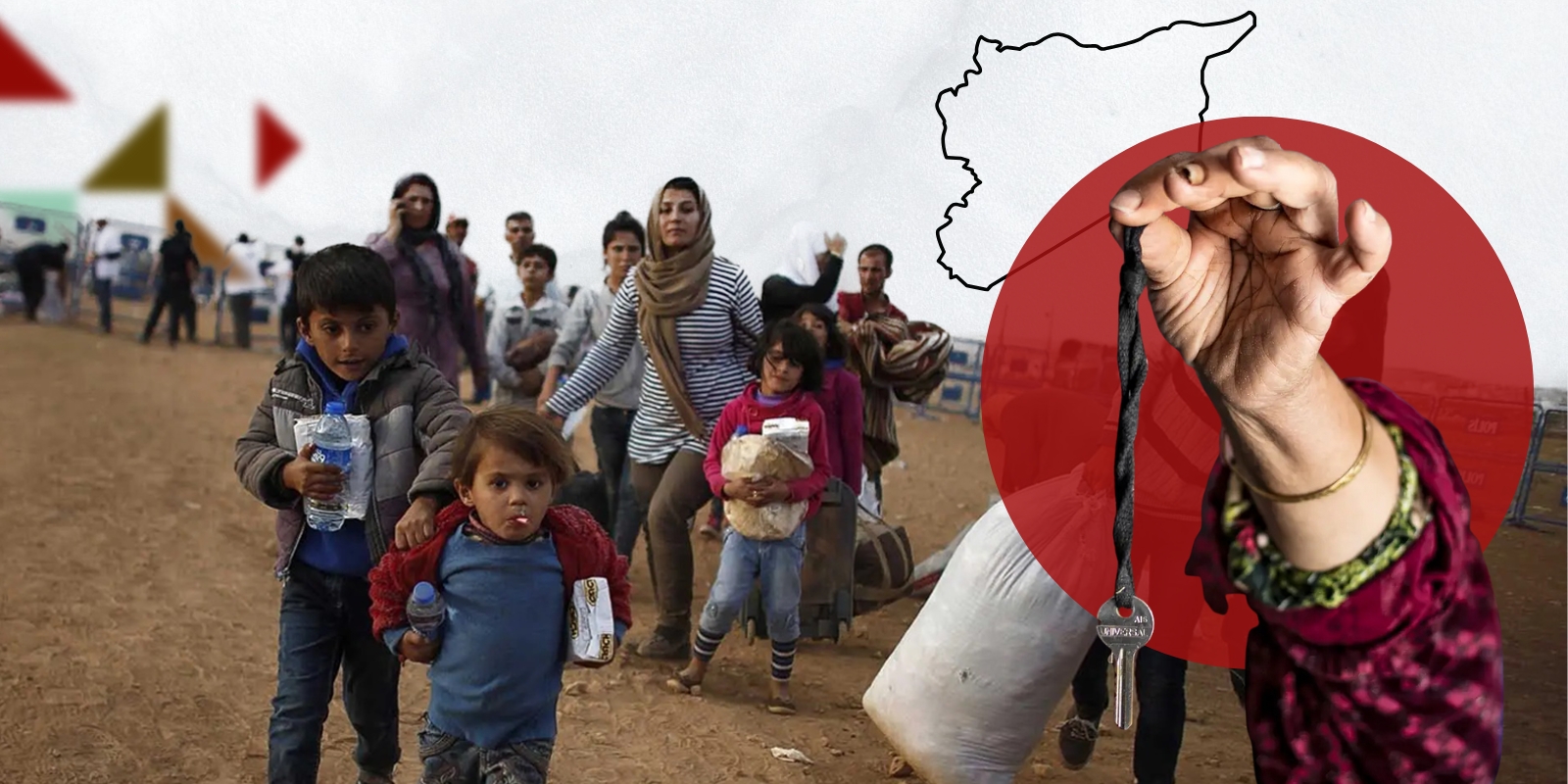
Analysts and local experts say the demographic changes that have taken shape in Syria over more than a decade are no longer a by-product of conflict but a complex crisis whose effects extend to housing, property rights, civil records, and the social identity of entire communities. They stress the need to acknowledge the scale of the problem and conduct comprehensive surveys to understand its true dimensions. Laws enabling property confiscation, obstacles to accessing land and ownership documents, and the absence of a safe environment for displaced Syrians to return have all deepened demographic distortions. Other observers point to ongoing pressures and displacement in a number of regions, with few concrete steps taken to curb these practices or halt associated violations.
Conversely, some argue that tackling the crisis begins with the return of internally displaced people to their original areas rather than allowing temporary camps to become permanent settlements. Rehabilitating infrastructure and restoring services and job opportunities, they say, are essential to rebuilding demographic balance and reinforcing the legitimacy of the state.
After more than a decade of large-scale displacement and forced population transfers, demographic change is no longer a marginal detail in Syria’s landscape; it has become one of the country’s most intricate and consequential challenges. Many cities and towns have undergone deep, sometimes systematic transformations in their population makeup, accompanied by interlocking legal, social and economic complications.
Read also: Syria.. Naturalization Dilemmas and Their Implications
Multiple layers of demographic change
Fadel Abdul Ghani, director of the Syrian Network for Human Rights, tells +963 that demographic change in Syria operates on several levels and must be addressed through a range of coordinated measures. The displacement and forced deportations of the past fifteen years, he says, have produced an extensive and complicated reality that cannot be treated superficially. The issue spans housing, property and multiple state registries – fields in which various rights intersect.
The first necessary step, he argues, is a comprehensive assessment based on surveys and wide-ranging studies to determine the extent of demographic change, accompanied by an honest recognition of what has occurred.
He emphasizes the need for sweeping legal reforms, noting that an entire body of laws issued by the Assad regime enabled demographic engineering, particularly decrees and regulations that facilitated the seizure of land and property. He cites a detailed SNHR report, “The Most Prominent Laws and Decrees Issued by the Syrian Regime to Seize Property,” which outlines how these measures pushed Syrians to sell their holdings or led to their loss.
Abdul Ghani also highlights the importance of easing access to land registries and resolving issues related to missing or damaged documentation – challenges that remain major obstacles to any solution.
Addressing demographic imbalance, he says, requires serious efforts to allow the return of displaced people and refugees or to secure viable conditions for their return. This issue is closely tied to transitional justice and accountability for those involved in forced displacement and the reconfiguration of population patterns. Restoring rights, providing compensation – material and symbolic – and rehabilitating victims are core components of any remedy.
He adds that most affected areas require extensive reconstruction, particularly schools, housing and health facilities. Without these essential services, residents cannot realistically return.
Abdul Ghani further stresses the importance of promoting social cohesion and local reconciliation, opening channels of dialogue among communities to overcome sectarian or regional tensions, and involving civil society organizations to reduce hate speech – a major barrier to return.
In the security sector, he notes the need to restructure and reform security institutions, especially in areas that experienced demographic alteration, ensuring they operate on professional and neutral foundations.
All of this, he says, must fall within a comprehensive national strategy involving the state and society, with media playing a role in highlighting its details.
He concludes that the government’s efforts so far are reasonable when compared to the immense challenges facing Syria – from corruption and bureaucracy to entrenched networks tied to the former regime. Yet the issue remains highly complex and interconnected, making progress slow in the first year. He expresses hope that the coming year will bring more serious work on the outlined priorities.
Read also: Syria: Demographic Engineering Through Property Laws
New pressures and continuing crises
In contrast, Syrian writer and political analyst Mohammad Arslan tells +963 that throughout this past year – the lifespan of the new authorities in Damascus – the effects of demographic change remain visible, especially in areas affected by displacement. He argues that new pressures have emerged against certain segments of Syrian society, particularly “Alawites in the coast, Homs, Hama and Damascus.” These developments, he notes, have not subsided; instead, they continue through policies designed to push residents to leave their homes as part of what he describes as a new vision for reshaping population structures in these regions.
Arslan points to events in Homs as clear evidence of the continuing crisis, despite claims that such incidents stem from “uncontrolled elements” or “undisciplined tribes,” as was said earlier about Suwayda.
Despite promises and official assurances, Arslan sees no real measures taken to address the effects of demographic change. Instead, displacement continues to grow. He notes that agreements with Kurdish groups in Aleppo’s Sheikh Maqsoud and Ashrafieh districts were supposed to ensure the safe return of Afrin’s displaced residents. Yet some hardline factions still control Afrin, imposing taxes, seizing crops and homes, cutting down trees, and preventing original inhabitants from returning.
He argues that the Syrian government bears full responsibility for ensuring the inclusion of all components of society, yet it has failed to protect the national fabric. These daily violations, he believes, threaten the legitimacy of the current authorities. For this reason, he finds it impossible to claim that the government is serious about stopping displacement or rebuilding social cohesion, as these issues are not among its priorities.
Return, reconstruction and restoring balance
Syrian writer Firas Alawi tells +963 that the government’s first step in countering demographic change must be to return internally displaced people to their original areas and contribute to rebuilding them as quickly as possible. He stresses the need to prevent camps from becoming permanent settlements and to gradually close them instead.
Alawi also underscores providing equal job opportunities across provinces to encourage skilled workers to return and resume their livelihoods. Although recent months have seen substantial returns, many obstacles remain – notably the destruction of homes and workplaces. Residents must be able to rebuild these before returning.
Damaged schools, hospitals and basic services form another barrier, he says, and restoring electricity, water and essential public facilities will accelerate returns and prevent further demographic shifts.
Alawi concludes that enabling the return of the displaced and preventing demographic transformations will strengthen the state’s national legitimacy and help restructure institutions in a way that reflects Syria’s demographic diversity. Stability in local communities also allows the government to apply laws more effectively, particularly in areas with unique social and legal characteristics.
He argues that restoring war-affected regions to their former state must be a top government priority, as it has a direct impact on national stability and the recovery of Syria’s demographic balance.











