


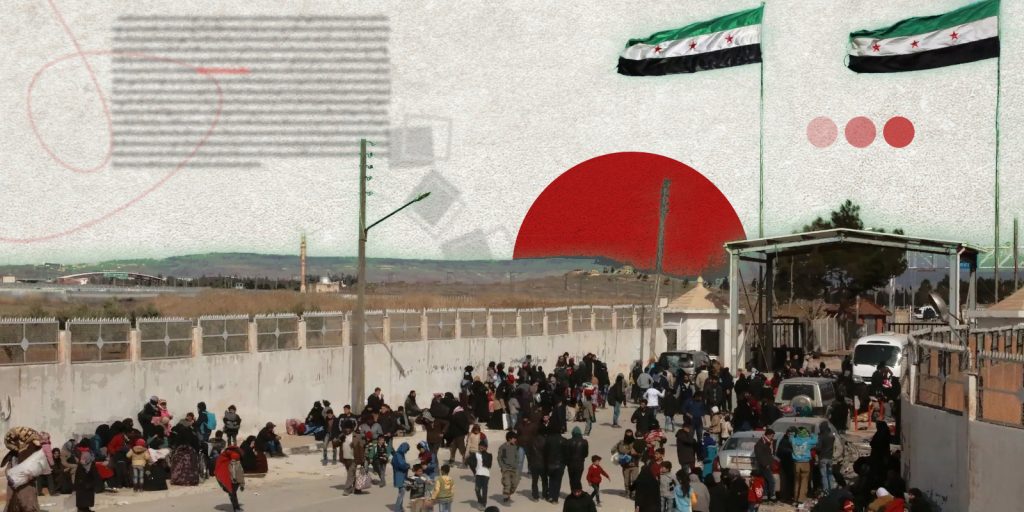
Amid the political and humanitarian repercussions left by more than a decade of conflict in Syria, the positions of European states, led by Germany, have been marked by a sharp shift regarding the issue of Syrian refugees.
In December 2024, German Chancellor Olaf Scholz announced that Syrians who have integrated well, work in Germany and speak German may remain despite changing conditions in their country. However, he stressed that the ongoing debate concerns the right to voluntary return and that the situation in Syria remains uncertain.
For her part, German Interior Minister Nancy Faeser stated that German law obliges the immigration office to review or revoke protection cases if their grounds no longer exist due to what she described as a stabilized situation in Syria, in a clear indication that the status of hundreds of thousands of Syrian refugees in Germany may be reconsidered.
In early November 2025, the German position advanced a step further when Chancellor Friedrich Merz declared that the civil war in Syria had ended and that there was no longer any reason to grant asylum in Germany. He added that the voluntary return of Syrian refugees to their homeland had become possible and that there was no justification for maintaining their protection in Germany.
Observers believe these statements reflect mounting political pressure within Germany and other European states regarding the return of refugees to Syria at a time when many criteria must be met, in order to avoid the suspension of protection or violations of the principle of non refoulement, requiring that any return be safe, voluntary and dignified. The United Nations High Commissioner for Refugees has indicated that conditions in Syria remain unsuitable for large scale collective return, including fragile infrastructure and widespread humanitarian needs.
In the Arab context, calls to prepare an environment conducive to the return of displaced Syrians have been present in Gulf and Arab statements, linking reconstruction to a trajectory of dignified voluntary return while warning that security, stability and service considerations remain significant obstacles to effective return.
Read also: How International Pressure Is Shaping Syrian Refugees’ Return
Motivating factors for return
Consultant Ali Qaddoumi, a migration researcher and expert based in Britain, told +963 that pressures on Syrian refugees are increasing noticeably. He explained that these pressures include tightened residency and work conditions in neighboring countries, risks of deportation or detention, declining humanitarian assistance and rising living and housing costs.
He noted that incentives for return remain extremely limited, often restricted to the desire of some families for reunification or a relative sense of improvement in certain areas within Syria. However, he emphasized that most return cases occur under material, legal or security pressure, making them, in his view, more forced than voluntary.
He added that return is not considered voluntary under international law unless it results from a free and informed decision made without any direct or indirect coercion. For this reason, he explained, many current return cases do not meet the criteria of full voluntariness but rather reflect what he describes as undeclared expulsion policies adopted by some states.
He explained that before return, legal travel documents must be provided along with assurances against security prosecution or forced conscription as well as accurate information about the intended area of return. After return, there should be freedom of movement, protection from arbitrary detention, the ability to recover property or obtain alternative housing and access to essential services such as water, electricity, healthcare and education.
However, Qaddoumi noted that international reports confirm that these guarantees are insufficient in most Syrian regions, as many returnees face security violations, property disputes and severe living difficulties. He affirmed that current conditions do not meet the standards of safe, dignified and sustainable return set by the United Nations High Commissioner for Refugees.
He added that neighboring governments are taking various steps to reduce refugee numbers, such as tightening residency rules or imposing work restrictions, creating indirect pressure on refugees to return. In contrast, he explained that international organizations, particularly the United Nations High Commissioner for Refugees, do not encourage collective return but rather monitor individual cases after confirming the decision is free and informed, while providing legal advice and limited post return assistance.
As for civil society organizations, Qaddoumi noted that they provide legal awareness, psychological support and document violations involving forced return.
Conditions and criteria
Qaddoumi explained the distinction between voluntary return and forced deportation. Voluntary return means that the refugee chooses to go back without threat or deprivation of assistance and with full knowledge of conditions, while forced deportation refers to any return that occurs due to pressure, threats, detention or conditioning aid on return, which constitutes a violation of the principle of non refoulement.
On the impact of return in neighboring countries, Qaddoumi said that the departure of refugees may ease pressure on public services economically but harms sectors that rely on inexpensive Syrian labor. Socially and in terms of security, he argued that population tensions may temporarily ease, yet crackdowns and deportations could increase social stress and violence.
Inside Syria, he noted that returnees face housing shortages, loss of property, weak essential services, lack of employment opportunities and security risks, adding that some are forced into secondary displacement.
He concluded by stressing that return is not sustainable unless there is concrete security, legal justice, essential services and job opportunities. The absence of these fundamentals renders most current returns unsustainable and may lead to repeated displacement.
For his part, Almoutassim al-Kilani, an expert in international criminal law and human rights based in Paris, told +963 that genuine voluntariness in return means that the refugee is able to choose between viable alternatives, either lawful residence and a dignified life in the host country or a safe return to the home country, supported by neutral information and protection guarantees before, during and after return. al-Kilani noted that when these alternatives are removed or pressure and intimidation are exerted on refugees, voluntariness erodes and the process nears forced deportation.
He added that return flows to Syria have increased since December 8, 2024, yet significant security, legal and service related risks persist. He also noted that United Nations and rights organizations approach such returns with caution, insisting on strict voluntariness and protection measures. He argued that the sustainability of return depends on concrete security improvements, effective mechanisms for remedying grievances particularly regarding housing, land and property and investment in services and livelihoods.
Read also: Syrian Refugees: A Humanitarian Cause Between Power Plays and Political Mood
Challenges to return
Al-Kilani explained that increasing pressure in neighboring countries plays a major role. He noted that Lebanon has witnessed security campaigns and push operations toward the border involving arrests, deportations and forced evictions, making the choice of return constrained by fear of detention or loss of livelihood, as documented repeatedly by rights groups. He added that the voluntary return programs in Turkey, which authorities present as voluntary and safe returns to northern Syria, face repeated skepticism from monitoring bodies regarding their actual voluntariness, especially given discrepancies in figures between official and rights based sources.
In Iraq, al-Kilani pointed out that ninety three percent of Syrian refugees do not intend to return within twelve months due to insecurity, lack of livelihoods, weak services and risks of forced conscription, adding that similar trends appear in regional United Nations surveys. He explained that political change in Damascus in December 2024 led to larger return waves, yet fragile security and service conditions cast doubt on the voluntariness of these decisions, particularly when returns coincide with restrictions in host countries.
He affirmed that the international standards set by the United Nations High Commissioner for Refugees require that return be a free and informed decision carried out in safety and dignity, with full respect for non refoulement. He added that these standards remain the primary reference for assessing return operations. Although the High Commissioner provides limited logistical support to those who freely choose to return, the organization continues to stress that return must be voluntary, safe and dignified, and does not encourage general return to Syria due to ongoing risks.
Regarding returnee safety, al-Kilani noted that documented reports in 2024 and 2025 showed continuing arbitrary arrests and violations against returnees even under so-called security settlements. He added that European sources confirmed that obtaining security clearance does not guarantee actual safety for returnees.
On the service situation in Syria, al-Kilani stated that recent estimates place reconstruction costs at around two hundred sixteen billion dollars amid severely fragile infrastructure, weak public services and high humanitarian needs, making long term stability for returnees extremely difficult.
He added that in 2025 the High Commissioner and its partners launched an operational framework for return focusing on legal consultation, verification of free choice, monitoring of border crossings and post arrival support. The High Commissioner has also started providing limited logistical support including transportation and cash grants to returnees who freely registered their intent.
Concerning neighboring governments, al-Kilani noted that some operate return registration mechanisms and return convoys, while rights organizations warn against any arrangements that may conceal forced return or restrict refugees’ ability to remain legally, particularly in Lebanon and Turkey. He added that the decisive criterion for rights groups is the presence of genuine alternatives to stay, the ability to refuse return without punishment and the availability of neutral information about conditions in Syria along with post arrival protection monitoring.
He also explained that civilians and local organizations provide legal awareness and support in documenting civil rights and housing, land and property rights to ensure that return decisions are informed and that property restitution is genuinely possible.
Regarding the situation in Turkey, al-Kilani noted that the labor market and services have been under significant pressure since 2014 despite integration and development policies supported by the World Bank. He stated that mass return may ease local pressure but at the same time creates transitional support needs and requires protection monitoring, especially if return is unstable in northern Syria.
In Lebanon, he noted that the strained economy and protracted crisis have driven authorities to intensify measures against Syrians, influenced by European packages and conditional migration management funding, increasing risks of forced return. He added that unsustainable return could lead to risky patterns of movement back and forth.
In Jordan, he said that authorities are working to improve work opportunities and services for Syrians and host communities, yet legal, economic and administrative barriers still limit many refugees’ desire to return. He noted that thousands returned voluntarily in 2024 and 2025 but emphasized the need to monitor the sustainability of these returns after entry into Syria.
In Iraq, particularly the Kurdistan Region, he explained that intentions to return remain very low at ninety three percent unwilling to return within a year due to security and living conditions in Syria. He added that the local impact in Iraq is more linked to ongoing refugee management than to large scale return waves.
Al-Kilani concluded by discussing the situation in intended areas of return inside Syria, explaining that despite a change in authority in December 2024, violations, arrests and security fluctuations persist, including abuses by local armed actors in some regions. He added that housing, land and property issues remain extremely complex due to difficulties recovering documents, accumulated disputes and property occupations, hindering reintegration and fueling risks of renewed displacement.
He affirmed that United Nations and civil society efforts are now focused on developing frameworks for compensation and rights restitution but remain in early stages. In conclusion, he stressed that major gaps in electricity, water, healthcare and education, along with enormous reconstruction costs, render sustainable return dependent on wide ranging investment and tangible improvements in services and protection.











