


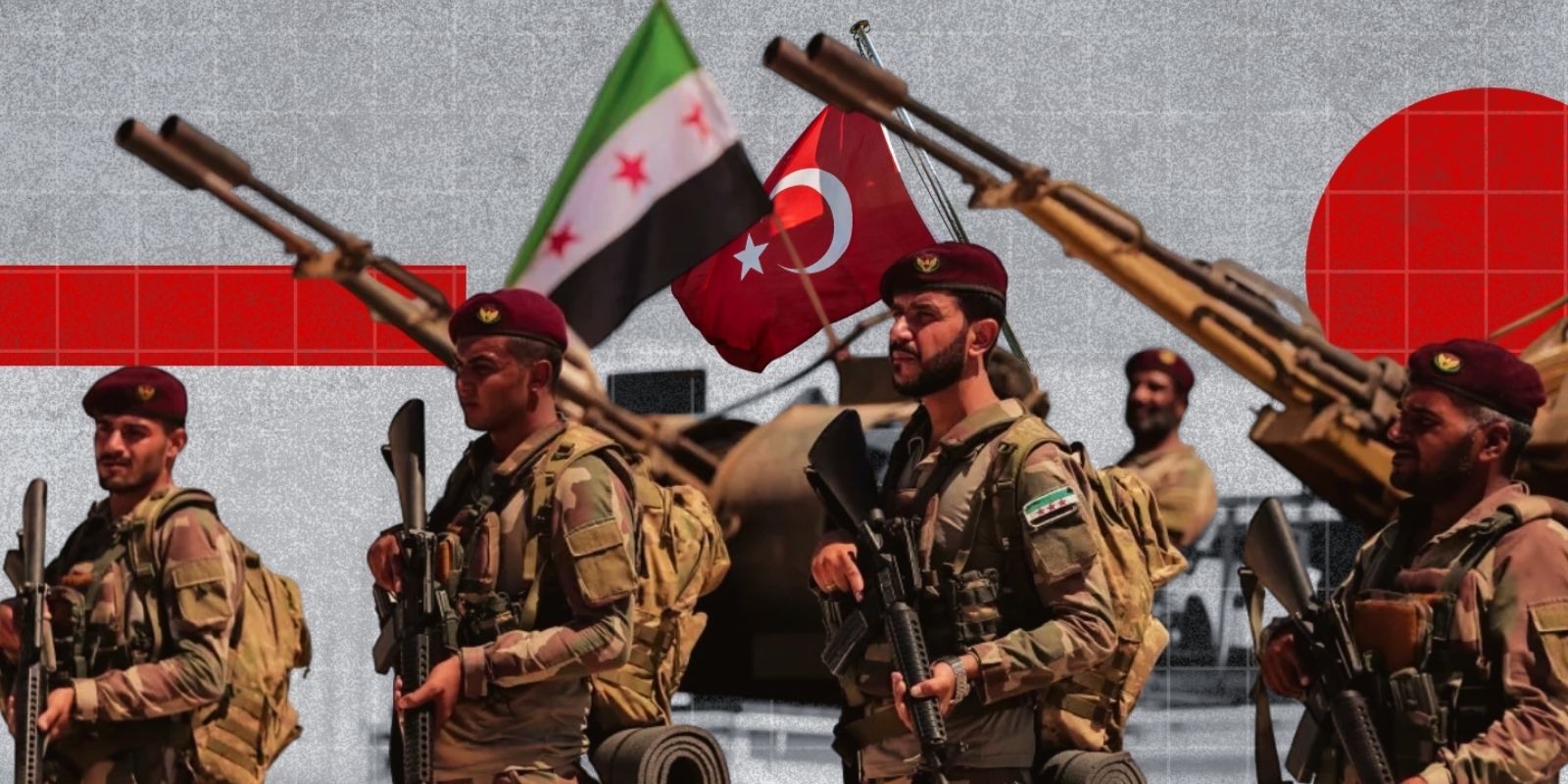
Since the outbreak of the Syrian crisis in 2011, regional and international powers have played varying roles in supporting the warring sides. Among these powers is Turkey, which shares a 911-kilometer border with Syria. Ankara has been a principal backer, providing funding, training, and arms to the armed opposition, particularly the Syrian National Army, with which it launched several cross-border operations against the Syrian Democratic Forces (SDF) since 2016. Turkey regards the SDF as a national security threat.
But following the fall of the former Syrian regime, Ankara shifted its strategy: instead of relying on factions, it is now engaging with the official Syrian army itself. This culminated in the signing of a military cooperation agreement that includes arming and training the army. Observers view this as a Turkish attempt to reposition itself in Syria in a more institutional and sustainable way, potentially binding Damascus to a formula of military aid and reconstruction in exchange for submission to Turkish influence, should Syria fail to reassert sovereignty and manage relations with Ankara in a way that preserves the independence of Syrian decision-making.
Read also: The Army as a Security Apparatus to Suppress Syrians
A Defense Memorandum of Understanding
Reuters, quoting Turkish defense sources, reported that Ankara will supply weapons systems, logistical equipment, and military training and consultancy for the new Syrian army under the cooperation agreement signed on August 14 in Turkey by Syrian Defense Minister Murhaf Abu Qasra and Turkish Defense Minister Yashar Güler.
The agreement covers specialized training programs in counterterrorism, demining, cyber defense, military engineering, logistics, and peacekeeping operations, in line with international best practices. It also provides for technical assistance, with Turkish experts to support the modernization of military systems, organizational structures, and command capacities within the Syrian army, according to Syria’s official news agency (SANA).
This step followed a formal request by Damascus in mid-July for military and technical support from Ankara to bolster Syria’s defensive capacities, after a series of Israeli strikes on Damascus, including the General Staff headquarters, amid escalating sectarian violence in Sweida.
Earlier, in February, Syrian President Ahmad al-Sharaa visited Turkey and met President Recep Tayyip Erdoğan. Discussions included establishing Turkish military bases in Syria (in Palmyra, Hama airbase, T4 airbase in Homs, and Menagh base in Aleppo countryside), training the new Syrian army, and granting Turkey access to Syrian airspace for military purposes. However, Israeli strikes soon followed, targeting those bases. Israel declared the strikes a “direct message to Ankara: we will not allow it to strengthen its military footprint in Syria.”
Turkish Motives
Speaking to +963,” journalist and expert on Turkish politics Sayed Abdel Majid, based in Ankara, explained that Turkey’s motives behind the military cooperation agreement are twofold: to send a message domestically that it remains strong and influential in Syria despite its economic failures at home, and to signal to the region that Turkey cannot be ignored in shaping Syria’s future.
He continued: “This cannot yet be described as a strategic military partnership. Rather, Ankara’s goal in training the Syrian army is partly to assert its presence, and partly to secure a significant stake in future reconstruction.”
Military and strategic expert Nidal Abu Zeid told +963 that Turkey’s interest lies in building a strong Syrian army to secure its southern borders. Ankara understands the threats along its frontier, not only from Kurdish forces, but also from remnants of radical right-wing extremist factions such as ISIS.
Political analyst Alan Berri added that Turkey seeks to maximize its influence over Syria in the post-Assad phase, not in temporary or conventional ways, but by anchoring its role through binding agreements and understandings that legalize its presence.
Berri noted: “What draws Turkey’s attention most is the emerging army structure, which has yet to fully form. Turkey has already created fighting groups motivated by money (mercenary factions), but building an official army holds far greater weight, especially in fragile states suffering internal conflict such as Syria.”
Also read: The Return of the “Syrian Army”: Should Anyone Still Be Waiting?
The Formula of “Support in Exchange for Subordination”
On whether the cooperation agreement represents an opportunity to rebuild the Syrian army or merely a gateway to Turkish dependency, Berri argues that Turkish funding, training, and military backing will inevitably place the Syrian army in a position of operational dependency, similar to the Turkish-backed Syrian National Army in the north, which became tied to Ankara’s decisions and agenda.
He added that Turkey will institutionalize this dependency through formal agreements, moving beyond the perception of Syria as a Turkish protectorate or mandate authority.
Berri stressed that the Syrian government is incapable of managing relations with Turkey independently: “Internal Syrian conflicts prevent the formation of a unified national decision outwardly. Each influential power in Syria maintains cross-border ties, and Turkey seeks to exploit the state’s fragility to advance its foreign policies via Syrian territory.”
Abdel Majid agreed, noting that Damascus does not control all of Syrian territory and thus cannot claim full decision-making sovereignty. Even without direct military support, Syria already demonstrates a degree of submission to Ankara.
Abu Zeid, however, argued that the situation will not amount to full Turkish dependency. He believes Damascus might accept a limited Turkish role, especially since Ankara supported the current government in toppling Assad. Yet, he added, Syria understands that other domestic and regional powers, including Israel, reject the replacement of Iran’s previous role in Syria with Turkey’s. “Any steps in that direction could provoke Israeli action against Damascus, hence the government carefully balances its moves.”
Political, Military, and Regional Repercussions
Abu Zeid expects the cooperation to yield positive outcomes, helping reorganize Syria’s political, security, and military landscape. “Turkey is a strong state and NATO member, capable of shaping Syria’s security and political scene. The former Syrian army adhered to an Eastern military doctrine, but this might shift closer to NATO standards in both structure and strategy.”
Regarding international reactions, Abu Zeid argued that the U.S., France, and Russia are likely to accept the rebuilding of the Syrian army, since there is broad international consensus on stabilizing Syria. Abdel Majid added that regional powers do not perceive Turkey’s involvement as upsetting the balance, noting that Israel will ensure the cooperation remains limited to training and technical exchange.
He emphasized that Turkey’s role will likely be confined to intelligence-sharing, technical advice, and narrowly defined training, as expanding beyond this would risk direct confrontation with Israel. Such escalation could also trigger tensions with Washington, something Erdoğan wants to avoid.
Berri concluded by warning that it remains too early to assess the long-term consequences of Turkey’s involvement. Syria remains unstable, and all scenarios for the government’s future are still possible. However, he stressed that the growth of Turkish influence is directly linked to Syria’s weak decision-making sovereignty, which continues to be subordinated to regional powers.











