


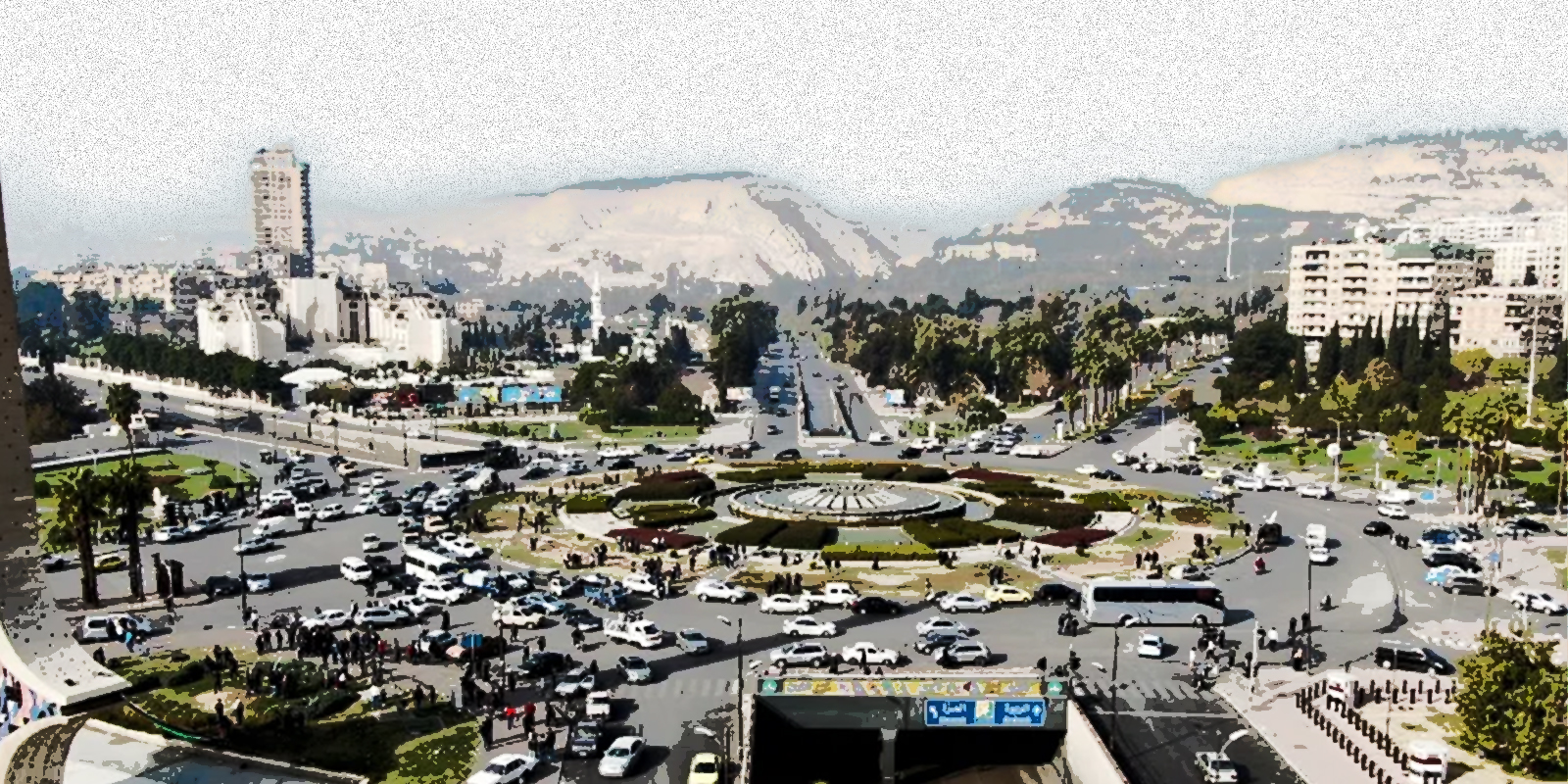
In a striking and controversial scene, Damascus hosted the signing of a series of massive investment memorandums worth $14 billion, according to the Syrian government. The ambitious agreements covered major sectors including infrastructure, transport, and housing.
The event was accompanied by extensive media coverage, attended by Syrian President Ahmad al-Sharaa, U.S. special envoy Thomas Barrack, and senior state officials. The government presented it as a signal of imminent economic openness and the start of a new reconstruction phase.
Yet behind the official spectacle, questions quickly emerged. Investigations by citizens and researchers into the companies signing these deals revealed that some existed only as barebones websites or social media pages, with no evidence of financial capacity, technical expertise, or even verifiable identities.
Phantom companies
One of the most telling examples was UBAKO, presented as an Italian firm. It turned out to be a company registered only in 2022 with a capital of just €16,000. Italian records listed it as a shell entity run by an obscure figure named Giovanni Rossi, employing just one employee.
Nor was UBAKO alone. Another firm, Polidef, claimed as Turkish, signed a $4 billion memorandum to develop Damascus International Airport. But no commercial records or prior projects could be found. Its Istanbul address proved inaccurate, its listed phone number belonged to an unrelated business, and its newly launched website contained no substantive information about team members, past projects, or financial data. Experts labeled it a textbook “paper company” or “front company.”
Such contracts raised serious questions about the transitional government’s transparency and awareness of its partners’ backgrounds. Some observers even described the affair as a “presidential fabrication,” speculating that certain companies were merely fronts for investors tied to the former regime, such as Khayyat Brothers, associates of businessman Muhammad Hamsho, once close to Maher al-Assad, brother of the former president Bashar al-Assad. Reports suggested these figures paid hefty sums for economic immunity under the transitional government through a so-called “sovereign fund” overseen by Hazem al-Sharaa, brother of the interim president.
Read also: Can Syria Rewrite Its Constitutional Declaration and Hold a National Conference?
Exporting the Idlib model
According to media reports, Hazem al-Sharaa is the architect of Syria’s “new economic restructuring,” drawing on experience managing Idlib’s economy under Hayat Tahrir al-Sham. Figures from unconventional backgrounds now hold key economic positions, such as Abu Abdulrahman, a former baker named Mustafa Qadid, and Abu Maryam, an Australian national wanted internationally whose brother carried out a 2013 suicide bombing. Both are now embedded in the transitional government’s economic structure, Reuters has reported.
The administration appears intent on replicating the “Idlib model” nationwide: running the economy through an unrecognized digital payment system (Sham Cash), distributing mega-projects to local or phantom companies under the guise of economic openness, all without tenders, public oversight, or expert review.
Domestically, contracts have also gone to firms linked to powerful insiders such as Anas Kazzbari and Mowaffaq Qaddah, or to newly created Idlib-based outfits like Afrina, and another firm whose only presence is an Instagram page run by someone calling himself Khaled al-Najm or Yamen al-Shami. These entities claim multimillion-dollar projects in Hama but lack any business record.
Despite high-profile promises, Barmakeh Towers, Damascus Metro, luxury malls, and 60-story skyscrapers, fundamental questions remain: Do these companies actually have the capacity to execute such projects? Were their financial and legal backgrounds vetted? Why were no open tenders held? And what justifies awarding a $4 billion airport redevelopment contract to a firm with no engineers on staff?
Public scrutiny rises
Remarkably, ordinary Syrians, long marginalized, have become the de facto watchdogs, uncovering facts that official oversight bodies failed to produce. In a country where over 90% live below the poverty line, state institutions crumble, and tens of billions are funneled into opaque contracts, citizens now ask: Is this the start of recovery, or simply a new face for the same economic chaos?
While the government refuses to disclose financial details of these firms and insists the memorandums will serve as an “economic lift,” no tangible change has appeared in daily life. The only visible activity is the staging of official ceremonies.
Also read: In Southern Syria: Russia’s Return Isn’t Enough; Warlords Must Be Stopped First
Analysts: More politics than economics
With more investment agreements reportedly underway, experts warn these deals are political maneuvers dressed as development.
Syrian writer Hassan al-Neifi, based in France, explains: “What we call contracts are really just ‘understandings.’ Most are non-binding and amount to preliminary frameworks for potential joint projects.” He adds: “The public assumes every signed contract will be implemented, but the reality is far more limited.”
Al-Neifi criticizes misplaced priorities: “Why focus on aesthetic projects while ignoring vital sectors essential to citizens’ lives?” He argues the government should attract investors into essential services, not showcase ventures.
Economist Dr. Firas Shaabo of Istanbul’s Başakşehir University concurs: “These are not strictly fake, but more deferred memorandums of understanding than enforceable investments.”
He tells +963: “Their purpose is political maneuvering and image management. They serve political and promotional goals far more than economic ones. Genuine investments require stability, security, and a legal framework, none of which Syria has under sanctions.”
Profit-driven, not reconstruction
Shaabo stresses the profit motive: “All companies aim to make money. A $7 billion energy project, for instance, won’t lower prices, companies will recoup investments through sales. These are not reconstruction efforts, but purely profit-driven ventures.”
He highlights persistent barriers to genuine investment: an unstable environment, lack of transparency, difficulty repatriating profits, and Syria’s dismal ranking of 177 on the global corruption index. “Despite changes in regime and government, corruption remains entrenched, only the faces have changed,” Shaabo concludes.











