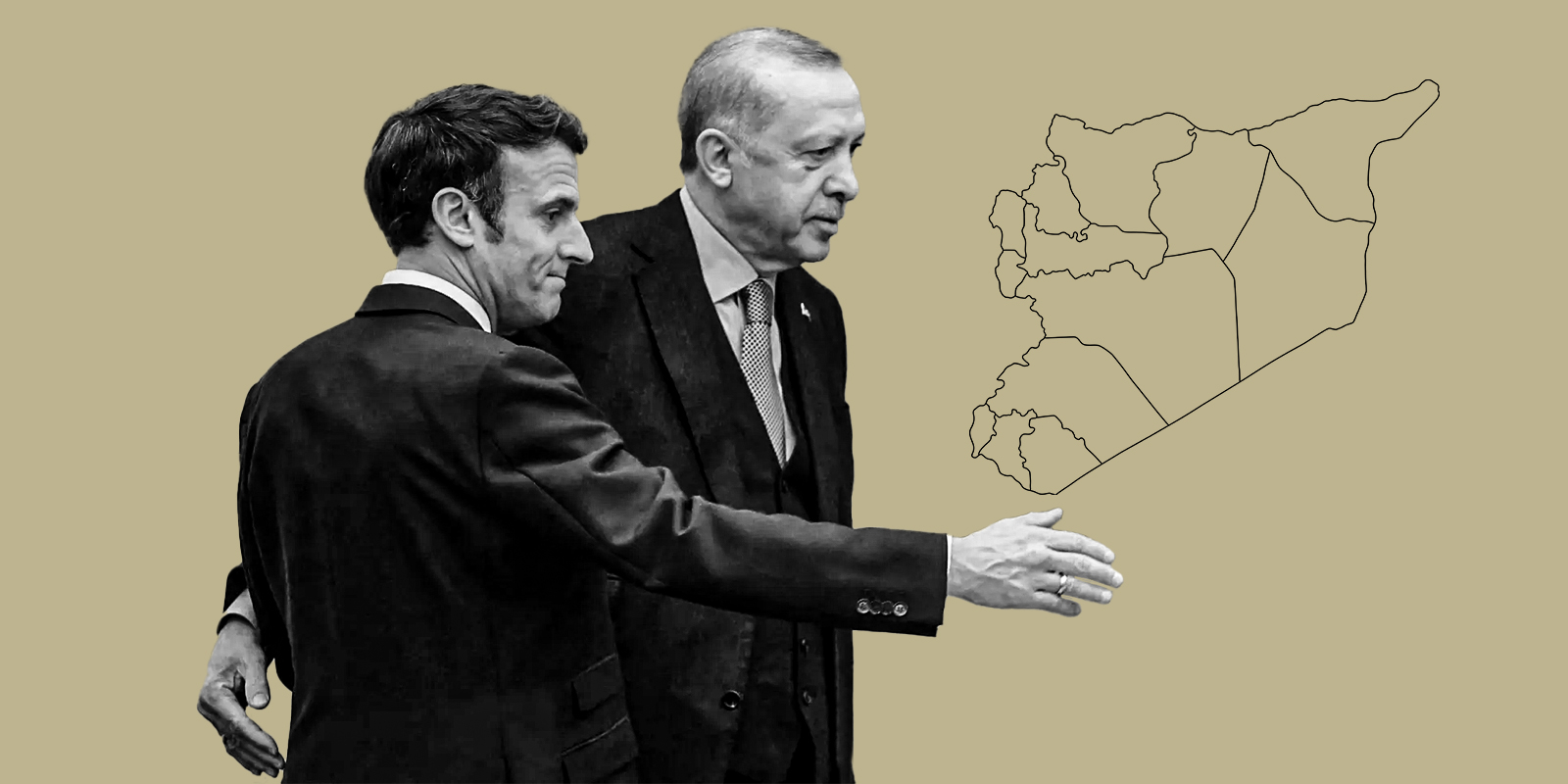
As the Syrian political and military landscape grows increasingly complex, signs of a French Turkish crisis are starting to surface. According to the U.S.-based outlet Al-Monitor, Ankara has been pressuring Damascus to withdraw from an upcoming meeting in Paris with the Kurdish-led Syrian Democratic Forces (SDF). Analysts say this could mark the start of a more visible clash between the two countries, one with direct consequences for internationally backed negotiations and for the future of Syria itself.
In recent years, relations between Paris and Ankara have been marked by tension, particularly over Syria. France maintains a limited but significant presence in the country, with diplomatic engagement and some military contributions through the international coalition against ISIS. Paris has consistently supported the SDF both politically and militarily and has called for Kurdish participation in any future Syrian government.
Turkey, by contrast, fiercely opposes this. Ankara views the SDF as an extension of the Kurdistan Workers’ Party (PKK), which it designates as a terrorist organization, and considers any form of Kurdish autonomy along its border a direct threat to its national security. It also has sought to expand its own influence in northern Syria while preventing the rise of an independent Kurdish entity.
The Paris meeting dispute
The latest flashpoint revolves around a planned meeting in Paris. A senior Syrian government official announced Damascus’ refusal to participate, framing it as a response to the recent “Unity of Position” conference held in Hasakah, which brought together different components of northeastern Syria. According to the official, the conference represented a “clear breach” of the March 10 agreement and an attempt to “internationalize” Syrian affairs.
However, a French diplomatic source told +963 that talks between the SDF and the Syrian government in Paris were still “on the table” and under discussion, stressing that Paris had not received any official request from Damascus to withdraw.
Meanwhile, Al-Monitor reported that Turkey’s foreign minister Hakan Fidan personally travelled to Damascus to pressure the Syrian government into cancelling its participation. This, the report suggested, disrupted U.S. and French-backed efforts to advance a political settlement in northeast Syria.
Read also: Israel–Iran War Scenarios: Middle East in the Crossfire
Why France and Turkey are at odds
According to Dr. Mohamed al-Tamawi, professor of political science and international relations, the breach stems largely from France’s support for Kurdish forces and from a broader rivalry over influence in post-war Syria. Other factors include differing approaches to counterterrorism, disagreements over foreign fighters, and the spillover of political and cultural tensions between Paris and Ankara.
Syrian analyst Nabil Shofan, based in Paris, added that the French Turkish rivalry is not confined to Syria. It reflects wider disputes over Greece and Cyprus in the Eastern Mediterranean, competition in North Africa, Turkey’s strained bid to join the European Union, and concerns about Ankara’s domestic slide away from democracy.
Despite these tensions, Shofan notes that France has so far avoided pushing for tougher measures against Turkey, such as sanctions, preferring instead to keep channels of cooperation open, especially within NATO.
Competing visions for Syria
France, according to Shofan, wants to work with European partners to promote a genuine political transition in Syria under UN auspices, seeing this as the only way to ensure stability and prevent a resurgence of extremism. With its deep historical and cultural ties, Paris also believes it can contribute to rebuilding Syrian governance, institutions, and infrastructure; without imposing its own model on Syrians.
Turkey, on the other hand, has pursued direct interventions in northern Syria, extending into areas like security, education, and even currency circulation. Ankara’s overriding goal remains to block any Kurdish-led entity from taking shape along its border, even if that means sidelining broader political reforms.
Read also: In Southern Syria: Russia’s Return Isn’t Enough; Warlords Must Be Stopped First
Impact on Syria and beyond
Al-Tamawi warns that the growing French Turkish rift has already weakened trust within NATO, strained intelligence and security cooperation, and deepened divisions among regional and international actors. On the ground in Syria, it complicates reconstruction, fuels displacement, and hampers humanitarian aid delivery.
Shofan argues that without some form of compromise, the result could be a fragile and fragmented Syria, divided into competing spheres of influence. This, he suggests, risks entrenching inequality, undermining national reconciliation, and leaving the state vulnerable to collapse.
What lies ahead?
Looking forward, Shofan believes Turkey’s “strategic ambiguity” makes its next moves hard to predict. While Ankara has often shown pragmatism, it may struggle to balance Western criticism of its role in Syria with its own domestic and regional priorities. If no direct French Turkish dialogue emerges, NATO allies, especially the U.S., could find themselves caught in the middle, forced to reconcile France’s concerns with Turkey’s demands.
Al-Tamawi concludes that in the near term, the likeliest outcome is limited escalation: Turkish military manoeuvres countered by French political pushback. A potential path to de-escalation could come through international mediation that addresses Turkey’s security concerns while carving out a constructive European role in Syria’s reconstruction. A more distant and less likely scenario, he says, would be a sweeping regional reset that reshapes the balance of power between Ankara and Paris.