

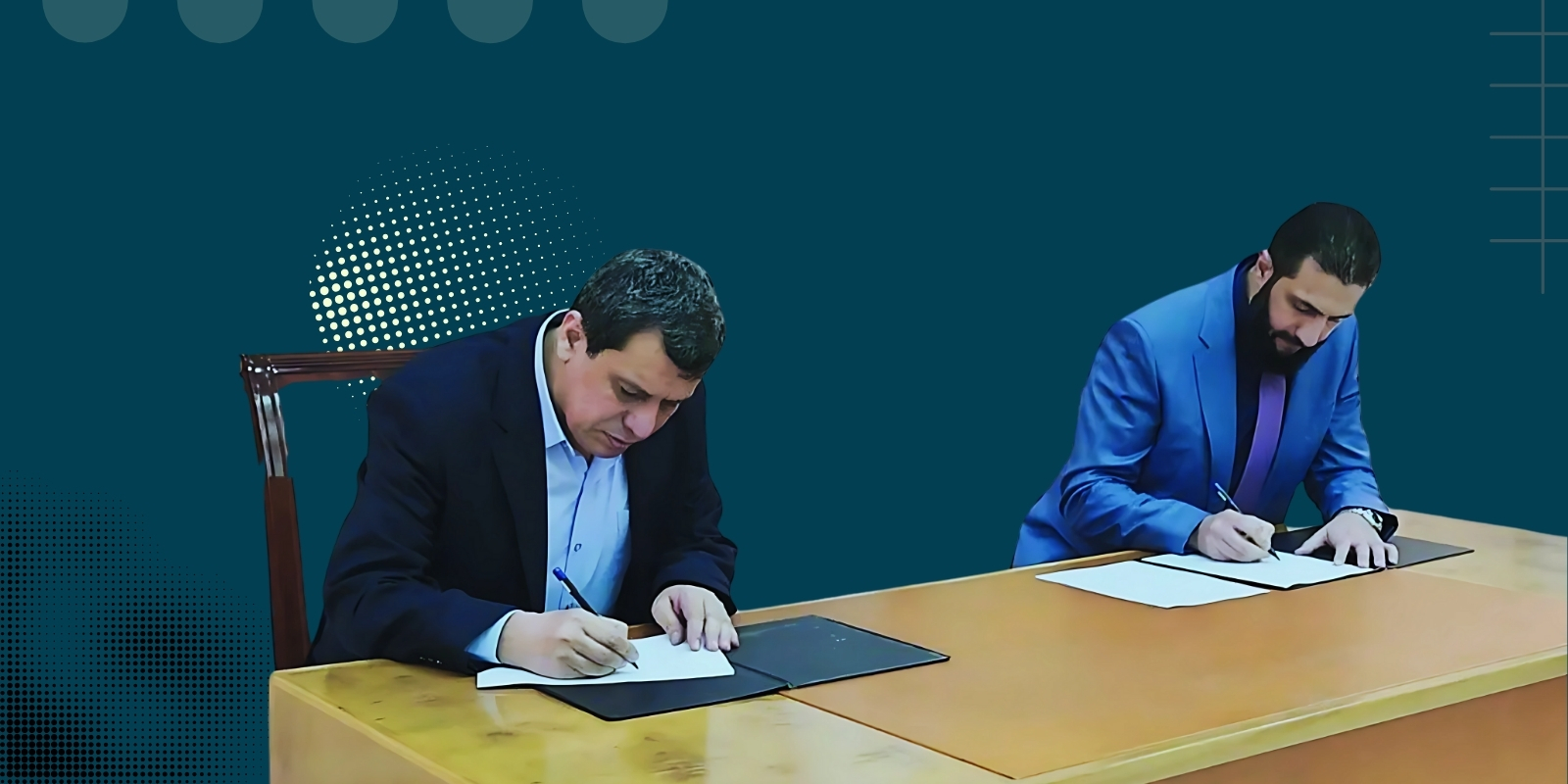
The agreement between the Syrian government and the Kurdish-led Syrian Democratic Forces (SDF) in March seemed like an attempt to turn a new page in the Syrian conflict. At first, it was described as a genuine opportunity to resolve part of the conflict. However, disputes quickly emerged over key issues such as “decentralization” and “autonomy,” leading to accusations and the suspension of negotiations, amid regional and international pressures. These included a Turkish opposition role, cautious U.S. support for the SDF, and unsuccessful Russian mediation attempts.
Speaking to +963, Political science and international relations professor Salah Qiratah, based in Madrid, said “On March 10 this year, Damascus and the SDF sat at the negotiation table and announced to the world a formula to bring the nation together: merging institutions, unifying forces, restoring state sovereignty, and establishing a comprehensive ceasefire. The agreement felt like a new page in a book half-burned; a promise to reunite the country.”
He added, “The SDF held the Hasakah conference, promoting slogans like ‘decentralization’ and ‘a pluralistic constitution.’ Meanwhile, Damascus showed no real willingness to test its patience or engage in flexible negotiations; it withdrew from Paris meetings under the pretext that ‘the venue is not national.’ In reality, it was looking for a reason to halt the process before being forced into heavy concessions.”
Qiratah noted that “both sides entered the agreement with a temporary-deal mindset rather than a commitment to lasting partnership. Damascus wanted to subordinate the SDF, not negotiate with it, while the SDF aimed to secure its gains rather than integrate into a strong centralized state. The result is that the agreement became a document without spirit, reminiscent of previous accords that led to nothing.”
He also warned that Damascus’s refusal to participate in planned Paris meetings could delay or disrupt negotiations, as the Syrian government insists that talks outside the capital lack national legitimacy. On the other hand, the SDF might face difficult choices: accept Damascus’s conditions to relocate negotiations to Damascus or explore less effective alternatives.
Qiratah concluded that the future of negotiations depends heavily on the political will of both parties and international mediators. Given the current challenges, revising dialogue strategies may be necessary to achieve tangible progress toward Syria’s stability and unity.
Read also: Did Northeast Syria Conference Highlight Deep Divisions among Syrians?
Threatened with Collapse
Kadar Beri, director of the NGO “Kurd Without Borders” in Paris, rejected linking the Hasakah conference to the postponement or cancellation of the Paris meeting. Speaking to +963, he said, “Damascus had already refused to attend the July 25 meeting, before the ‘Unity of Components’ conference took place.”
Beri explained that the Syrian government is following Turkish pressure to avoid attending the Paris meeting, amid the strained Paris–Ankara relationship, as Turkey seeks a political and military settlement in northern and eastern Syria according to its vision.
He stressed the importance of holding the Paris meeting despite Damascus’s hesitancy and wordplay, noting that the March 10 agreement is “threatened with collapse due to Damascus’s stalling.”
Beri emphasized the need to implement the March agreement with constitutional and extra-constitutional guarantees for the Kurdish component, given Damascus’s stance since signing and its recent talk of cancelling the Paris meeting.
Constitutional Reform
Zaradasht Muhammad, a member of the “Syrian Components Coordination Committee,” clarified to +963 that a Brussels meeting is a preliminary consultative gathering, not formally linked to the Hasakah conference.
He explained that while both events address issues like federalism, decentralization, and minority rights, any similarity only reflects a shared national interest and does not indicate a unified track or organizational dependency.
Muhammad stressed that the committee advocates for constitutional reform and a national conference including all Syrian components, while preserving Syria’s unity within a decentralized framework, a key step toward comprehensive national consensus.
Read also: Northeast Syria’s Unity of position Conference and Its Impact
SDF Perspective
SDF commander General Mazloum Abdi stated that the March 10 agreement faces challenges regarding decentralization and cultural rights. He emphasized that the agreement is crucial for integrating SDF forces into the Syrian army.
Abdi highlighted, in a statement to Indian Express, that the fall of the Baath regime created a massive administrative and security vacuum, requiring a decentralized democratic governance system that protects all Syrians’ rights and dignity. He stressed the need for elected regional councils to manage local affairs and affirmed that the unified Syrian army should serve all citizens.
He also confirmed that the SDF and the Autonomous Administration of North and East Syria do not threaten Turkey’s security and that continued international support is essential to combat ISIS and prevent security vacuums.
Abdi described his meeting with Syrian President Ahmad Al-Shar as positive, resulting in a three-hour discussion that opened direct channels of daily communication. He also noted ongoing contacts with Turkey and saw potential for Saudi Arabia to play a constructive mediating role, having previously helped lift sanctions on Syria.