By Hammoud Hammoud
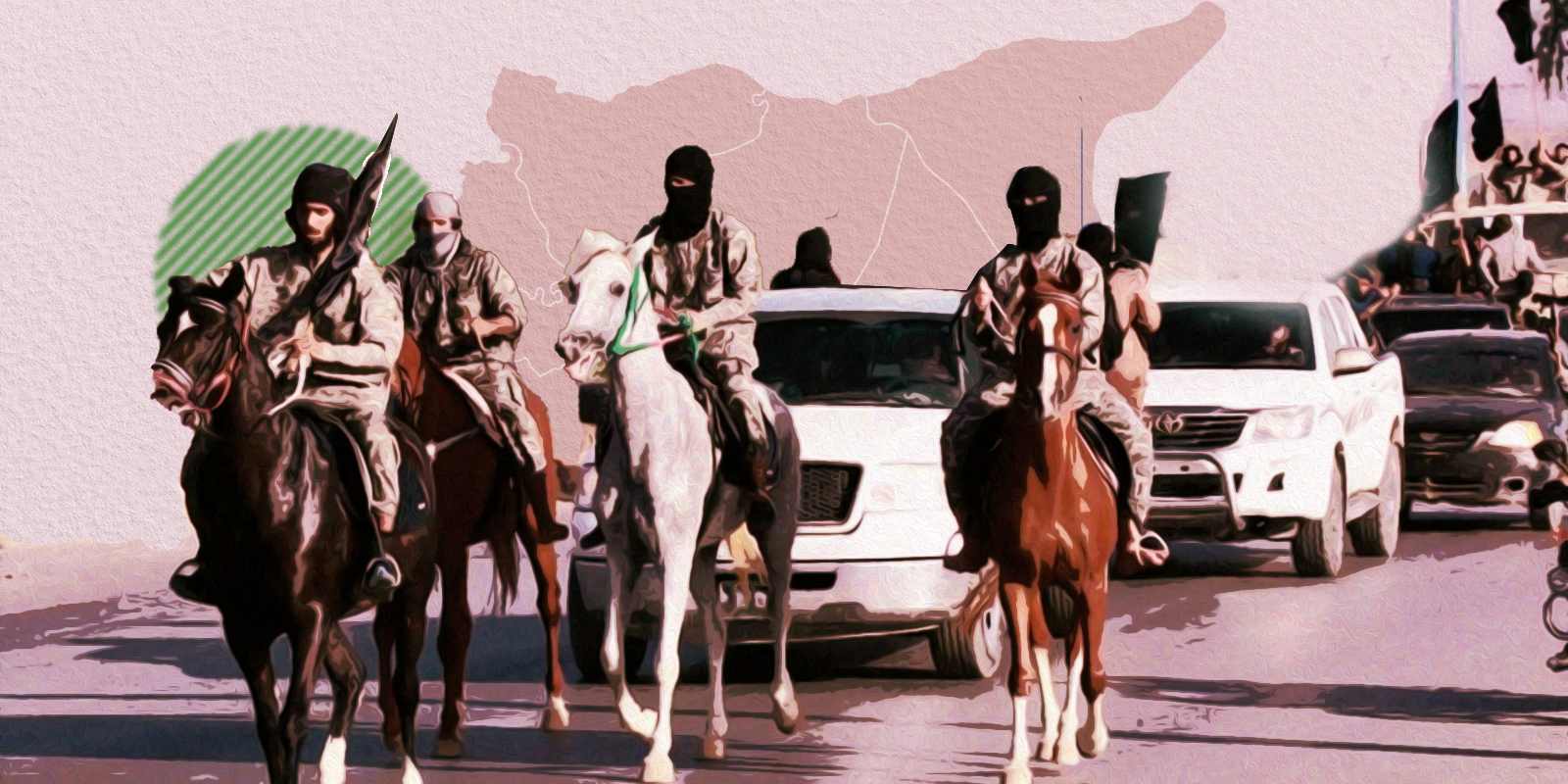
The theological and jurisprudential corpus produced by jihadist thought in modern times stands as a vast intellectual contribution within contemporary religious fundamentalism. Despite its ideological weight and volume, this article poses a central question: why have jihadist leaders in Syria today, many now in positions of authority, so consistently failed to offer meaningful answers to the “question of institutions,” or more broadly, the challenge of the modern state?
It is worth emphasizing that this failure to engage with the demands of modern state-building represents a deep wound in fundamentalist thought; one that has not been healed or addressed on its own evolving historical terms. The current Syrian context, where jihadist groups have controlled territory, provides a striking example of this historical failure by Islamic fundamentalist movements to respond effectively to the state-building challenge.
The Structural Contradiction: “Islamic Jihad” vs. “State”
One of the core reasons behind this failure lies in the deep semantic and conceptual contradictions between “jihad” and “state.” The legitimacy of jihad, in jihadist literature, is drawn from classical texts and interpretations rooted in theocratic ideals; aimed at establishing divine rule or defending an imagined, idealized ummah whose legitimacy exists largely outside of historical reality. In contrast, the modern state is built on civil institutions, geographic boundaries, codified legal systems, pluralism, and the monopoly of violence within a legal framework.
This fundamental tension, between jihad’s sacred heritage and the rational, institutional foundation of the modern nation-state, creates a conceptual deadlock that jihadist groups have been unable to overcome. They remain trapped in a mindset of “holy struggle” as an instrument of conflict and domination, unable to transition into the political and institutional logic of statecraft and governance.
Read also: Extending the Caesar Act for Two More Years: What’s Behind the Decision?
From Revolution to Governance: A Shallow Shift
When Syria’s transitional president Ahmad al-Sharaa (Abu Mohammad al-Julani) began speaking of institutions and governance on his way to Damascus, many Syrians perceived a significant rhetorical shift, some even thought he had been reading Marxist theory. His call to move from a “revolutionary mindset” to a “state mindset” seemed to signal a change in jihadist discourse.
But whether al-Shara truly abandoned the jihadist mindset is beside the point. What’s clear is that these leaders understood the state only superficially; at best, they equated it with the seizure of power and the domination of others.
The fixation on violence and coercion, seizing the state by force, is a persistent theme in Syrian jihadist circles. This mirrors a broader legacy in Islamic history, where the idea of the state was often reduced to dynastic rule: “The Umayyad State,” “The Abbasid State,” “The Ottoman State,” and so on. While these may have fit their historical contexts, it is a historical distortion to inherit and perpetuate them as modern governance models, just as the Assad regime has done, and as “al-Shara’s state” seems poised to replicate.
The State as a Tool of Coercion
This reductionist view of the state, as a means of domination, highlights the continuing semantic contradictions at the heart of jihadist discourse toward modern statehood. Whereas modern states aim to institutionalize the monopoly of force to protect rights and manage public affairs through participatory mechanisms, jihadist movements view the state through the lens of sacred violence, sectarian triumphalism, and mythological victories.
In this worldview, governance becomes an extension of conflict. The principle of “Ahl al-Shawka” (those with force) prevails, echoing Ibn Khaldun’s “the victor rules” paradigm. We see this logic in jihadist attempts to subdue Syria’s various sectarian communities, first the Alawites, then the Druze, and now efforts to coerce the Kurdish-led Syrian Democratic Forces (SDF) into submission under what they call “the state of Sharaa.”
This coercive framework does not recognize the state as a neutral or inclusive space that reflects the collective will of a diverse society. Instead, it is an instrument for enforcing a singular, authoritarian vision; one that undermines lasting stability, justice, or equal citizenship.
The jihadist mindset, grounded in doctrines such as wala’ and bara’ (loyalty and disavowal) and hakimiyya (divine sovereignty), consistently rejects positive law, pluralism, and democratic representation. Consequently, the frequent calls by jihadist leaders in Damascus for a “state” may sound as though they refer to an actual state, but they are articulating a new form of authoritarianism; one tailored to their goals of control and dominance.
Read also: The Concept of the State in Syria
Thus, the jihadist, particularly the ones in Damascus, exists in a state of existential rupture. He cannot reconcile the illegitimacy of the modern state he inhabits with the mythical legitimacy he longs for, drawn from an idealized, imagined past. This explains why most fundamentalist movements do not aim to build states; they seek instead to obliterate them, as both concept and institution.
Jihadists in Damascus derive neither their legitimacy from the state, nor do they function within it. Their ideology is imposed upon the state, not for the state. And since their legitimacy is drawn from myth, they find themselves paradoxically seeking recognition from foreign powers, particularly the United States, their once archenemy, while ignoring the only real source of legitimacy in Syria: the will of the people.
This contradiction exposes the profound crisis at the heart of Syria’s post-revolutionary state-building efforts.
In Conclusion, as long as the true foundations of the state remain absent, and as long as its would-be builders are jihadists emerging from ideological voids, who view power through the lens of coercion and domination, the project of a viable Syrian state will remain indefinitely postponed.