


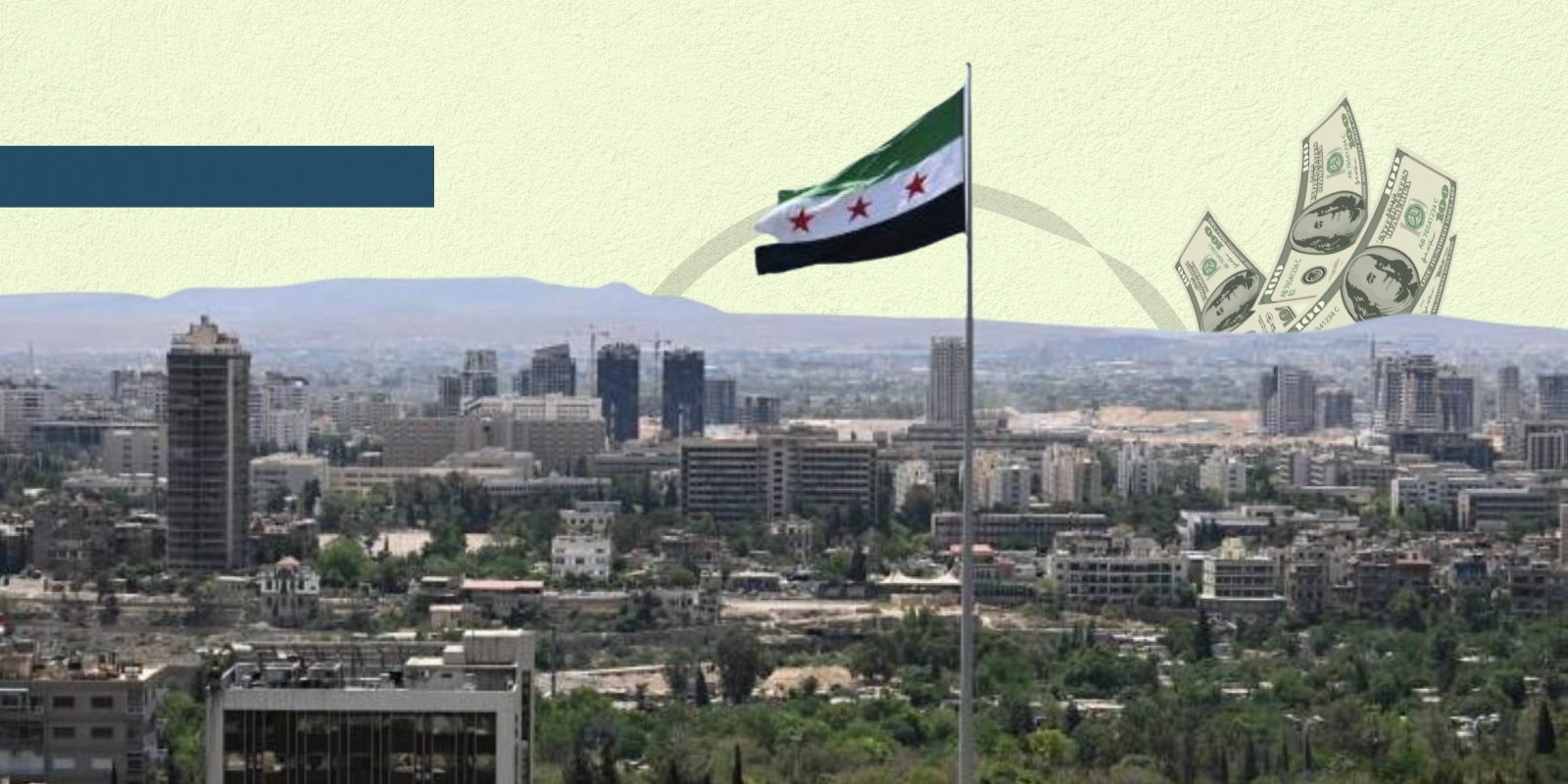
As the Syrian economy was preparing for a phase of gradual recovery, and as members of the Syrian diaspora in the United States were making efforts to repeal the Caesar Act imposed on Syria, the decision by the U.S. House Financial Services Committee marked a shift in direction. The committee approved a bill to extend the Caesar Act for another two years instead of repealing it, tying any future easing of sanctions to the protection of minorities and respect for their rights. What lies behind this decision, and what are its potential impacts on Syria’s economic and political landscape?
The Caesar Act: Background and Provisions
The “Caesar Syria Civilian Protection Act,” commonly known as the Caesar Act, is a U.S. law that went into effect in 2020. It imposes financial and economic sanctions on the Syrian government and its main allies, notably Iran and Russia.
The law is aimed at holding accountable those responsible for human rights violations and war crimes in Syria. Its broader goal is to pressure the Syrian government to engage in a political solution based on UN Security Council Resolution 2254.
The Extension Proposal and U.S. Conditions
On July 22, the House Financial Services Committee approved a bill extending the Caesar Act for two additional years. The bill will now move to a full vote in both chambers of Congress.
The proposal was introduced by Republican Representative Mike Lawler, who chairs the Subcommittee on the Middle East and North Africa in the House Foreign Affairs Committee. It includes provisions to tighten banking restrictions and strengthen anti-money laundering measures. It also requires the U.S. administration to report to Congress on regulatory and enforcement authorizations granted to the Central Bank of Syria.
The bill extends the exemption period for certain provisions from 180 days to two years and allows for the possibility of a full suspension of the Act; if the Syrian government complies with the stated conditions for two consecutive years, or by the end of 2029.
Key conditions include halting airstrikes on civilian areas, protecting ethnic and religious minorities, combating the production and trafficking of Captagon, ensuring unrestricted humanitarian access, releasing all political prisoners, and allowing international monitors access to detention facilities.
Economic and Political Implications
Economic expert Amer Al-Deeb, head of the Syrian Renaissance Council and based in Damascus, told +963 that the extension is largely a procedural step that does not require the full legislative process, since it activates a pre-existing renewal clause.
Although he notes that the negative effects of the sanctions may be less severe than in the past, he believes the extension will still lead to economic stagnation, increased living costs, and a further slowdown in markets. He anticipates the exchange rate will not exceed 12,000 Syrian pounds to the dollar, attributing this to currency liberalization and a diversified basket policy.
Al-Deeb adds that the new law could weaken the Syrian government’s efforts to engage with American civil society, particularly through organizations such as the Syrian American Peace Council.
He also expects the U.S. to impose stricter oversight of Syria’s economy, including blocking access to the SWIFT banking network, further paralysing the financial sector, and adding more Syrian businesspeople to sanctions lists.
Economic analyst Shadi Ahmad told +963 that the U.S. decision would freeze ongoing foreign investment negotiations and halt international financing, given the continued reluctance of global banks to interact with the Syrian financial system. He notes that rising transportation and logistics costs also hamper trade and reconstruction efforts, adding more strain on the Syrian pound and the general population.
Gulf Investments and Legal Hurdles
Regarding Gulf companies that have expressed interest in investing billions of dollars in Syrian reconstruction projects, Ahmad says the extension of the Caesar Act restricts their ability to act. Moving money or equipment without violating sanctions remains nearly impossible, especially as insurance and logistics firms are unwilling to operate in Syria.
He adds that fears of secondary sanctions prevent Gulf banks from funding these projects, rendering such investment pledges currently unfeasible, unless formal understandings are reached between Washington and some Arab states to grant legal exemptions.
In the same context, Al-Deeb believes that media reports claiming a lifting of sanctions are inaccurate. What occurred, he says, was the issuance of limited humanitarian licenses, not an actual lifting of sanctions, whether from the U.S. or the European Union. He also notes that announcements of Gulf or American investments, particularly in the oil sector, have so far remained limited to media statements.
Diverse Responsibilities
Al-Deeb holds the Syrian government partially responsible for the continuation of sanctions. He argues that it failed to capitalize on international support, did not foster national partnership, and instead pursued exclusionary policies that led to social fragmentation and a loss of both internal and international trust.
On the other hand, Ahmad views responsibility as shared among multiple actors, including the U.S. Congress, under pressure from human rights advocates, alongside Israeli-linked lobbying groups and segments of the Syrian diaspora. He also blames the external Syrian opposition, which has tied the lifting of sanctions to full regime change, and the Syrian government itself, which has yet to build sufficient international trust or implement substantial reforms.
Facing Sanctions: Options and Possible Paths
Regarding the possibility of lifting sanctions should the Syrian government comply, Al-Deeb believes this would require real progress on the political track; through inclusive national dialogue, the formation of a pluralistic government, restructuring of the military into a unified national force, and convening a genuine national conference.
Ahmad points out that there are ongoing internal discussions in Syria about how to respond to sanctions. He suggests several options, including launching a direct negotiation track with Washington to propose a gradual roadmap for lifting sanctions, appealing to international legal bodies, strengthening partnerships with countries like China, and boosting domestic economic initiatives.
He concludes by emphasizing that the Caesar Act, in its current form, remains stronger than the tools presently available to the Syrian government, unless a new political approach is adopted, one that balances sovereignty with human rights, and demonstrates a credible and transparent governance model that prioritizes the Syrian citizen.











