


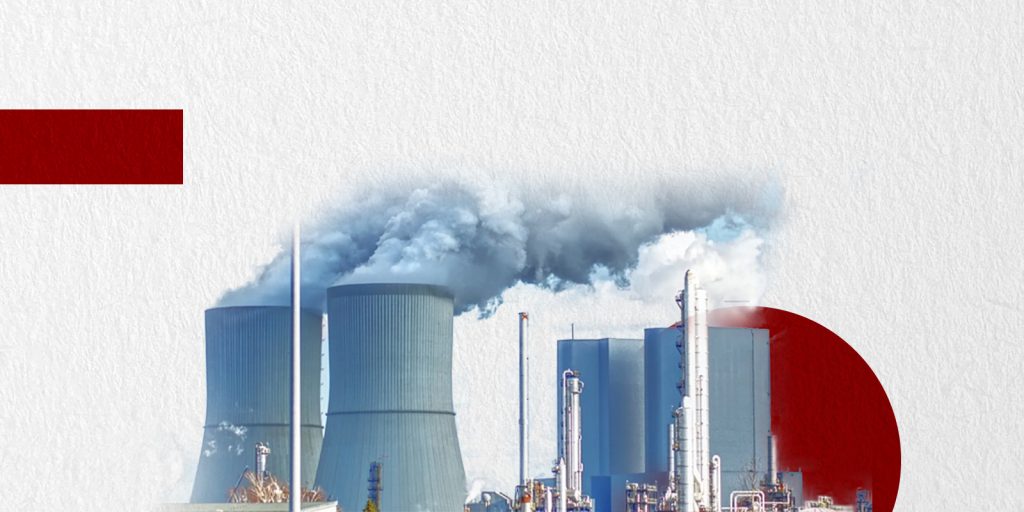
The devastation that the Syrian war has done is not restricted to ruined cities and lost lives, but one of its most overlooked victims is the environment impact. Years of intense military operations, heavy weapons, explosives, and chemical agents have released massive amounts of greenhouse gases and toxic pollutants into the environment in a country with little to no environmental oversight or damage assessments.
Direct impact on Syrians’ health was observed. Respiratory illnesses like asthma and chronic bronchitis have become alarmingly common. Cases of chronic skin conditions and immune disorders have risen to, leading to high mortality rate due to collapsing environmental and public health systems.
The hazard
According to Abdulrahman Omran, Chairman of “News bi-Arabi” news website based in Cairo, the main greenhouse gases released by military activity include carbon dioxide (CO₂) from burning fuel and organic material, methane (CH₄) from burning wastes, and nitrogen oxides (NOₓ) from explosions and fires of industrial facilities. These attacks have filled the air with fine particulate matter (PM2.5 and PM10) those are tiny particles that pose a direct threat to human lungs.
Speaking to “963+”, Omran says these emissions haven’t just impacted local environment they have also pushed local air pollution to dangerous levels, especially in battle-scarred regions like Eastern Ghouta, Aleppo, Raqqa, and Deir ez-Zor.
International organizations, including the World Meteorological Organization, and a handful of local researchers have tracked the environmental decline in Syria’s conflict zones. They point to worsening air quality, polluted water, and expanding soil erosion and desertification in once-fertile farmland.
Read also: Syria’s Chemical Weapons and the Hidden Health Crisis
Despite this, Omran says the international community continues to overlook Syria’s “silent catastrophe,” focusing mostly on the political, military, and humanitarian dimensions of the war while ignoring the environmental aspect that could haunt Syrians for generations. Weak local capacities and the lack of reliable environmental monitoring make it nearly impossible to fully measure the damage.
Due to the conflict’s complexity and the breakdown of state institutions, there is still no comprehensive official environmental assessment of Syria’s wartime damage — not by the UN, nor by the Syrian government. Some international groups have tried to map parts of the impact, using satellite imagery and remote sensing to estimate damage where possible.
The environmental depth
Janet Frangieh, founder of the Support, Protection and Giving Association based in Beirut, says the world largely ignores the environmental side of Syria’s crisis. “Most of the focus remains on the human, political, and economic consequences — while the environmental toll is treated as secondary,” she tells “963+.”
Frangieh points out that this neglect is partly due to the lack of field data and the near-total absence of mechanisms to protect the environment during conflict. This makes it difficult to include these issues in official reports and recovery plans.
Read also: Environmental Safety in Post-Conflict Syria
The health effects, however, are impossible to hide. Emissions from explosions, fuel fires, and industrial sites have severely harmed local communities. Respiratory illnesses like asthma, bronchitis, and even lung cancer have risen in some areas. Contaminated water and soil have led to higher rates of skin and intestinal diseases, while exposure to heavy metals and toxic chemicals has triggered nervous system disorders and stunted child development. Children, the elderly, and pregnant women are among the most vulnerable to this hidden threat.
Frangieh stresses that real recovery for the country must include the environment. The first step, she says, is a detailed damage assessment with help from specialized international organizations. Next should come regular monitoring of air and water quality in affected towns and cities, along with targeted clean-up operations in residential areas and former frontlines.
Long-term solutions should prioritize reforestation and restoring vegetation, switching to clean energy during reconstruction, and pushing for the environment to be recognized as part of Syria’s national rebuilding plans. She also argues that the international community must treat environmental destruction as a war crime, to ensure accountability, compensation, and at least partial repair of the damage that still lingers in Syria’s air, water, and soil.











