


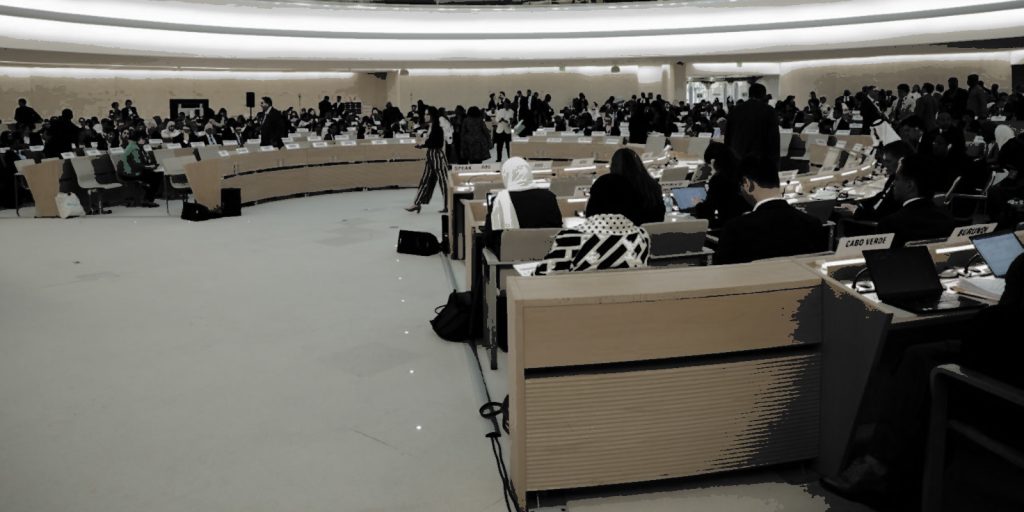
The 78th session of the World Health Organisation (WHO) convened in Geneva under the banner “One World for Health,” with participation from Syrian Health Minister Dr. Musab al-Ali and representatives of WHO member states.
This session, which runs through the 27th of this month, is among the largest in the organisation’s history. Countries are working toward a comprehensive strategy to strengthen health systems, combat epidemics, and ensure rapid emergency response, especially as growing demands stretch the WHO’s ability to support low- and middle-income countries.
Discussions at the session included enhancing coordination with international partners, reviewing sustainable financing priorities for the coming phase, reforming the global health architecture, and expanding future pandemic and emergency response capacities.
In his address, Dr. Musab al-Ali, Minister of Health in the Syrian Transitional Government, said Syria’s health system has suffered severe damage over the years of conflict. Medical services have significantly deteriorated, with around 40% of hospitals either non-operational or only partially functioning. Many healthcare workers, he added, have fled the country in search of safety.
Al-Ali emphasised that lifting international sanctions on Syria could be a turning point, offering a real opportunity to improve the lives of millions. He urged WHO member states and partners to support Syria in building a fairer, more inclusive health system, one that saves lives, strengthens peace, and supports the country’s future.
He outlined the Health Ministry’s comprehensive recovery plan, which includes rehabilitating at least 200 health facilities over the next 18 months. The plan prioritises facilities based on the extent of damage and local needs.
Al-Ali also highlighted efforts to rebuild Syria’s health workforce by enhancing governance, improving human resources management, and expanding vocational and continuing education. Restoring basic services and ensuring equitable health coverage are central to the ministry’s vision, he said, alongside bolstering emergency preparedness through reforms in governance, financing, supply chains, and digital infrastructure.
Read more: Syria in Our Eyes: Ministry of Information Celebrates Youth Creativity
Restructuring the Health Sector
Dr. Pierre El-Khoury, economist and Dean of the College of Business at the American University of Technology, told +963 that Syria’s participation in the World Health Organisation primarily aims to garner greater support for restructuring the country’s health sector, particularly in conflict-affected regions like Aleppo, Deir ez-Zor, and Homs.
The Syrian delegation is also seeking to improve access to medicines and medical equipment through more flexible international mechanisms, forge new channels of cooperation with previously unsupportive states, and benefit from a gradual shift in certain international stances toward embracing early recovery, without strictly tying it to a comprehensive political settlement.
As for translating the organisation’s resolutions into tangible outcomes within Syria, El-Khoury noted that success hinges on several key factors. These include the government’s ability to present credible and actionable technical plans, maintain a degree of transparency in resource allocation, and engage constructively with international partners and donors such as Gavi, the Vaccine Alliance, the Global Fund, and the Red Cross.
According to El-Khoury, Syria’s engagement could also pave the way for bilateral agreements targeting specific health initiatives, such as rehabilitating essential hospitals or training healthcare professionals in underserved rural areas.
He cited global examples that Syria might draw from, including post-Ebola recovery efforts in Sierra Leone and Liberia, where large-scale international funding helped strengthen supply chains, establish emergency response units, and build community-level epidemiological surveillance systems.
El-Khoury also pointed to Iraq’s hospital reconstruction efforts in Mosul, carried out through partnerships between the Iraqi Ministry of Health and the United Nations Development Programme, as a model of coordinated and equitable rebuilding.
He emphasised that achieving synergy between international aid and local initiatives will require a relatively independent oversight mechanism to jointly monitor implementation. This includes involving community-based and civil society organisations in evaluation efforts and ensuring the availability of accurate, up-to-date data.
El-Khoury concluded by stressing that Syria’s presence at the WHO should not be seen merely as a diplomatic gesture. Rather, it represents a genuine opportunity to reintegrate the Syrian health system into the global health network, provided that this engagement is matched by a sincere commitment to move beyond rhetoric and implement meaningful reforms centred on public health.
Previously, Doctors Without Borders announced the closure of 150 health facilities in Syria, citing widespread funding cuts from the United States. The organisation stated that the reductions impacted around 4.4 million people across nine Syrian governorates.
Read more: U.S. Seeks to Attract Investment in Syria with Global Partners
Positive Results and Tangible Support
Writer and economic analyst Dr. Bassam al-Zoghbi affirmed that Syria’s participation in the WHO in Switzerland is highly significant, reflecting the international community’s willingness to reintegrate Syria into the activities and operations of the organisation, particularly at a time when the country’s health system is experiencing severe deterioration due to past policies.
Speaking to +963, al-Zoghbi expressed hope that Syria’s involvement in the event would lead to positive outcomes and concrete support from the World Health Organisation for the country’s healthcare system. He emphasised the need for collaborative efforts with the international community to revitalise healthcare services, including hospitals and health centres across Syrian cities, following the collapse of many basic services.
Earlier this year, the WHO warned of a worsening health crisis in Syria. Organisation spokesperson Margaret Harris stated that more than 15 million people in Syria are in urgent need of healthcare, including millions of internally displaced persons. She noted that many hospitals can no longer accept patients due to extensive damage and severe funding shortages.











