In a meeting last Tuesday in Brussels, the foreign ministers of the EU’s 27 member states agreed to end economic sanctions previously imposed on Syria. The decision was presented as part of the bloc’s broader effort to support Syria’s reconstruction and to provide Syrians with an opportunity to rebuild their country in a unified, inclusive, and pluralistic manner. The move raised hopes for a potential economic recovery, especially following U.S. President Donald Trump’s recent announcement that American sanctions on Syria would also be lifted.
In a statement, the EU said it would continue cooperating with Syria’s transitional government to support efforts aimed at fulfilling the aspirations of all Syrians, without discrimination, while upholding human rights and fundamental freedoms. The bloc emphasised that it will closely monitor developments on the ground, particularly progress in accountability for recent episodes of violence. However, it clarified that certain sanctions would remain in place, specifically those targeting the Assad regime, as well as security-related sanctions, including restrictions on weapons and technology that could be used for internal repression. The EU will also continue to enforce measures against individuals and entities accused of human rights violations.
What Does the European Decision Include?
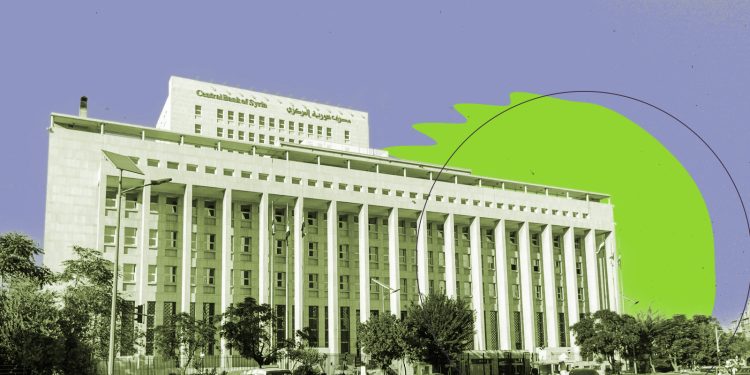
The lifted sanctions cover several key sectors. These include the Syrian banking system, which had previously been excluded from international markets, as well as the unfreezing of the Central Bank of Syria’s assets. Cash transactions are now permitted, and restrictions have been lifted across the transport, energy, aviation, and commercial sectors.
Following the announcement, EU foreign policy chief Kaya Kallas stated that “there is no peace in Syria without economic recovery and stability.” Speaking at a press conference in Brussels, she explained, “We decided to lift the economic sanctions we imposed on Syria because we want to help the Syrian people build a new, inclusive, and peaceful Syria.”
Kallas emphasised that the lifting of sanctions is reversible and contingent on progress. She said the EU faces a choice: either to provide the Syrian people with access to services and employment and help pay salaries to curb extremism, or to deny them that opportunity, thereby forfeiting the ability to influence human rights and other issues of concern.
Related: U.S. Treasury Eases Sanctions on Syria Following Trump’s Directive
What Are the Pillars of Economic Recovery?
Maan Talaa, Director of Research at the Omran Centre for Strategic Studies, emphasised that achieving economic recovery in Syria requires a multi-faceted approach, political, economic, and security-based.
Politically, he said, progress hinges on the transitional government’s ability to build strong international relationships and strike a balance in regional and global diplomacy. The lifting of sanctions also holds significant political weight, serving as a reflection of international confidence in the current authority.
Economically, Talaa explained, recovery depends on the practical mechanisms used to lift and clear sanctions. He suggested there could be a shift away from the crisis-response phase that has defined European development policies toward Syria, laying the groundwork for genuine reconstruction.
In remarks to +963, Talaa added that the security dimension is equally vital. “No one can support or guarantee political and economic stability in the presence of ongoing security threats and the failure to address them,” he said, stressing that the government’s ability to manage security challenges is a key determinant of future stability.
Talaa also noted that while European countries initiated the lifting of sanctions after the new transitional government took power, U.S. sanctions remain a more formidable obstacle. “American sanctions are the harshest,” he explained, adding that “because Washington controls the dynamics of the global economy, the lifting of European sanctions is important, but not decisive.”
Strategic Implications
Despite these limitations, Talaa believes the lifting of European sanctions will have significant strategic effects, particularly on Syria’s banking, healthcare, education, commerce, and transport sectors, due to Europe’s geographical proximity and its long-standing development involvement in Syria since 2011 through various organisations. He anticipates increased engagement by these groups in assessing needs and providing support on the ground.
On Tuesday, Syria’s Transitional Government’s Ministry of Foreign Affairs welcomed the EU’s decision, calling it a “pivotal moment” and the beginning of a new chapter in Syrian–European relations. In a statement posted on Facebook, the ministry described the move as being based on “mutual respect and shared interests.”
Related: Marco Rubio’s Statements Stir Controversy: Civil War or Push to Lift Sanctions?
United Nations Special Envoy to Syria, Geir Pedersen, also praised the EU’s swift action, writing on X that the decision represents an “important step in supporting the Syrian people in their quest to build a comprehensive, peaceful, and just future.” Meanwhile, Italian Ambassador to Syria, Stefano Ravagnan, expressed pride in the EU’s move and Italy’s key role in achieving it.
According to Talaa, however, reconstruction is not solely dependent on external factors. He stressed that internal readiness is equally crucial, including the Syrian economy’s capacity, availability of skilled professionals, and a coherent national policy for reconstruction. “National ownership must be the foundation,” he said, highlighting the importance of fair needs assessments, preserving cultural heritage, promoting balanced development across regions, and ensuring local participation in the rebuilding process.
In late February, the European Union had already eased some sanctions on Syria, particularly in the energy and transport sectors. It also relaxed restrictions on four Syrian banks, the Industrial Bank, the Popular Credit Bank, the Savings Bank, and the Cooperative Agricultural Bank, as well as on Syrian Airlines. Additionally, certain limitations on the Central Bank of Syria were lifted to facilitate essential financial operations.
European sanctions against Syria were first imposed in 2011, following what Brussels at the time described as “the Assad regime’s violent suppression of peaceful protesters.” The sanctions included sweeping restrictions on trade, financial transactions, and key industries such as energy and transport, measures that sharply reduced economic ties between Syria and the EU.