Yasser Al-Ibrahim, 45, hoped that returning to his home after years of displacement in the camps of Idlib, northern Syria, would mark a fresh start. But what should have been a moment of renewal quickly turned into a nightmare. His wife tragically passed away due to a sudden health crisis, caused by a delayed ambulance response, taking over an hour and a half to arrive. By the time help reached her, it was too late; her heart had stopped.
A Dangerous Return
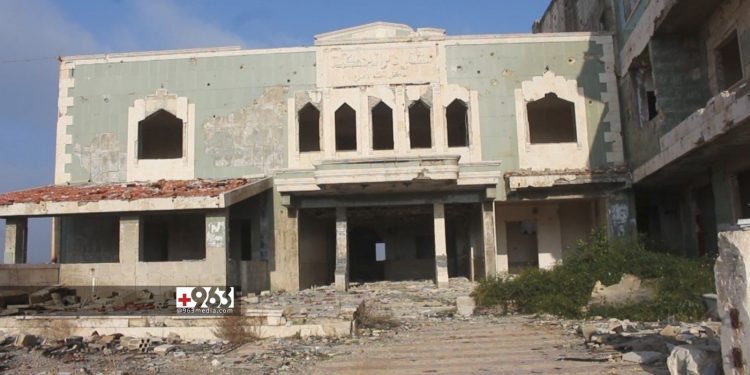
Al-Ibrahim shared in the eighth issue of +963 “I thought the war was over, but the suffering never ended.” He recounted the devastating impact of the long wait to get his wife to a medical centre. His village, Has, located south of Idlib province, is 50 kilometres away from the nearest medical facility, a distance that proved too great to save her life. Ibrahim’s return to his largely destroyed hometown shattered his hopes, as the absence of essential services, particularly healthcare, became painfully clear. The only medical centre in his village was reduced to nothing more than burnt and destroyed walls.
He added, “After five years of displacement in dilapidated camps, I decided to return to my town. But I soon collided with a harsh reality: the absence of all services, including the only health clinic, which no longer exists.”
Read also: Health Sector in Crisis: Challenges and Efforts
Ibrahim and his family were forced to return to the camp, where at least there are clinics and basic first aid services. He said, “We want to go back, but how can we return to a place where we can’t even save ourselves?”
Ibrahim’s story is not unique. Many displaced people who attempted to return to their villages in the Idlib and Hama countryside found that the lack of basic services, especially healthcare, made return impossible.
Thousands of displaced Syrians are facing major obstacles preventing their return to their homes. The absence of medical services keeps many in the camps of northwest Syria, where they have access to relatively better healthcare facilities compared to their war-torn villages.
New Displacement
Less than a month after returning to the town of Kafr Nabuda in northern Hama, Khaled Atta’om (28 years old) was forced to return to the camps of Ruheen in northern Idlib. His young daughter’s deteriorating health was beyond his capacity to address in the destroyed town.
Atta’om shared in the eighth issue of +963, “My youngest daughter developed a severe pneumonia in the later stages, caused by being deprived of treatment. I couldn’t access the medications due to the lack of pharmacies and medical centres in the area.”
He added, “I had no choice but to return to the camps after failing to secure the necessary medicines and medical consultations for my daughter. The nearest medical centre is over 30 kilometres away.”
Read also: A Nation Without Healers: Syria’s Medical Workforce in Crisis
Atta’om also expressed his frustration with the situation, saying that residents of northwest Syria who return to their homes after the fall of the former regime are “dying in silence” due to the absence of essential services and healthcare. He questioned the role of government and health authorities in addressing the dire situation in the region.
Most medical centres in the Idlib and Hama countryside have been either completely or partially destroyed due to bombing and fighting. Those that remain are severely under-resourced, lacking both medicines and qualified medical personnel.
Early last year, the World Health Organization (WHO) issued a statement confirming that the health system in northwest Syria had been “severely disrupted” after years of conflict and natural disasters, compounded by the cessation of support for many health facilities. The WHO reported that the number of people in need of health services in Syria had reached 15.3 million.
Dire Conditions
Mustafa Abd al-Sattar, 35 years old, a displaced person from Kafr Nabl in southern Idlib, commented, “It’s not enough that the war has stopped; there need to be hospitals, schools, and clean water. Without that, returning is nothing more than an adventure that could cost lives.” He told +963, “Most of the displaced people in the camps live in dire, tragic conditions compared to returning to their homes, which lack all basic necessities.”
He continued, “The southern region of Idlib is sorely lacking in healthcare, with almost no services available. This exacerbates the humanitarian crisis faced by hundreds of thousands of displaced people. Returning without medical services is simply trading one form of suffering for another.”
Abd al-Sattar stressed that areas controlled by the former regime at the end of 2019 in the Idlib and Hama countryside lack healthcare and medical services. If these areas remain without improvement, thousands of displaced people will be forced to bear the consequences of displacement for many more years.
Urgent Solutions Needed
Mohammad Al-Ali, the head of the Central Ambulance Department in Maaret al-Numan, southern Idlib, pointed out that the lack of healthcare services not only threatens residents’ lives but also prolongs the suffering of displaced people, worsening the humanitarian crisis without any effective or immediate solutions. Thousands of families will remain far from their homes, stuck between the dangers of displacement and the risks of returning to areas without medical protection.
Read also: A Fragmented Economy: Syria’s Struggle to Rebuild Across Divided Regions
He added to +963, “Rebuilding healthcare infrastructure, repairing destroyed medical centres, even if partially, and setting up mobile clinics in remote villages, along with providing fully equipped ambulances, are essential steps to alleviate the problem and reduce its catastrophic effects on Syrians in these regions.”
Ali emphasized the importance of providing treatment, which is a basic right for citizens and a necessary condition to restore life to these devastated areas, where rates of epidemics and deaths are rising due to the lack of medical services, while residents cannot afford private and paid hospitals.