
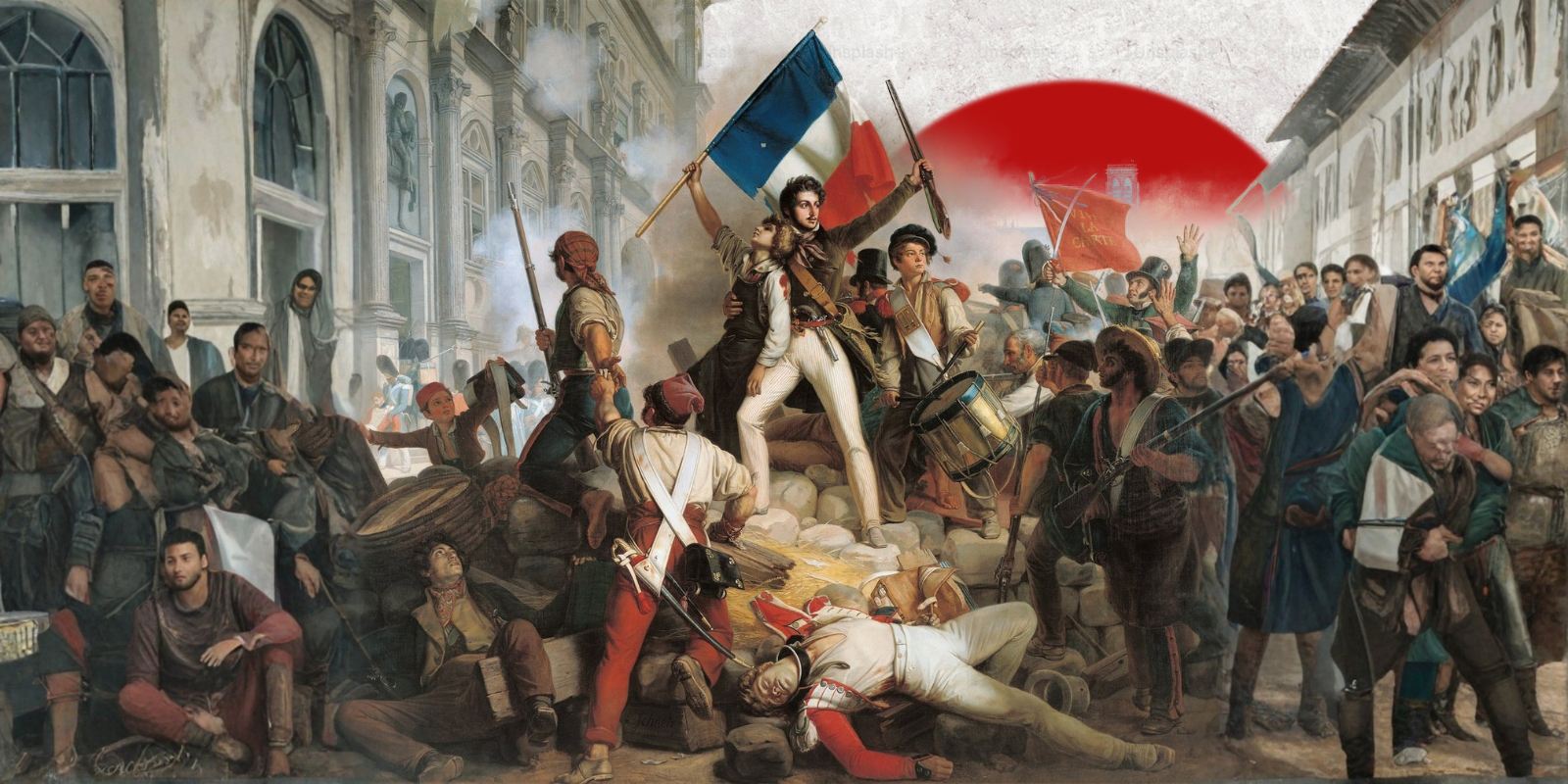
Critics often praise the values of the French Revolution, and secularists increasingly recite near-religious paeans to its principles and slogans, viewing it as the most significant modern transformation towards freedom, dignity, and independence. Yet, this article does not aim to diminish the Revolution’s values or question its justice. The French Revolution remains among the most philosophically rich, mature, and clear in vision, confronting tyranny. But who says noble ideas alone are enough to face a vindictive administration?
This article examines the terrifying aftermath of the Revolution, when the uprising descended into a frenzy of revenge, overturning its own principles, and replacing justice, liberty, and equality with instincts for vengeance. The parallels to modern struggles are deliberate – history is rarely mere coincidence.
France reached its zenith in the European theatre under Louis XIV, the Sun King, who ruled for seventy-two years with absolute power, sanctioned by generals, clergy, and the bourgeoisie. He governed by divine right, with no obligation to seek popular approval – and famously declared, “L’État, c’est moi” (“I am the state”).
His grandson, Louis XV, maintained the state’s rhythm effortlessly, passing power to Louis XVI, whose ten-year reign oscillated between Versailles’ extravagance and Élysée frivolity. Marie Antoinette’s excesses, contempt for the poor, and disregard for human suffering left her infamous in history.
Marx observed that injustice alone does not spark revolution; it is the awareness of injustice that does. European philosophers awakened the people to the vile collusion between priests and dictators. For ten years, anger festered beyond the monarchy’s control, culminating in a popular uprising that filled France’s squares with the roar of a people vowing punishment for every throne, crown, and priest. Denis Diderot’s declaration echoed through the streets: “May the last king be strangled with the entrails of the last priest!”
In 1789, the storming of the Bastille, Europe’s most feared prison, symbolized the collapse of oppression. Inside, prisoners emerged shaken, having never seen the sun. The horrors of the Bastille ignited a vengeance-fuelled revolution. Young faces on the streets sought to destroy every trace of the past, ignoring appeals for tolerance. Revolutionary justice became indiscriminate – the guillotine executed generals who had oppressed the people, then expanded to nobles, priests, and even hesitant philosophers.
Soon, the Revolution devoured its own. Over 17,000 citizens met the guillotine, with tens of thousands more dying in other violent reprisals. Robespierre, head of the Committee of Public Safety, personally oversaw executions, ensuring every “enemy of the Revolution” faced justice. Louis XVI and Marie Antoinette were brutally executed amid the cheering of the crowd. The violence escalated, consuming not only enemies of the monarchy but also those deemed deviants or conspirators among the Revolution’s own ranks. Leaders such as Jean-Paul Marat, Georges Danton, Camille Desmoulins, and even Philippe, Duke of Orléans, fell victim to the same blade they once commanded.
The Revolution turned on its intellectuals, too. Lavoisier, France’s most prominent physicist, faced execution for his association with the ancien régime. Robespierre justified this as protecting the Revolution from “contaminated ideas,” reinforcing the notion that ideology outweighed science and reason. Ironically, Robespierre himself eventually succumbed to the guillotine, highlighting the Revolution’s self-consuming nature.
The decade following the Revolution left France awash in blood, with approximately 80,000 victims. Attempts at reconciliation, tolerance, or mercy failed. The Revolution’s momentum created a cycle of violence that persisted until Napoleon rose to power. He crowned himself emperor atop the nascent Republic, installing relatives across Europe, and redirecting revolutionary anger into a prolonged series of wars – the “0 World War” – lasting fifteen years and claiming millions of lives across Austria, the Low Countries, Spain, and ultimately Russia, ending at Waterloo.
The promised French Republic was delayed. The first Revolution failed to secure freedom and justice; vengeance, blood, and chaos dominated its course. Only after decades of struggle, wars of liberation, and Napoleon III’s defeat did the second Republic establish a constitutional framework with legal constraints on power.
The lesson is stark: revolutions unchecked by mercy or law risk becoming their own worst enemy. They replace liberty with fear, equality with vengeance, and life with death.
It is painful that in our struggling Arab countries, we do not study the French Revolution to learn from it and avoid its disasters. Instead, we read it as if it were sacred scripture, seeing wisdom in every failure, a lesson in every massacre, and joy in every downfall. The more catastrophes and horrors we witness, the more we are told: the French Revolution only triumphed after it purged all its enemies and endured seventy years of successive betrayals! Rather than studying the true lesson of history and avoiding the dark path of a reckless, vengeful revolution, we repeat the cycle of blood and war. As the historian George Santayana warned, those who do not read history are condemned to repeat it.
The opinions expressed in this article do not necessarily reflect the views of +963.