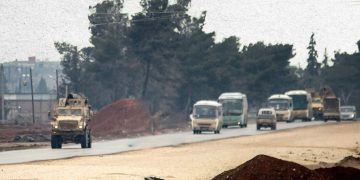
Syria’s internal displacement crisis continues to reshape the country’s social and economic landscape. What began as an emergency response to violence has evolved into a long-term condition that defines daily life for millions. Countless families now endure extreme hardship in destroyed homes, worn-out tents or overcrowded temporary shelters, relying on minimal food or cash assistance that barely covers basic needs.
Rising prices, shrinking purchasing power and dwindling job opportunities have compounded their suffering. Water shortages, electricity cuts and collapsing infrastructure make life even harsher, particularly in camps that lack the most fundamental services. The steady decline of international assistance in recent years has widened the gap between urgent needs and available resources.
Deep Impacts
These conditions have left profound and lasting marks on Syrian society. Population structures in several cities have shifted dramatically, pressure on essential services has intensified and large segments of the population now live in a state of permanent instability. With ongoing economic and security crises, the prospect of many families returning to their original areas remains deeply complicated, turning internal displacement into a long-term crisis with far-reaching social consequences.
Dr. Salah Qirata, professor of political science and international relations, argues that internal displacement has produced demographic and social transformations that will shape Syria for generations. These movements, he says, were never merely a desperate search for safety – they became a force redrawing the country’s demographic map.
Many vibrant cities lost more than half their original populations, while others absorbed massive influxes of displaced people, producing unprecedented shifts in social fabric. Traditional local identities, he notes, have eroded under the pressure of forced coexistence between newcomers and host communities – coexistence driven by necessity rather than trust. This has created fragile social structures vulnerable to recurring tensions.
Qirata adds that displacement has redistributed centres of economic and social influence. The importance of major urban hubs has declined, while smaller towns that absorbed large numbers of displaced residents have swelled into overcrowded population centres. Such changes are reshaping power balances and will inevitably influence any future political settlement or governance arrangements.
Economically, the effects have been severe. Cities emptied of their residents have lost skilled labour and productive capacity, while host cities face pressures far exceeding their ability to cope. Local markets have deteriorated, poverty has soared and social tensions have heightened. Syria today – demographically, socially and economically – bears little resemblance to its pre-2011 form. Any political project that ignores this new reality, Qirata warns, will remain nothing more than an “unreachable aspiration”.
Living Under Constant Strain
Qirata stresses that displaced families live in a permanent state of tension – caught between a homeland they lost and a temporary existence that has turned into long-term residence. Many live in makeshift shelters, overpriced rentals or unprepared collective centres offering little stability. The strain on host-city services – schools, water networks, electricity grids and healthcare – deepens their hardship and limits access to the labour market, reinforcing their dependence on unstable aid.
Return to original homes remains a distant dream for many due to widespread destruction, security risks and altered demographics. The absence of legal and political guarantees compounds the uncertainty. Any viable return, he argues, requires a comprehensive framework ensuring property rights, personal safety and large-scale rehabilitation of infrastructure.
For displacement to transition into safe and dignified return, Qirata calls for political and legal safeguards protecting returnees and preventing reprisals, along with transparent mechanisms to restore property or compensate those who lost their homes. Reintegration, he says, requires investments in infrastructure, job creation and mechanisms to resolve social and property disputes. Local reconciliation efforts will also be essential in preventing friction between returning families and host communities, while careful monitoring of population distribution is crucial to prevent the manipulation of return for narrow political objectives.
“Less Cohesive Communities”
Ali Mutawalli, an economic consultant at IBS Consulting in London, warns that a decade of mass displacement has produced hybrid, less-cohesive societies and created a large, geographically unstable population. This instability affects education, healthcare, employment opportunities and local identity.
Mutawalli notes that without comprehensive political and service-related solutions, internal displacement will shift from a temporary condition to a long-term demographic reality. Ensuring safe return, he argues, requires a broad framework beginning with political guarantees and extending to service provision. Clear, enforceable security agreements are needed to protect returnees from arrest, retaliation and discrimination, supported by sustained regional and international commitments.
Reconstruction, he says, must follow a national, phased plan prioritising areas that experienced the largest waves of displacement. This includes rebuilding infrastructure, securing affordable housing, rehabilitating schools and hospitals and resolving property disputes through transparent mechanisms. Property rights remain one of the most serious obstacles to return.
Mutawalli emphasises the need for economic incentives – job creation, support for small businesses and integration into local labour markets. Neglecting these steps risks entrenching new demographic realities and cementing their long-term social and political repercussions.
Read also: Why Displaced Syrians Struggle to Return Home: A Health Crisis That Can’t Be Ignored
Mounting Challenges
The greatest challenges facing displaced families today are economic and residential instability. Most rely on seasonal or informal jobs and live in costly temporary housing. Host-city services – from healthcare and education to water and electricity – are overstretched, often relegating displaced people to the bottom of priority lists.
Major cities such as Damascus, Aleppo, Latakia and Tartous have experienced unprecedented population density due to the influx of displaced people, fuelling rising rents and altering labour markets. Conversely, original populations have sharply declined in cities like Homs, Deir ez-Zor, Daraa and Idlib, creating demographic voids and reshaping Syria’s social map.
On 19 November, Lisa Doughten, Director of Financing and Partnerships at OCHA, stated that more than 16 million people in Syria still require humanitarian assistance. She noted that insecurity and climate-related shocks are intensifying these needs.
Doughten reported that over 180,000 people remain displaced in Suwayda and neighbouring areas, stressing that the UN prioritises aid to these regions in coordination with Syrian authorities and affected communities. Explosive remnants of war, she warned, remain a deadly threat, claiming six lives last week alone – including one child – bringing the death toll to more than 570 since December 2024.
Despite the scale of needs, Doughten expressed cautious optimism. The number of those returning home is rising, with 1.2 million returnees from neighbouring countries and over 1.9 million returning internally. These families, however, still require support to rebuild their lives, particularly with winter approaching.
She added that, despite reduced funding, the UN continues to provide aid to an average of 3.4 million people per month – a 24 percent increase from the same period last year – thanks to improved humanitarian access and operational conditions. She called for sustained de-escalation, increased humanitarian funding (currently only 26 percent met) and large-scale investments in development and reconstruction.