


Avin Alo
In the fields of Qamishli, northeast Syria, farmer Sami Hassan looks out over the land where he has long planted wheat, cotton and maize. Sami tells +963 that these crops are “very resistant”, so in his view, soil testing is rarely needed – perhaps only once in ten years.
His words reflect a broader reality in the region, where few farmers make use of soil or water analysis before planting. Many rely instead on traditional knowledge and use large amounts of fertiliser without scientific guidance. This often leads to the opposite of what they want: lower yields and rising soil salinity.
A scientific step forward
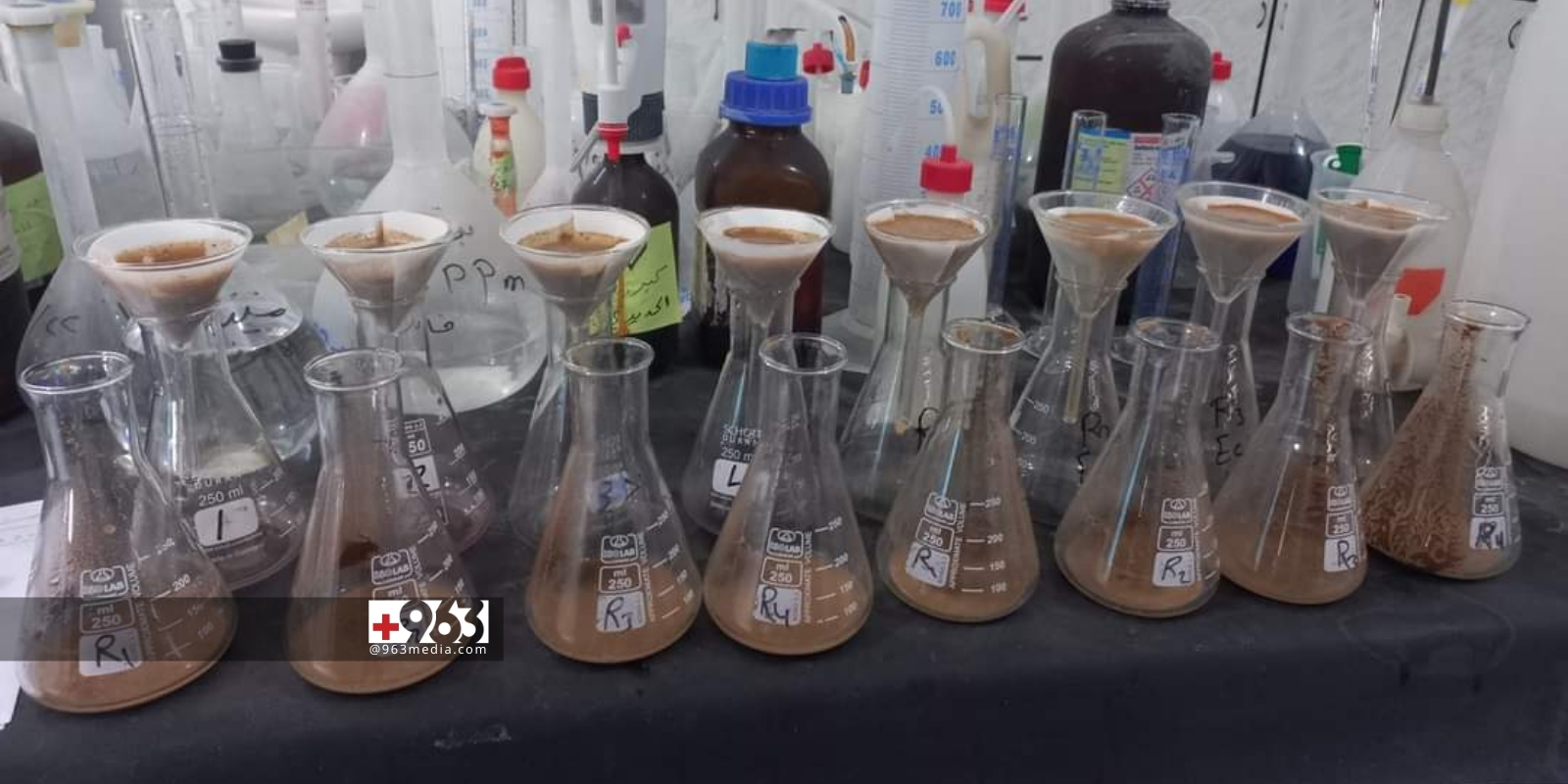
To tackle this challenge, the Agricultural Scientific Research Centre for Innovation and Excellence recently opened a laboratory for soil and water analysis in the village of Himo, near Qamishli.
According to Berivan Mohammed, the centre’s co-chair, the aim is to guide farmers based on accurate results rather than guesswork when applying fertilisers.
The tests examine key soil elements – phosphorus, nitrogen, potassium, magnesium, calcium – as well as acidity and organic matter. Water is checked for chlorine and bicarbonates, with results ready in two to three days.
The service costs around 321,000 Syrian pounds per test, depending on the type of analysis and chemicals used. While the lab can process between 100 and 300 samples a month, only 3 to 10 are submitted. The reason, staff say, is the lack of awareness among farmers.
Mixed reactions
Farmer Walid Jouli from Amuda, west of Qamishli, calls the new lab an “important and necessary step”. But he points out that poor awareness of proper farming methods has led some to over-irrigate their fields. The result is higher soil salinity, land turning barren, and a growing risk of desertification.
Another farmer, Mohammed Khair from Derbasiya, has seen the benefits of testing firsthand. When his land lost fertility, he turned to the new lab. The analysis showed a shortage of NPK, which he corrected through organic fertilisation. “The land needs to renew itself constantly,” he explains. “Labs are a key tool to achieve that.”
Agricultural expert Kevork Ghazar agrees, stressing that testing is not only about measuring fertiliser needs. It can also detect serious problems, such as nematode disease in wheat, which harms both the soil and human health. In his view, soil testing helps farmers use the right amount of fertiliser, increasing yields and protecting crops for the long term.
Beyond science alone
Despite the lab’s promise, farmers ask whether testing alone is enough to save agriculture in northeast Syria. Many argue that fuel supplies and government support for wheat and fertilisers are just as critical.For their part, lab officials insist that their main goal is to guide farmers towards more efficient and sustainable agriculture. Yet they acknowledge that broader awareness programmes and training are still needed to spread this scientific approach more widely across the region.