


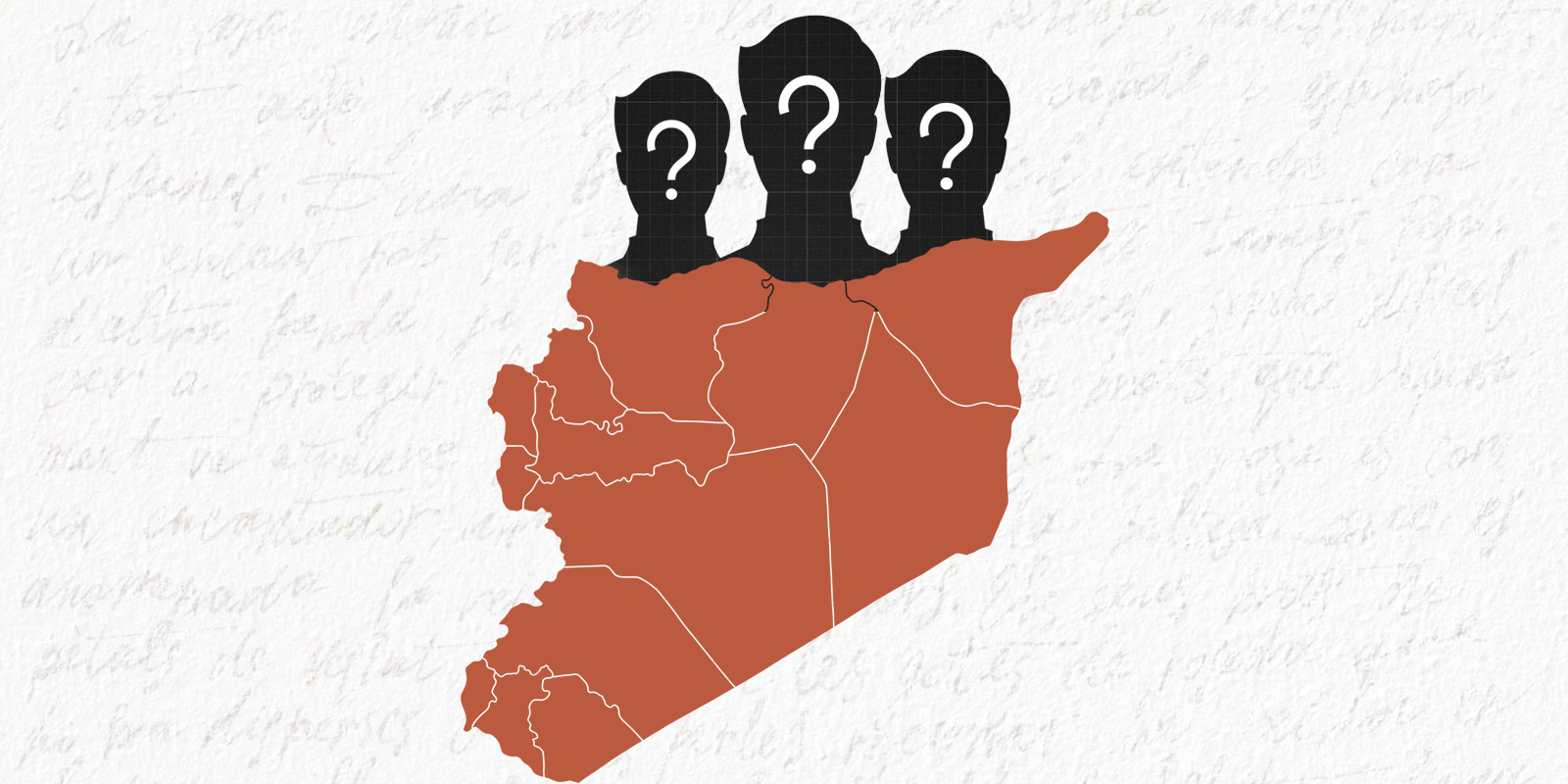
Understanding the structure of Syria’s political life is essential to grasping the country’s evolving dynamics, especially in light of the persistent confusion between the concepts of the state, the government, and the regime.
While these three terms carry distinct meanings, they often overlap in Syria, blurring the lines of political responsibility and power; particularly under the Assad dynasty.
In theory, the state is the sovereign institutional framework made up of land, people, and law. It is meant to outlast any government or political ideology. The government is the executive body charged with running the state’s day-to-day affairs. The regime, on the other hand, refers to the political and ideological system that directs how power is exercised.
In Syria, these concepts have merged so thoroughly that the regime, not the state, dictates who governs and how. As a result, the state has become a hostage to political authority.
The Concept of the State
According to Ali Isso, Director of the Ezdina Foundation, the Syrian “state” should be understood as a legal and institutional structure serving the public through legislative, judicial, and executive powers. It must guarantee rights, freedoms, security, and equality under the law.
Speaking to +963, Isso clarifies that the government is the executive body constitutionally mandated to run the state’s affairs, while the regime refers to the mode of governance; whether democratic or authoritarian, legitimate or imposed.
After the collapse of the former regime, Syrian groups generally agreed on the need to preserve state institutions, such as the judiciary, the military, and civil administration. But the real challenge lay not in declaring this principle, but in determining who wields state authority and how.
Democracy vs. Centralization
Dr. Abdullah Turkmani, a political affairs researcher, argues that the notion of the “state” should not be reduced to a binary between centralized control or ethnic/sectarian federalism. Instead, Syria needs a real democratic system in which a central government retains authority over key domains; foreign policy, defense, monetary policy, and national resources, while broad local governance is empowered.
Speaking to +963, Turkmani emphasizes that this model requires a competent government able to resolve longstanding challenges. It also demands extensive decentralization, granting municipalities and provinces the autonomy to manage local affairs and balance the center, periphery relationship.
Transitional Justice
Any viable path forward also requires the regime and government to support institutions for transitional justice, ones capable of addressing past grievances and steering the country toward a fairer, more inclusive future. This effort demands a genuine commitment to accountability, human rights, and peaceful transformation.
After Assad: Power without Direction
Legal researcher Mazid al-Kreidi tells +963 that after the fall of Bashar al-Assad’s regime in late 2024, Syria’s main crisis wasn’t simply deciding who would rule; but how the country would be governed and what would legitimize that rule.
For decades, the previous regime deliberately blurred the distinctions between state, government, and regime. It stripped the government of substance, turning it into a bureaucratic arm of an all-powerful security and party apparatus. Institutions became tools within a system of top-down loyalty rather than instruments of democratic governance.
Kreidi notes that Syria’s 2011 uprising opened a historic window to reverse this distortion and build a new state. But after Assad’s fall, what followed was not a transitional state-building process, but a reshuffling of power. Armed factions entered Damascus under the banner of liberation, only to reproduce the same authoritarian logic, this time in a more chaotic environment shaped by fragmented loyalties.
Even the transitional government that emerged remained largely symbolic, lacking real authority and operating as a façade for the international community. Meanwhile, true power remained concentrated in the hands of military and local actors. The result: dangerous overlap and confusion. The government became a slogan, the regime was rebuilt without a new social contract, and the state continued to erode.
The Citizen’s Dilemma
Today, the average Syrian struggles to distinguish between the state that is supposed to protect them, the regime that might repress them, and a government that holds no real power. In some communities, the state is still viewed with suspicion; as an adversary, not a collective home.
This conceptual confusion has created a murky political space, one with no clear answers to the questions: Who holds power? Who ensures accountability? Who protects citizens’ rights?
Reimagining the Political Framework
Kreidi concludes that recovery begins by redefining the basics:
• The state must become an institutional structure that serves all.
• The regime must emerge from a democratic social contract.
• The government must act in the public’s interest; not as a tool of domination.
The real question now isn’t “Who rules Syria?” but:
“How are we governed and by whom?”
Unless Syria answers this question, any effort to build a new state risks becoming just another distorted replica of the one that fell.











