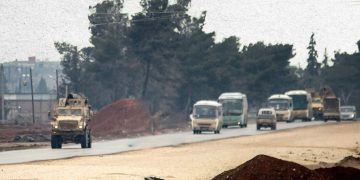



Syria’s southern province of Suweyda is facing an alarming humanitarian crisis, as intense armed clashes, now ongoing for more than a week, continue between Bedouin tribes in rural Suweyda and the local Military Council alongside other armed groups. These hostilities have torn through the region’s social fabric, forcibly displacing thousands of families to neighbouring Daraa province under an emergency agreement that facilitated civilian evacuations and temporary shelter for hundreds.
Daraa Governor Anwar Al-Zoubi announced last Wednesday that the number of emergency shelters had risen sharply from 13 to nearly 50 in just a few days. This rapid expansion aims to accommodate the influx of displaced families fleeing the escalating violence in Suweyda. Al-Zoubi also noted the involvement of Daraa’s local communities in providing aid alongside official efforts and civil society organizations.
According to the governor, 3,700 families have so far taken refuge in shelters, while another 800 families have been hosted by relatives in the Hauran region. Humanitarian assistance has arrived from other provinces, including Aleppo, and is being distributed through an emergency operations room.
Samia Mahmoud, displaced from the town of Shahba in rural Suweyda, shared with +963 her ordeal of fleeing to a shelter in western Daraa amid sweltering heat and scarce medical care. Her two children fell ill due to the poor conditions and overcrowding in the shelters, where essential services are strained.
“We lived in constant fear, without electricity, clean water, or access to baby formula,” she said. “We left our town with only the clothes we wore. I don’t know where my relatives are. We escaped alone.”
Read also: The Concept of the State in Syria
Shelter Conditions and Urgent Needs
According to the Syria Civil Defence (White Helmets), 25 shelter centres have been set up in rural Daraa, coordinated with the Ministry of Emergency and Disaster Management.
At the shelter in Khirbet Ghazaleh, centre director Ziad Al-Bakawi told +963 they have taken in 22 families, 71 people in total, mostly women and children, many of whom witnessed traumatic violence. The facility, a repurposed school with 14 rooms, relies on local efforts and humanitarian groups to provide food and medicine.
However, Al-Bakawi warned of severe shortages in essentials, especially baby formula, medication, and sanitary products. “We need more support to meet even the most basic needs,” he urged.
Yamama Al-Jumaat, from the Ecumenical Relations and Development Commission, told +963 that the organization is conducting therapeutic activities for children, psychological support for women, and distributing essential hygiene kits to ease the trauma of war and siege.
Voices from the Displaced: Unspeakable Pain, Fragile Hope
In the Jabab shelter, Abdelrahman Al-Masalmeh, a supervisor, reported hosting 80 families, including wounded civilians. He confirmed that Red Crescent teams and volunteer doctors are providing medical care and that government support continues to maintain shelter operations.
Subhiyya Salem, a displaced woman from the Bedouin community of Al-Mazraa, now living with her husband’s relatives in the town of Al-Sanamayn, told +963 that, while their living conditions are better than in a camp, their future remains uncertain.
“We’re not wealthy or even middle-class. We live in constant anxiety. My child has a chronic illness and needs regular medication and check-ups. My husband is now looking for work. We can’t stay in a relative’s house forever,” she said.
At Al-Sanamayn Hospital, a wounded Druze woman recounted being shot at while fleeing on a bus from the village of Walgha. She noted that she received care in the hospitals of Izraa and Al-Sanamayn but also spoke of tensions with residents mourning loved ones lost in the clashes.
Read also: Who Governs Suwayda? Regional Power Contest in Southern Syria
Displacement by the Numbers: A National-Scale Catastrophe
According to the Daraa Directorate of Social Affairs and Labor, over 2,500 families from Suweyda have taken refuge in shelters across towns like Khirbet Ghazaleh, Sahwa, Nahta, Jabab, Bosra al-Sham, Gharieh al-Gharbiya, and Kahil.
The United Nations announced on Wednesday that 93,400 people have been internally displaced within Suweyda itself; an indication of the massive scale of suffering in the face of ongoing violence.
Further reports describe partial destruction of critical infrastructure, including electricity, water networks, telecommunications, and hospital services, crippled by staff shortages and fuel scarcity.
Mounting Needs, Missing Solutions
With the security situation deteriorating, shelters face a worsening shortage of food and medical supplies. Health risks are rising, especially in neighbourhoods where unburied bodies have been left in the open, raising fears of disease outbreaks.
Despite local aid initiatives and some humanitarian deliveries, the worsening situation calls for urgent international humanitarian intervention. The personal stories of the displaced and wounded bear witness to one of the most significant humanitarian tragedies to strike southern Syria in recent years.
The events in Suweyda can no longer be described as isolated conflict or tribal violence. They have evolved into a widespread humanitarian crisis affecting tens of thousands of lives, placing tremendous responsibility on both local and international actors.
Amid this chaos, calls for de-escalation, reconciliation, and reconstruction grow more urgent, an effort to overcome what eyewitnesses describe as an “unforgettable massacre,” and to reclaim even a glimpse of the peace that once defined this now-devastated region.